


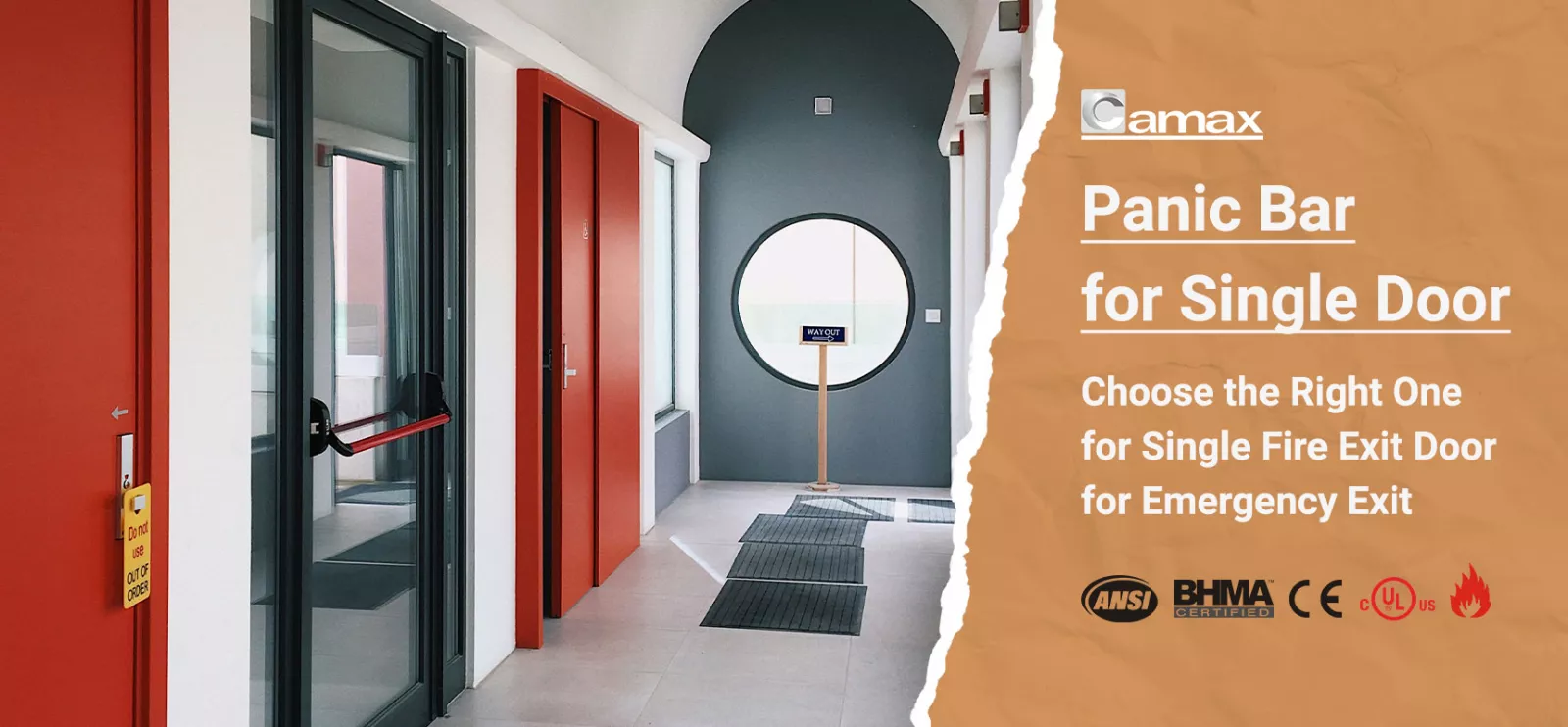
Emergency evacuation systems are essential for modern buildings. One of the most effective solutions is a fire exit door with panic bar, which allows occupants to leave quickly by simply pushing a horizontal bar. A properly designed single fire exit door with panic bar improves safety, reduces panic during emergencies, and helps buildings comply with fire safety regulations.
Today, fire door panic bar systems are widely used in warehouses, schools, offices, factories, and shopping centers. These doors ensure that people can exit immediately during an emergency without searching for keys or turning handles.
This guide explains how a fire exit door with panic bar single works, why panic hardware is important, and how to select the best commercial solution for industrial or public buildings.
Table of contents
What Is a Single Fire Exit Door With a Panic Bar?
A single fire exit door with panic baris a one-leaf, fire-rated door combined with push-bar hardware that allows emergency egress without using a handle, key, or knob. The latch can be released when pressure is applied. This design ensures quick evacuation even when people are rushing toward the exit.
A single fire-rated exit door with panic bar is built as a complete safety system rather than a simple door assembly. It typically consists of a fire-rated steel or metal door panel combined with a heavy-duty fire door panic bar that allows immediate exit under pressure. Inside the door, a precisely engineered latch mechanism ensures secure closure while still enabling fast release when the bar is pushed. The entire system is supported by a reinforced frame designed to withstand high temperatures, and it is usually paired with clearly visible emergency exit signage to guide occupants during an evacuation.
In terms of construction, several material options are commonly used depending on the application. A steel single fire exit door with panic bar is often preferred for its strength and durability in high-traffic or industrial environments. A metal fire exit door with panic bar single offers a balanced solution for general commercial use, while an insulated fire exit door with panic bar single is ideal for settings where thermal performance is important. Each configuration provides a different combination of fire resistance, structural strength, insulation capability, and overall cost efficiency.
These door types are frequently used as commercial single fire exit door with panic bar solutions in public buildings and industrial facilities.
What’s the Difference between Panic Hardware and Fire Exit Hardware?
People often use "panic hardware" and "fire exit hardware" interchangeably, but they are not the same thing — and mixing them up can create serious compliance and safety problems. Understanding what is the difference between a fire exit door and a panic bar door (or more specifically, the hardware on each) is essential before you specify or purchase.
Standard panic hardware allows a quick exit but is designed for non-fire doors. Fire exit hardware, however, is specifically tested to withstand high temperatures and maintain functionality during a fire.
A certified fire door panic bar must be compatible with fire-rated doors and pass strict safety testing. This is why building codes often prohibit using ordinary panic bars on fire-rated exits.
To know how do I know if my panic bar is fire-rated exit hardware, look for a permanent UL label — often found on the underside of the push rail or on the end cap of the device. That label confirms the device has passed fire testing and is suitable for a single fire-rated exit door with panic bar application.
Tips: Why can't I use a standard panic bar on a fire-rated door?
Because standard panic hardware is not tested or rated to maintain a fire barrier. During a fire, a door's hardware must remain functional and keep the door properly latched. A non-fire-rated device may fail under heat, allowing smoke and flames to spread. Always use UL listed single fire exit door with panic bar hardware when a fire rating is required.
How Does a Panic Bar Work on a Single Fire Exit Door?
How does a panic bar work on a single fire exit door? The mechanism is elegantly simple, which is a large part of why it has remained the standard for emergency egress hardware for decades.
When someone pushes the bar on an emergency exit steel door with single panic bar, several mechanical actions occur:
The horizontal bar compresses inward.
The internal mechanism retracts the latch.
The door swings open immediately.
One of the most practical advantages of this design is that it works even when someone is being pushed from behind. On an emergency exit steel door with single panic bar, the outward swing combined with the low-force release means that crowd pressure itself becomes the operating force — the very pressure that would trap people against a conventional door instead opens this one.
This is equally important on an exterior single fire exit door with crash bar installation, where the door often leads directly to a parking lot or alley and must release without hesitation in all weather conditions.

Why Panic Bars Are Required For Fire Exit Doors?
The requirement for panic hardware on emergency exits is not arbitrary bureaucracy. It grew directly from some of history's deadliest fire disasters, including the 1903 Iroquois Theatre fire in Chicago and the 1942 Cocoanut Grove fire in Boston — both of which saw catastrophic loss of life partly because panicked crowds could not open exit doors quickly. These tragedies led building safety organizations to mandate push-bar hardware on high-occupancy buildings.
After several historic disasters where locked exits prevented escape, safety codes began requiring fire door panic bar systems in high occupancy buildings.
Today, most jurisdictions follow the International Building Code (IBC) and NFPA 101 Life Safety Code, which generally require panic hardware on exit doors serving:
Assembly occupancies (theaters, stadiums, worship spaces) with 50 or more occupants
High-hazard occupancies regardless of occupant load
Educational buildings — a single fire exit door with panic bar for school installations is typically required in any corridor serving 50+ students
Hospitals and healthcare facilities
Shopping malls and retail complexes
Warehouses and industrial facilities — a fire exit door with panic bar single for warehouse installations is required in most jurisdictions when occupancy levels or hazard classifications apply
If you are wondering panic bars are required on all single fire exit doors — the short answer is: not every single door, but most doors in the occupancy types above and any door equipped with a fire exit label. Where are panic bars required in a building? Primarily on doors that serve as required means of egress in the occupancy types listed above, and on all fire-labeled exit door assemblies in most commercial and industrial buildings.
How to Choose The Best Panic Bar for Single Fire Exit Doors?
Not all panic bars operate the same way. What type of panic bar is required for a single fire-rated exit door — and what type is best for a single steel fire exit door? That depends on the door configuration, latch geometry, and security level required. Here are the main device types:
Camax Hardware manufactures professional fire exit door with panic bar systems designed for commercial and industrial safety environments. Camax provides OEM and ODM manufacturing services for global partners in the door hardware industry.
1. Rim Panic Bars
The most common and economical option. A rim device mounts to the face of the door and connects to a rim latch that strikes the door frame. It is easy to install on a single fire exit door with panic bar installed for the first time, and it is suitable for most light-to-medium commercial applications. If you are asking what is the best single fire exit door with panic bar for a warehouse or school where budget matters, a UL-listed rim device is often the answer
Camax offers rim exit devices in both touch bar and cross bar configurations, providing flexible solutions for different project requirements. The touch bar versions are built to meet ANSI/BHMA A156.3 Grade 1 standards and carry a UL10C 3-hour fire rating, making them a reliable choice for fire-rated single door applications. Both half-length and full-length options are available to suit various door sizes and usage scenarios.
For projects that follow European standards, Camax cross-bar exit devices are engineered in compliance with EN1125, EN1634-1, and EN12211. These certifications ensure consistent performance, durability, and safety across demanding commercial and industrial environments.
- • CE & UL Listed Panic Touch Bar
- • Non-handed
- • Certificate: ANSI/BHMA A156.3 grade 1; UL10C, fire rated
- • Material: Stainless steel, Steel
- • Finish: Stainless steel satin, Silver painted, Polishing, PVD, Black, Red
- • Narrow Stile Door Exit Device
- • Non-handed
- • Compliance: ANSI/BHMA A156.3 grade 1; UL10C, 3-hour fire rating
- • Material: Stainless steel, Steel, Aluminum
- • Modular design, more than 4-point locks are available. Security anti-thrust latch.
- • Narrow Stile Crossbar Exit Device
- • Handed
- • Certificate: EN1125, categoery 3; EN1634-1, 2-hour fire rated
- • Optional: Pullman latch with invisible fixing screws
- • Material: Stainless steel, Steel, Plastic
- • Finish: Stainless steel satin, Silver painted, Polishing, PVD, Black, Red
- • Cross bar Exit Device
- • Non-handed
- • Suitable dor narrow stile door
- • Pullman latch, lateral latch modular design, with anti-thrust function
- • REX and LBM monitoring
- • Material: Stainless steel, Steel
- • Finish: Stainless steel satin, Silver painted, Polishing, PVD, Black, Red
2. Vertical Rod Panic Bars
This device drives rods up and down from the push bar, latching into strikes at the door head and sill. It is ideal for double doors and wide openings but also available in single-door configurations. Vertical rod devices offer better weather sealing for external fire exit door with panic bar single installations and are common in best single steel fire exit door with panic bar for commercial use specifications for high-traffic or high-security facilities.
For industrial door applications, Camax provides both surface-mounted vertical rod exit devices and concealed vertical rod exit devicess. These solutions are suitable for use on both single and double doors, offering flexibility in installation and appearance.
- • Concealed Vertical Rod Exit Device
- • Non-handed
- • Certificate: ANSI/BHMA A156.3 grade 1; UL10C, 3-hour fire rated
- • Material: Stainless steel, Steel, Aluminum
- • Finish: Stainless steel satin, Silver painted, Polishing, PVD, Black, Red
- • Concealed Vertical Rod Exit Device with Panic Bar
- • Non-handed
- • Certificate: EN1125; EN1634-1, fire-rated
- • Material: Stainless steel, Steel, Plastic
- • Finish: Stainless steel satin, Silver painted, Polishing, PVD, Black, Red
3. Mortise Exit Devices
A premium option where the push bar actuates a mortise lock body built into the door edge. Mortise exit devices offer the highest level of security and the smoothest operation. They are frequently found on industrial fire exit doors with panic bar single configurations in facilities that require both emergency egress and strong access control, such as data centers and pharmaceutical plants.
Designed for use on interior industrial doors as well as steel fire doors, Camax mortise panic hardware delivers reliable and consistent performance even in demanding operating conditions.
- • Heavy-Duty Panic Device
- • Non-handed
- • Certificate: ANSI/BHMA A156.3 grade 1; UL10C, 3-hour fire rated
- • Work with ANSI mortise locks.
- • Modular design, more than 4-point locks are available.
- • Security anti-thrust latch.
- • Touch Bar for Mortise Lock or Concealed Vertical Rod
- • Non-handed
- • Compliance: ANSI/BHMA A156.3 grade 1; UL10C fire rated; EN1125, EN1634-1 fire-rated
- • Work with Euro mortise locks complied to EN1125.
- • Material: Stainless steel, Steel.
4. Exterior Trim Options
Many building owners wonder: can I use a panic bar on a single exterior fire exit door and still control who enters from the outside?
Yes. Exterior trim or a keyed cylinder can allow controlled entry from outside while ensuring the door always opens freely from inside. Options include a simple pull handle (egress-only), a lever trim with key cylinder (keyed entry), or an electric latch retraction device tied to an access control system. All trim must be compatible with the fire listing of the exit device, and the inside push bar function must remain free at all times.
| Image | Type | Certification | Feature | Hand | Material | |
|---|---|---|---|---|---|---|
| CMPA004/004B/006 | 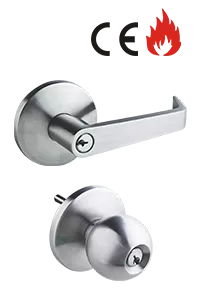 |
Lever & Rose Trim | EN1634-1, fire rated | CMPA004/006: with fixed cross shape spindle; CMPA004B: with spindle housing adaptor | Non-handed | Stainless steel; Steel |
| CMPA008/010 | 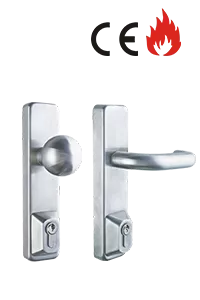 |
Escutcheon Trim | EN1634-1, fire rated | Cylinder can be changed on site | Non-handed | Stainless steel; Steel |
| CMPA012 | 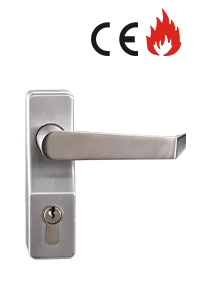 |
Escutcheon Lever Trim | EN1634, fire rated | For narrow stile doors, Function 008, key locks & unlocks handle; Free wheeling, clutch design | Non-handed | Stainless steel 304 |
| CMPA401 | 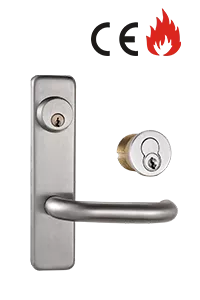 |
Escutcheon Trim | (Pending) UL 10C fire rated | Standard with ACY-28.6mm cylinder; SFIC cylinder is optional; Door thickness 44-50mm | Non-handed | Stainless steel; Steel |
| CMPA410 | 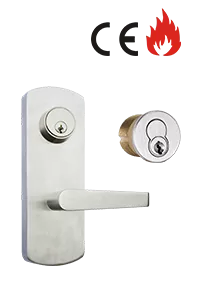 |
Escutcheon Trim | (Pending) UL fire rated | Standard with ACY-28.6mm cylinder; SFIC cylinder is optional; Door thickness 44-50mm | Non-handed | Stainless steel; Steel |
| CMPA450 Series | 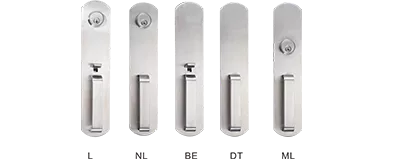 |
Pull & Thumbpiece Trim, Wide Stile | Trim has through-bolts to the device chassis for more security and durability. It fits 1-3/4" (44mm) door standard. | Non-handed | Finish: US3, US4, US10, US10B, US26, US26B & US32D |
Contact Camax Hardware to Manufacture Certified Panic Bars for Single Fire Doors
A fire exit door with panic bar is not just a hardware specification — it is a life-safety investment that protects the people inside your building when it matters most. From a busy warehouse floor to a school corridor, the right single fire exit door with panic bar ensures that evacuation happens quickly, intuitively, and in compliance with the codes your building must meet.
Camax provides commercial single fire exit door with panic bar systems built to international standards, with full OEM and ODM support for global partners. Custom sizes, hardware configurations, surface finishes, and packaging are all available. If you need a solution for a warehouse, school, industrial facility, or any other commercial building, the Camax team can help you specify the right door, with the right hardware, at the right price.
Contact Camax today to discuss customized fire exit door manufacturing and panic bar hardware solutions for your next project.
Need help? Contact Camax for a quote!
Discover Camax's door & window hardware with ANSI/BHMA/UL/CE certification today!