


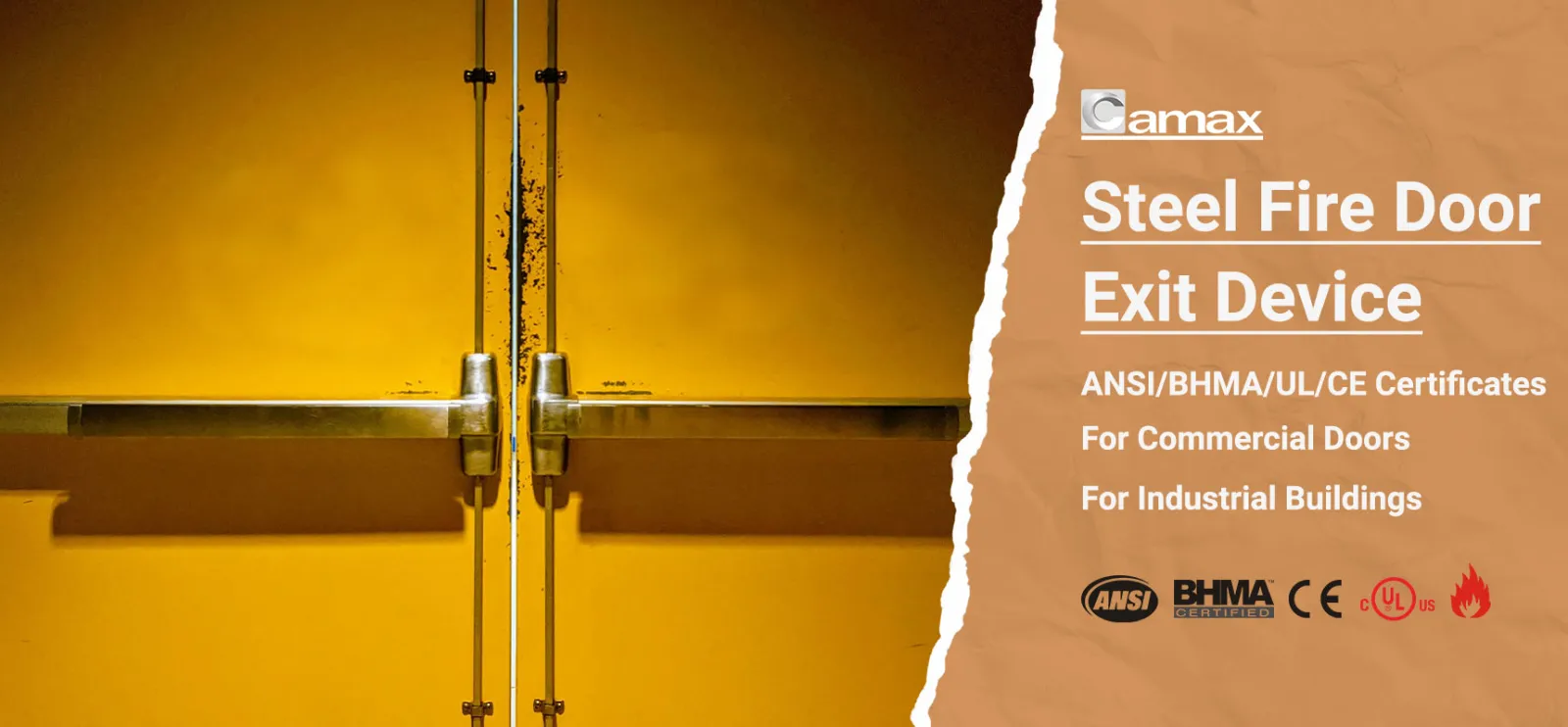
In commercial buildings, an emergency exit system needs to perform under pressure, literally. When a fire alarm sounds and hundreds of people are moving toward the nearest exit, there is no time to fumble with a lever or turn a handle. The right exit device for fire-rated steel door applications is what makes the difference between a smooth evacuation and a dangerous bottleneck.
Steel fire doors are the backbone of passive fire protection in hospitals, schools, office buildings, and industrial facilities. But a properly tested steel fire door and frame assembly can only do its job when paired with hardware that meets the same rigorous standards. Exit hardware for steel doors is not a secondary consideration; it is a core part of the fire protection system.
This guide walks through what exit devices are, why fire-rated steel doors specifically require certified exit hardware, the distinction between a panic bar and a fire exit device, and which types of exit devices Camax Hardware manufactures for these applications. Whether you are a specifier, contractor, or facility manager, understanding these fundamentals will help you make the right call for your next project.
Table of contents
What Is an Exit Device on a Steel Fire Door?
An exit device is a door hardware mechanism that allows occupants to exit a building quickly through a single pushing motion, without needing a key, turning a knob, or learning any special procedure. If you have ever pushed on a crossbar in a shopping mall or hospital corridor to open a door, you have used an exit device.
On a steel fire door exit device setup, the mechanism is designed to work reliably alongside the door's fire rating. Commercial steel doors, particularly metal fire doors used as fire barriers, must remain latched when closed so that they can contain flames and smoke during a fire event. The exit device provides a latching function during normal use while allowing immediate, unobstructed release when someone pushes on the bar from the inside.
The push bar itself spans a significant portion of the door's width, making it easy to activate even in poor visibility or crowded conditions. When pressed, the bar retracts the latch bolt and releases the door. On fire-rated applications, the device is engineered to return to a fully latched position once the door closes, maintaining the fire and smoke seal of the steel fire door and frame assembly.
Why Is Certified Exit Hardware Essential for Fire-Rated Steel Doors?
You might wonder whether any solid exit device would work on a fire-rated steel door. The short answer is no, and the reasoning is important. Fire doors are not just heavy doors; they are tested assemblies that must perform to specific standards for a defined period, typically 20, 45, 60, or 90 minutes. Installing uncertified hardware on a fire door can compromise that rating entirely.
Certified exit hardware serves several interconnected functions in fire safety:
Evacuation reliability: During a fire, certified steel fire door panic bar hardware must operate consistently even when components are exposed to heat stress. Uncertified devices may warp, jam, or fail at the worst possible moment.
Smoke containment: A fire door that does not latch properly leaves gaps through which smoke travels. Certified exit hardware ensures the latch fully engages every time the door closes.
Fire resistance integrity: The door, frame, and hardware are tested together as a system. Swapping in non-certified hardware breaks that system, even if the door itself is listed.
Legal and code compliance: Building codes, fire marshals, and insurance carriers all require that exit hardware for steel doors meets recognized standards. Non-compliance can result in failed inspections, fines, or liability in the event of an incident.
For the North American market, the most relevant certifications to look for include UL 305, which covers panic hardware for emergency egress, and UL 10C, which addresses positive pressure fire tests for door assemblies. Hardware should also conform to ANSI/BHMA grade requirements, which govern mechanical performance and durability. For projects in Europe or international markets, CE marking and related standards apply. Camax Hardware products are available with UL, ANSI/BHMA, and CE certifications, allowing them to meet requirements across different regions.

Panic Bar vs Fire Exit Device: Key Differences Explained
A panic bar, or panic hardware, is a broad category of exit device designed for emergency egress. These products are tested to ensure that people can push their way out quickly. They may be installed on interior stairwell doors, exterior exit doors, or other high-traffic commercial exits. Some panic bars allow a feature called "dogging," which holds the push bar in the depressed position so the door can operate as a standard push/pull door during normal business hours. This is perfectly acceptable on non-fire-rated doors.
A fire exit device, on the other hand, is specifically certified for use on fire-rated doors. This is where a steel fire door panic bar differs from standard panic hardware. Because fire doors must remain self-closing and fully latched to maintain their fire rating, mechanical dogging is not permitted. The device must always return to the latched position after each use. Fire exit devices carry a fire label, indicating they have passed fire testing in addition to the standard egress tests.
| Feature | Panic Bar | Fire Exit Device |
|---|---|---|
| Primary Application | General emergency egress | Fire rated door applications |
| Dogging Function | Often permitted | Mechanical dogging not allowed |
| Door Type | Non-fire-rated doors | Fire rated steel doors |
| Fire Label | Not required | Required (UL 10C or equivalent) |
| Self-Closing Compatibility | Variable | Required |
| Code Compliance | Standard egress codes | Egress and fire codes |
When specifying a panic bar for steel fire door use, always confirm that the product carries the appropriate fire label. A standard panic bar installed on a fire-rated steel door may pass visual inspection but will fail a proper code audit and could void the door's fire certification.
Which Exit Device Types Work on Steel Fire Doors?
Not every exit device configuration suits every door situation. The mounting style, door thickness, door type (single or double), and architectural requirements all influence which product is appropriate. Below are the three main types of exit devices used on commercial steel double doors exterior and interior fire door applications, along with how Camax Hardware approaches each category.
Camax Hardware manufactures exit devices in stainless steel with certified compliance to ANSI, BHMA, UL, and CE standards. Multiple finish options are available, along with OEM and ODM services, logo branding, and bulk production capabilities. The product range covers applications in hospitals, schools, office buildings, and industrial facilities, including stainless steel fire door and single or double door configurations.
1. Rim Exit Devices for Steel Fire Doors
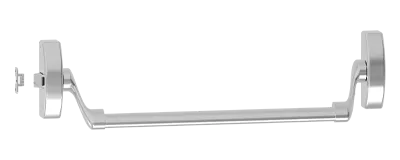
A rim exit device is mounted directly on the interior face of the door and engages a strike on the door frame. It is the most common configuration and represents the most straightforward answer to the question "which exit device works on a steel fire door" for single-door applications.
Camax manufactures rim exit devices in both touch bar and crossbar configurations, giving architects and contractors flexibility to match the device to the project's aesthetic and operational needs. Touch bar versions offer a cleaner, more architectural look, while crossbar versions provide a more traditional appearance and are often preferred in institutional settings.
- • CE & UL Listed Panic Touch Bar
- • Non-handed
- • Certificate: ANSI/BHMA A156.3 grade 1; UL10C, fire rated
- • Material: Stainless steel, Steel
- • Finish: Stainless steel satin, Silver painted, Polishing, PVD, Black, Red
- • Narrow Stile Door Exit Device
- • Non-handed
- • Compliance: ANSI/BHMA A156.3 grade 1; UL10C, 3-hour fire rating
- • Material: Stainless steel, Steel, Aluminum
- • Modular design, more than 4-point locks are available. Security anti-thrust latch.
- • Narrow Stile Crossbar Exit Device
- • Handed
- • Certificate: EN1125, categoery 3; EN1634-1, 2-hour fire rated
- • Optional: Pullman latch with invisible fixing screws
- • Material: Stainless steel, Steel, Plastic
- • Finish: Stainless steel satin, Silver painted, Polishing, PVD, Black, Red
- • Cross bar Exit Device
- • Non-handed
- • Suitable dor narrow stile door
- • Pullman latch, lateral latch modular design, with anti-thrust function
- • REX and LBM monitoring
- • Material: Stainless steel, Steel
- • Finish: Stainless steel satin, Silver painted, Polishing, PVD, Black, Red
2. Vertical Rod Exit Devices for Steel Fire Doors
A vertical rod exit device uses a single push bar mechanism that activates rods running both up and down from the bar, latching the door at the top and bottom simultaneously. This is particularly effective on taller commercial steel doors, steel door double door configurations, or any application where a single-point latch would not provide adequate holding strength against wind pressure or intrusion.
Camax offers both surface-mounted and concealed vertical rod exit devices. Surface-mounted versions are more economical and easier to install; concealed versions run rods inside the door itself for a cleaner profile and greater resistance to tampering. Both configurations are suitable for single and double doors, offering installation flexibility on projects ranging from standard interior corridor doors to heavy exterior exit doors.
- • Concealed Vertical Rod Exit Device
- • Non-handed
- • Certificate: ANSI/BHMA A156.3 grade 1; UL10C, 3-hour fire rated
- • Material: Stainless steel, Steel, Aluminum
- • Finish: Stainless steel satin, Silver painted, Polishing, PVD, Black, Red
- • Concealed Vertical Rod Exit Device with Panic Bar
- • Non-handed
- • Certificate: EN1125; EN1634-1, fire-rated
- • Material: Stainless steel, Steel, Plastic
- • Finish: Stainless steel satin, Silver painted, Polishing, PVD, Black, Red
3. Mortise Exit Devices for Steel Fire Doors
A mortise exit device integrates the latch and deadbolt mechanism into a mortise housing that sits within a pocket cut into the door's edge. From the outside, the only visible elements are the trim and handle; the mechanism itself is concealed. This configuration is common on high-traffic commercial entries and fire-rated doors in industrial environments where the hardware is subjected to significant daily use.
Camax mortise panic hardware is designed for both interior industrial steel fire doors and exterior fire-rated assemblies, maintaining reliable, consistent performance even where cycle counts are high and conditions are harsh. This makes the mortise exit device a strong answer to the question of what is the best exit device for a steel fire door in heavy-duty settings.
- • Heavy-Duty Panic Device
- • Non-handed
- • Certificate: ANSI/BHMA A156.3 grade 1; UL10C, 3-hour fire rated
- • Work with ANSI mortise locks.
- • Modular design, more than 4-point locks are available.
- • Security anti-thrust latch.
- • Touch Bar for Mortise Lock or Concealed Vertical Rod
- • Non-handed
- • Compliance: ANSI/BHMA A156.3 grade 1; UL10C fire rated; EN1125, EN1634-1 fire-rated
- • Work with Euro mortise locks complied to EN1125.
- • Material: Stainless steel, Steel.
Choose the Right Exit Device for Steel Fire Doors and Partner with Camax Hardware
Selecting the correct exit device for steel fire door applications is essential for modern commercial buildings. High-quality exit hardware helps improve emergency evacuation, supports fire safety compliance, and ensures long-term operational reliability.
A rim exit device suits most single-door commercial installations. Vertical rod exit devices are the go-to for taller doors and double-door configurations. Mortise exit devices deliver the durability and security needed in industrial or high-cycle environments. In every case, the device must carry the appropriate fire label and meet the certifications required for your project's jurisdiction.
Camax Hardware provides professional OEM and ODM manufacturing solutions for commercial fire exit hardware worldwide. From rim exit devices to vertical rod and mortise systems, Camax delivers durable and certified solutions for modern commercial construction projects.
Need help? Contact Camax for a quote!
Discover Camax's door & window hardware with ANSI/BHMA/UL/CE certification today!