


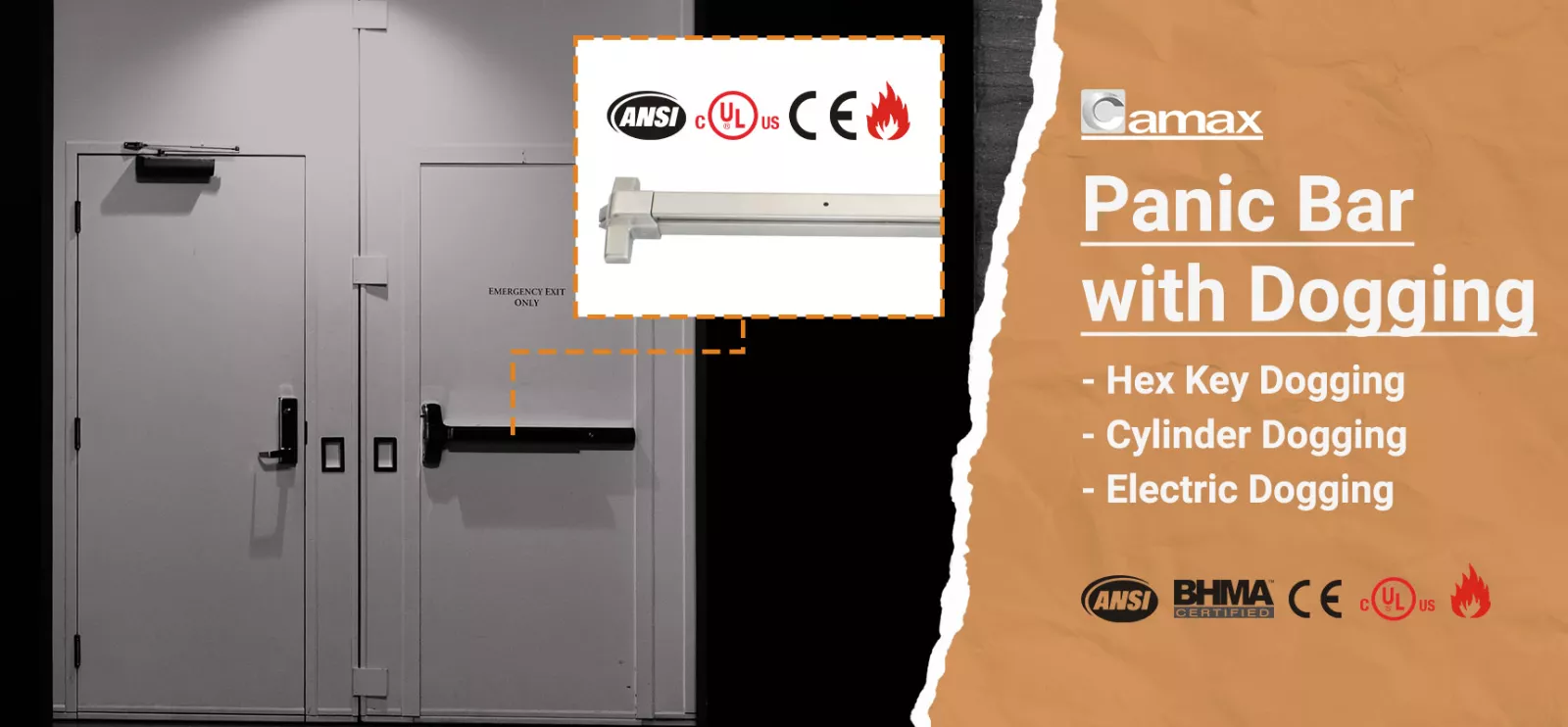
In busy commercial environments, doors need to move smoothly without slowing people down. This is why door dogging is so common in schools, offices, hospitals, and retail buildings. Understanding how to dog a panic bar correctly helps building managers balance daily convenience with safety and code compliance.
In this guide, we explain what dogging a door means, how panic bar dogging works, the different types of dogging available, and step-by-step instructions on how to dog a panic bar door safely. We’ll also cover fire-rated door rules and common problems, while introducing reliable dogging solutions from Camax Hardware.
Table of contents
Why Door Dogging Is Widely Used In Commercial Buildings
In commercial environments, the constant flow of people, equipment, and materials makes it impractical to have everyone push a panic bar every single time they pass through. Schools need doors open between classes, warehouses require clear paths for forklifts, and retail spaces benefit from welcoming, accessible entryways. The dogging door hardware feature provides a legitimate solution that's built into many exit devices, allowing doors to remain open during high-traffic periods while maintaining the ability to secure the building when needed.
However, dogging a door isn't simply about convenience—it requires understanding the balance between accessibility and safety compliance. Fire codes, building regulations, and insurance requirements all play a role in when and how mechanical dogging a door is appropriate. This comprehensive guide will walk you through everything you need to know about panic bar dogging, from basic mechanics to advanced electrified systems.
What Does Dogging A Door Mean In Panic Hardware?
What does dogging a door mean in the context of commercial hardware? Simply put, dogging refers to the process of holding the latch mechanism of a panic bar or exit device in a retracted position, allowing the door to swing freely without requiring anyone to push the bar.
The term "dogging" likely originates from the mechanical "dog" or catch mechanism used to hold the latch back—similar to how a mechanical dog catch works in various industrial applications. When a panic bar is dogged, the internal latch that normally extends into the door frame stays pulled back, creating the same effect as if someone were continuously holding down the push bar.
Inside the panic hardware, the dogging mechanism engages with the latch assembly. In most exit device with dogging configurations, there's a secondary locking point—either a hex key socket or a cylinder lock—that physically holds the latch in the retracted state. This is fundamentally different from unlocking the door; unlocking allows the latch to retract when the bar is pushed, while dogging keeps the latch retracted regardless of bar position.

How Panic Bar Dogging Works Mechanically?
When someone pushes a panic bar under normal operation, the horizontal push pad compresses, which rotates an internal linkage. This linkage pulls the latch bolt back from the strike, allowing the door to open. A spring then returns everything to the locked position once the bar is released. The beauty of panic hardware is this fail-safe design—it always allows exit even if keys are lost or locks malfunction.
The dogging mechanism adds an override to this system. When activated through hex dogging keys or a keyed cylinder, it engages a catch that holds the latch linkage in the retracted position. Think of it as inserting a pin that prevents the spring from returning the latch to its normal extended state. The push bar itself may still move when pressed, but it no longer controls the latch—the dogging mechanism has taken over that function.
Importantly, panic bar dogging instructions should never be confused with locking instructions. Dogging does not secure the door against entry.
Types Of Dogging Options For Panic Bars
1. Hex Key Mechanical Dogging
Hex key dogging is one of the most common and cost-effective solutions. It uses a simple hex dogging key inserted into a hole on the push bar.
To activate hex key dogging, you insert the appropriate size hex key and turn it, usually a quarter turn, which engages the internal dog catch. The hex key typically remains in place while the door is dogged, providing a visual indicator that the door is in dogging mode. When you need to return to normal panic function, simply turn and remove the hex key.
The limitation of hex dogging is accessibility—anyone with a hex key can dog the door. For environments where you need more control over who can activate dogging, keyed options provide better security.
Camax Hardware offers CMP400, CMP466, CMP600, and CMP800 series exit devices which can be equipped with hex key dogging mechanisms, offering reliable performance at an economical price point for standard commercial applications.
- • Touch Bar Exit Device
- • Dogging, not fire-rated: Hex Key Dogging
- • Non-anded
- • Certificate: ANSI/BHMA A156.3, Grade 1; UL10C, fire-rated; EN1125; EN1634-1 wooden door 90 minutes, steel door 120 minutes
- • Material: Stainless steel, Steel
- • Finish: Stainless steel, Silver painted, Polishing, PVD, Black, Red
- • Concealed panic exit device
- • Dogging, not fire-rated: Hex Key Dogging
- • Non-handed
- • Certificate: ANSI/BHMA A156.3, Grade 1; UL10C, 3-hour fire rating
- • Material: Stainless steel, Steel, Aluminum
- • Finish: Stainless steel satin, Silver painted, Polishing, PVD, Black, Red
- • Dogging, not fire-rated: Hex Key Dogging
- • Compliance: ANSI/BHMA A156.3, grade 1; UL10C, fire-rated; EN1125; EN1634-1, fire-rated
- • Pullman latch, lateral latch modular design
- • Non-handed
- • Material: Stainless steel, Steel
- • Finish: Stainless steel satin, Silver painted, Polishing, PVD, Black, Red
- • Dogging, not fire-rated: Hex Key Dogging
- • Compliance: EN1125; EN1634-1
- • Suitable for narrow stile door
- • Non-handed
- • Material: Stainless steel, Steel
- • Finish: Stainless steel satin, Silver painted, Polishing, PVD, Black, Red
2. Cylinder Keyed Dogging
For schools, offices, and facilities requiring controlled access, cylinder dogging represents the professional standard. Instead of a hex socket, the panic bar incorporates a keyed cylinder—similar to a door lock cylinder—that controls the dogging function. Only authorized personnel with dogging keys can activate or deactivate the feature.
Cylinder dogging also integrates well with master key systems. Facility managers can include dogging cylinders in their keying schedule, ensuring that custodial staff, administrators, or specific department heads have the appropriate access while maintaining security protocols.
If you’re searching for an exit device with dogging that offers more security, cylinder dogging is a strong choice. Camax’s CMP450 Series and CMP750 Series support optional keyed dogging kits.
- • Heavy Duty Panic Exit Device
- • Dogging, not fire-rated: Cylinder Dogging; Hex Key Dogging
- • Non-handed
- • Certificate: ANSI/BHMA A156.3 grade 1; UL10C, 3-hour fire rated
- • Material: Stainless steel, Steel, Aluminum
- • Finish: Stainless steel satin, Silver painted, Polishing, PVD, Black, Red
- • Narrow Stile Touch Bar Exit Device
- • Dogging, not fire-rated: Cylinder Dogging; Hex Key Dogging
- • Non-handed
- • Compliance: ANSI/BHMA A156.3, Grade 1; UL10C, 3-hour fire rating
- • Material: Stainless steel, Steel, Aluminum
- • Finish: Stainless steel satin, Silver painted, Polishing, PVD, Black, Red
3. Electric Dogging For Advanced Applications
At the highest level of sophistication, electric dogging systems integrate panic hardware with electronic access control platforms. Rather than manual key operation, the dogging function is controlled remotely through a building management system, allowing scheduled activation, zone-based control, and real-time monitoring.
At the highest level of sophistication, electric dogging systems integrate panic hardware with electronic access control platforms. Rather than manual key operation, the dogging function is controlled remotely through a building management system, allowing scheduled activation, zone-based control, and real-time monitoring.
Tips:
Electric dogging mechanisms use motorized components to retract the latch and solenoids to release it. In advanced configurations, the system can retract not just the latch but also mortise lock latchbolts, deadbolts, and even top and bottom bolts on paired doors. Sensors monitor the latch position, touch bar activation, and bolt status, feeding this information back to the access control system for comprehensive security oversight.
Camax’s electrified exit devices feature electric dogging options where the latch is automatically retracted by motor and released by solenoid. The system can drive the retraction of latches, mortise lock components, and top and bottom bolts while monitoring all positions and signals for integration with your access control infrastructure.
Step-By-Step Instructions On How To Dog A Panic Bar
Now that you understand the types of systems available, let's walk through the actual process of how to dog a panic bar door. While specific models may vary slightly, this general procedure applies to most panic bar dogging situations.
Confirm Dogging Support
Check that the panic bar includes a dogging feature. Look for a hex socket or keyed cylinder and verify manufacturer approval, especially for fire-rated door applications.
Open the Door Fully
Open the door completely before dogging. This releases latch pressure and allows the mechanism to engage smoothly without resistance or sudden door movement.
Engage the Dogging Mechanism
Insert the hex key or dogging key and turn as specified. Rotate until the mechanism catches and holds the latch in the retracted position.
Check Latch Position
Confirm the latch is fully retracted into the door edge. It should not extend outward. Remove the key if applicable while keeping the device dogged.
Test Free Swinging
Open and close the door without pressing the bar. The door should swing freely with no latch contact or unusual noise.
Tip:
Once dogged, test the door from both sides to ensure it swings freely in all expected directions. For high-traffic areas, verify that the door has adequate hold-open strength if paired with an overhead holder or magnetic catch.
1. Is Dogging Allowed On Fire-Rated Doors?
Dogging a door on a fire-rated opening is a major safety concern and is often restricted by building codes. In most cases, mechanical dogging is not allowed on fire-rated doors because these doors must close automatically to stop fire and smoke. Approval should always come from the local authority having jurisdiction (AHJ).
If an open fire-rated door is needed, safer alternatives include electromagnetic hold-open devices linked to the fire alarm or fusible link holders that release during a fire. Non-fire-rated doors allow more flexibility, but dogging should still be used carefully and only where it does not create safety risks.
Important Safety Information:
Fire-rated doors and fire exit hardware have specific requirements that often prohibit mechanical dogging. The critical difference lies in the door's purpose—panic hardware is for general egress, while fire exit hardware must maintain fire compartmentation.
2. Common Problems With Dogging Doors
Even when used correctly, door dogging can cause problems over time. If a panic bar won’t stay dogged, dirt, worn parts, or latch misalignment are common causes—door position can also affect engagement. If a dogging key won’t turn, corrosion or poor alignment may be the issue; never force the key. When a door won’t latch after undogging, the mechanism may not be fully released or internal springs may be worn. Heavy traffic increases wear on latches and dogging parts, so regular inspection, lubrication, and maintenance are essential to keep the hardware working safely and smoothly.
How To Undog A Panic Bar Safely?
Knowing how to undog a door properly is just as important as the dogging process itself. Improper undogging can damage the hardware, create security vulnerabilities, or leave the door in an unsafe state.
To undog a panic bar, insert the key or hex tool and turn it in the opposite direction until the mechanism releases. The latch should return automatically. Afterward, test the panic bar to ensure the latch retracts and extends smoothly. Close and open the door several times to confirm proper latching. If the bar feels stiff or the latch does not work correctly, address the issue immediately. Always follow the manufacturer’s exit device dogging instructions, as different models may require specific steps or door positions to undog safely and ensure reliable operation.
Safety Check After Undogging: Before leaving the door, confirm that it latches securely when closed, the panic bar operates smoothly when pressed, and there are no unusual sounds or resistance. A quick functional test prevents security gaps and ensures life-safety compliance.
Contact Camax to Get Expert Guidance on Door Dogging Hardware
Selecting the right panic bar dogging system for your facility requires understanding your specific operational needs, code requirements, and security considerations. At Camax Hardware, we specialize in commercial door hardware solutions that balance convenience, safety, and compliance.
Whether you're upgrading existing exit devices, planning a new construction project, or troubleshooting current hardware issues, Camax brings decades of expertise in panic bar dogging instructions, installation, and maintenance. We provide detailed technical support, code compliance guidance, and ongoing service to keep your doors operating reliably.
Contact Camax today and get expert advice on how to dog a panic bar, door dogging hardware selection, and complete exit device solutions for your commercial facility.
Need help? Contact Camax for a quote!
Discover Camax's door & window hardware with ANSI/BHMA/UL/CE certification today!