


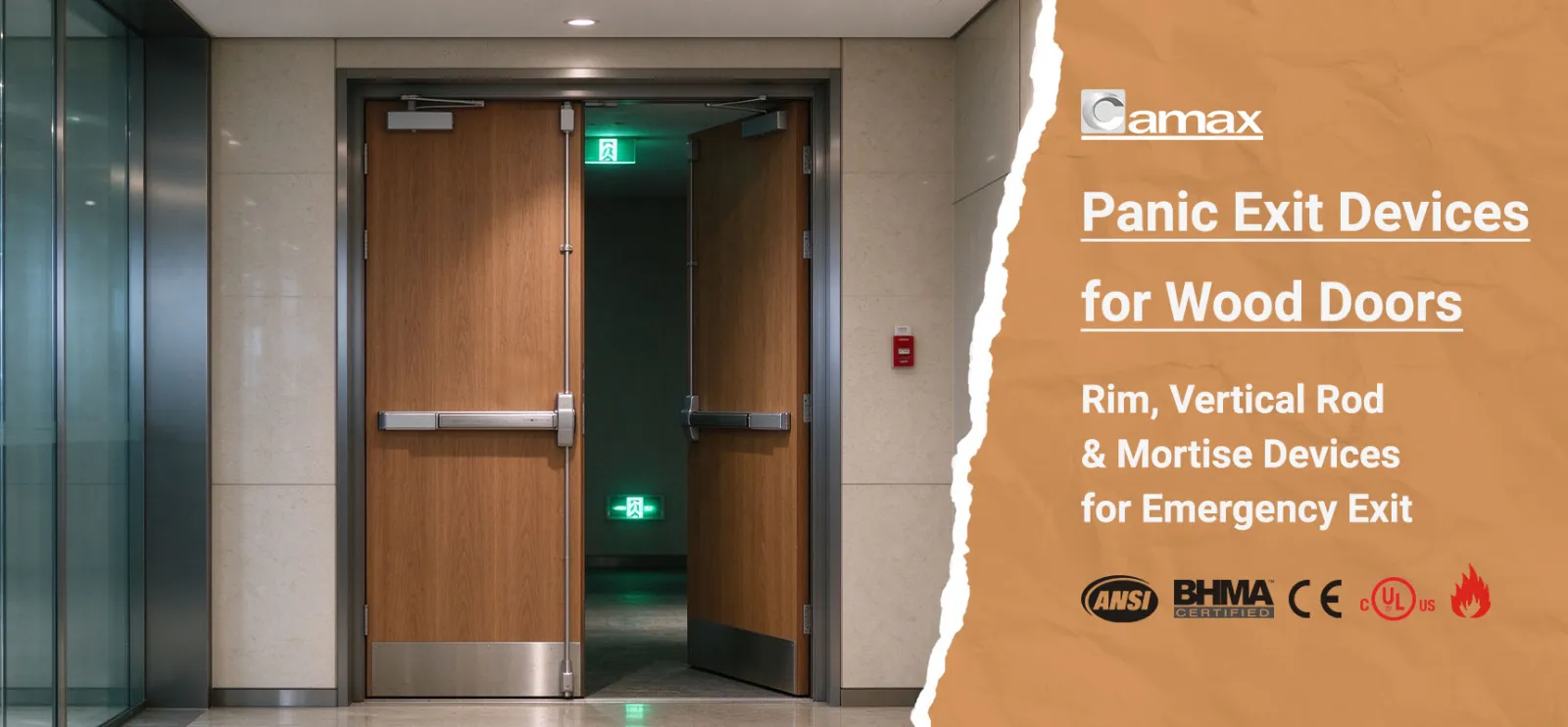
A panic exit device can be installed on a wood door, provided the door’s construction, thickness, and condition support the hardware. Common options include rim exit devices, surface vertical rod devices, concealed vertical rod devices, and mortise exit devices. Each type offers different mounting requirements, latching methods, and applications for commercial buildings.
Choosing the right panic exit device for a wood door depends on the door configuration, exit requirements, fire-rating requirements, and whether exterior access is needed. For commercial projects, buyers should also consider hardware durability, applicable certifications, and compatibility with the complete door assembly. Camax offers a range of panic exit devices, with OEM and ODM services for door hardware brands, distributors, and project suppliers.
Table of contents
What Is a Panic Exit Device for a Wood Door?
A panic exit device is a door locking mechanism that allows occupants to open an exit door from the inside by pushing a horizontal bar or pad. Operating the bar retracts the latch, allowing the door to open without requiring a key or a separate unlocking action from the egress side.
A wood door panic bar is commonly used on commercial doors where quick, straightforward exit operation is important. The device may use a rim latch, vertical rods or a mortise locking mechanism, depending on the door configuration and project requirements.
1. How Does a Panic Exit Device Work on a Wooden Door?
When the bar is pressed, its internal mechanism releases the latch or latches securing the door. The door can then open in the direction of egress. Once the door closes, the latch returns to its engaged position, provided the device and strike are correctly installed and adjusted.
The door itself is part of this working system. Its thickness, core construction, edge preparation and frame alignment can affect installation and performance. A suitable exit device must be selected for the actual door rather than chosen by appearance alone.
2. What Is the Difference Between a Panic Bar and a Push Bar?
The terms are sometimes used interchangeably, but they do not always describe the same hardware. A panic bar generally refers to an exit device designed and tested for a defined emergency egress application. A push bar may describe a broader range of door operating hardware that does not necessarily provide a listed panic function.
When specifying panic hardware for wood doors, confirm the product's intended use and applicable certification instead of relying on the product name alone.
Fire Rated and Grade 1 Panic Hardware for Wood Doors
Not every panic bar is suitable for a fire rated door. A fire rated panic bar for wood door applications must be compatible with the relevant door assembly and approved for the intended use. The door label, frame, hardware listing and installation instructions all matter.
In the US market, UL 305 addresses panic hardware, while fire exit hardware used on fire door assemblies must meet the applicable fire test and listing requirements, including UL 10C where specified. ANSI/BHMA grading addresses other performance criteria and should not be treated as a substitute for fire certification.
A Grade 1 panic exit device for wood door applications may be appropriate for demanding commercial environments when its verified performance matches the project requirements. A heavy-duty panic bar for wood door use should also be evaluated for operating cycles, door size, expected traffic and installation conditions.
Before ordering, check the exact model number and its certification documents. A manufacturer's general statement about a product family does not establish that every configuration is approved for every fire rated door.

Types of Panic Bars for Wood Doors
The most suitable exit device for wooden door applications depends on how the door is built, how it is used and how it must latch. The following configurations cover common commercial requirements.
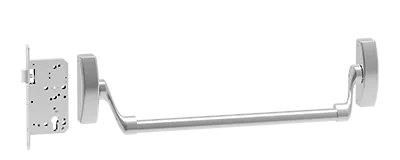
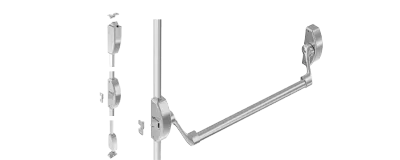
1. Rim Panic Exit Devices
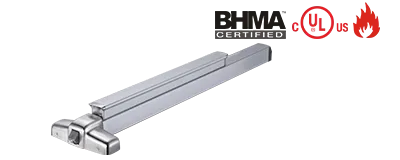
A rim panic exit device is mounted on the door surface and uses a latch that engages a strike on the frame. This arrangement is often considered for single commercial doors because the locking mechanism is relatively straightforward to access for installation and maintenance.
Camax offers rim panic exit device models including the CMP451, CMP751, CMP551 and CMP351 series. These products provide options for different commercial door hardware requirements. The applicable standards, certifications and available functions should be confirmed against the documentation for each model.
When specifying a rim device, check the frame strike position, door thickness, mounting support and available outside trim. The frame must provide a suitable fixing point for the latch strike.
- • Heavy-Duty Panic Device
- • Security anti-thrust latch
- • Non-handed
- • Certificate: ANSI/BHMA A156.3 grade 1; UL10C, 3-hour fire rated
- • Material: Stainless steel, Steel
- • Finish: Stainless steel satin, Silver painted, Polishing, PVD, Black, Red
- • Narrow Stile Door Exit Device
- • Non-handed
- • Compliance: ANSI/BHMA A156.3 grade 1; UL10C, 3-hour fire rating
- • Material: Stainless steel, Steel, Aluminum
- • Modular design, more than 4-point locks are available. Security anti-thrust latch.
- • Narrow Stile Crossbar Exit Device
- • Handed
- • Certificate: EN1125, categoery 3; EN1634-1, 2-hour fire rated
- • Optional: Pullman latch with invisible fixing screws
- • Material: Stainless steel, Steel, Plastic
- • Finish: Stainless steel satin, Silver painted, Polishing, PVD, Black, Red
- • Cross bar Exit Device
- • Non-handed
- • Suitable dor narrow stile door
- • Pullman latch, lateral latch modular design, with anti-thrust function
- • REX and LBM monitoring
- • Material: Stainless steel, Steel
- • Finish: Stainless steel satin, Silver painted, Polishing, PVD, Black, Red
2. Surface Vertical Rod Exit Devices
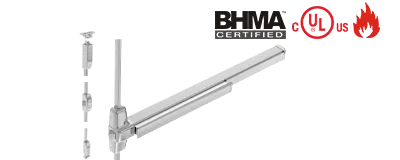
Surface vertical rod exit devices use rods to secure the door at more than one point, typically near the top and bottom. They may be considered for certain double door applications or projects where the specified latching arrangement calls for multiple locking points.
Camax manufactures surface vertical rod exit device options within the CMP450, CMP750, CMP550 and CMP500 series. The correct configuration depends on the door and frame arrangement, the required latching points and the intended application.
Before selecting a surface vertical rod device, check the available clearance at the top and bottom of the door, the floor or threshold conditions, and the manufacturer's installation requirements. Misalignment can prevent the rods from engaging or releasing properly.
- • Heavy-Duty Panic Device
- • Security anti-thrust latch
- • Non-handed
- • Certificate: ANSI/BHMA A156.3 grade 1; UL10C, 3-hour fire rated
- • Material: Stainless steel, Steel
- • Finish: Stainless steel satin, Silver painted, Polishing, PVD, Black, Red
- • Cross bar Exit Device
- • Non-handed
- • Suitable dor narrow stile door
- • Pullman latch, lateral latch modular design, with anti-thrust function
- • REX and LBM monitoring
- • Material: Stainless steel, Steel
- • Finish: Stainless steel satin, Silver painted, Polishing, PVD, Black, Red
3. Concealed Vertical Rod Exit Devices
Concealed vertical rod exit devices place the rods inside the door, giving the installation a cleaner appearance while retaining top and bottom latching. They can be suitable for commercial projects where exposed rods are undesirable, provided the door construction supports the required internal preparation.
Camax offers concealed vertical rod options including the CMP466/463, CMP766/763, CMP566 and CMP366 models. These product families are intended for different exit hardware requirements. Applicable ANSI, BHMA, UL or CE certifications must be checked for the specific model and configuration.
Concealed rods require particular attention to door preparation, internal space and alignment. Retrofitting this type of wood door panic bar exit device may require more extensive work than installing a surface mounted model.
- • Concealed Vertical Rod Exit Device
- • Non-handed
- • Certificate: ANSI/BHMA A156.3 grade 1; UL10C, 3-hour fire rated
- • Material: Stainless steel, Steel, Aluminum
- • Finish: Stainless steel satin, Silver painted, Polishing, PVD, Black, Red
- • Concealed Vertical Rod Exit Device with Panic Bar
- • Non-handed
- • Certificate: EN1125; EN1634-1, fire-rated
- • Material: Stainless steel, Steel, Plastic
- • Finish: Stainless steel satin, Silver painted, Polishing, PVD, Black, Red
4. Mortise Exit Devices
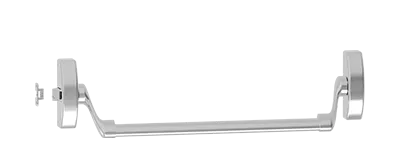
A mortise exit device operates with a locking mechanism installed within a prepared pocket in the door edge. This configuration can be useful when a project calls for a mortise lock function integrated with panic operation.
Camax offers mortise exit device options including the CMP455 and CMP555 series, designed to work with ANSI mortise locks or EN mortise locks, subject to the specific model configuration. Buyers should verify lock case dimensions, door preparation, backset and the relevant product standards before specifying the hardware.
For all four device types, compatibility must be confirmed at model level. Door width, door thickness, frame preparation and fire rating can affect which configurations are suitable.
- • Heavy-Duty Panic Device
- • Non-handed
- • Certificate: ANSI/BHMA A156.3 grade 1; UL10C, 3-hour fire rated
- • Work with ANSI mortise locks.
- • Modular design, more than 4-point locks are available.
- • Security anti-thrust latch.
- • Touch Bar for Mortise Lock or Concealed Vertical Rod
- • Non-handed
- • Compliance: ANSI/BHMA A156.3 grade 1; UL10C fire rated; EN1125, EN1634-1 fire-rated
- • Work with Euro mortise locks complied to EN1125.
- • Material: Stainless steel, Steel.
- • Cross bar Exit Device
- • Non-handed
- • Suitable dor narrow stile door
- • Pullman latch, lateral latch modular design, with anti-thrust function
- • REX and LBM monitoring
- • Material: Stainless steel, Steel
- • Finish: Stainless steel satin, Silver painted, Polishing, PVD, Black, Red
Panic Bar with Exterior Lever for Wood Door
Many commercial doors need to allow free exit from inside while controlling entry from outside. A panic bar with exterior lever for wood door applications combines an inside exit device with compatible outside trim, which may include a lever handle and cylinder depending on the selected function.
1. Can a Panic Bar Have an Outside Lever on a Wood Door?
Yes. A panic exit device with outside lever can provide controlled access for staff, tenants or other authorized users. The exact operation depends on the trim and lock function. Some arrangements allow entry with a key, while others may provide different access or locking options.
Check that the exterior lever trim is designed to work with the chosen exit device. Matching products by appearance alone is not sufficient because spindle, cylinder, mounting and locking requirements may differ.
2. Can I Lock a Panic Exit Device from the Outside?
In many configurations, outside access can be controlled or disabled using the specified trim and locking function. The inside panic operation must still comply with the applicable egress requirements. The outside locking method should never be assumed to apply to every model.
For commercial projects, confirm the required access function, cylinder type and operating sequence before ordering. Where the door is fire rated, all hardware must also remain compatible with the approved assembly.
How to Choose a Commercial Panic Exit Device for a Wood Door
Selecting a commercial panic bar for wood door applications starts with the door specification, not the hardware catalogue. The following checks can help buyers narrow the options before requesting a quotation.
Door construction: Confirm whether the door is solid core, hollow core or specially reinforced, and check whether the device supports that construction.
Door dimensions: Provide door width and thickness, along with any relevant frame or clearance information. Confirm the approved device size and mounting positions.
Door arrangement: Identify whether the opening is a single door or part of a double door assembly. This affects the required latching configuration.
Locking requirements: Decide whether a rim, vertical rod or mortise device is appropriate and whether outside lever trim or cylinder access is needed.
Fire and performance standards: Identify the applicable market, required certifications and any fire door assembly limitations.
Traffic and durability: Consider how frequently the door will be used and whether a verified Grade 1 or other specified performance level is required.
Project and supply requirements: Confirm finish, monitoring options where available, packaging, quantities and any OEM/ODM specifications.
1. Can a Panic Exit Device Be Installed on a Hollow Core Wood Door?
It depends on the door construction and the device's approved mounting requirements. Many hollow core doors do not provide enough support for standard panic hardware without a suitable reinforcement system. Do not assume that ordinary screws or a surface mounting plate will solve the problem.
Check with the door and hardware manufacturers before proceeding. If the door is fire rated, any modification must also comply with the applicable listing and installation requirements.
2. What Size Panic Bar Do I Need for a Wood Door?
The correct size depends on the door width, device model, required mounting clearances and the manufacturer's approved size range. Measure the door accurately and consult the installation template. Avoid trimming or modifying the device unless the manufacturer specifically permits it.
3. How to Install a Panic Bar on a Wood Door
The exact installation method varies by exit device. In general, the process includes checking the door and frame, marking the mounting positions with the supplied template, preparing the required holes, securing the device, fitting the strike and compatible outside trim, and testing latch engagement and release.
If you are learning how to install a panic exit device on wood door assemblies, use the instructions for the exact model rather than a generic drilling pattern. Incorrect preparation can weaken the door or affect reliable latching. Fire-rated doors should only be modified in accordance with their approved requirements.
Camax Panic Exit Devices for Wood Doors: OEM and ODM Manufacturing
For commercial door hardware brands, distributors and project suppliers, product compatibility is only part of the purchasing decision. Consistent specifications, suitable configurations and dependable manufacturing support are also important when building a product range.
Camax manufactures commercial door hardware, including panic exit devices for different applications. Its product range includes rim, surface vertical rod, concealed vertical rod and mortise configurations. The CMP series provides options for buyers working with different door designs and project specifications.
Through OEM and ODM services, Camax can discuss product requirements with customers developing their own door hardware ranges or sourcing solutions for specific projects. Depending on the product and agreed scope, discussions may cover configuration, finish, packaging and other manufacturing requirements.
For buyers seeking a suitable exit device for wood door applications, it helps to provide the door dimensions, core construction, latching requirements, target certifications, exterior access functions and estimated order quantity at the enquiry stage. This gives the manufacturer a clearer basis for assessing the appropriate product options.
Product certifications should always be checked against the exact model and configuration. If the application involves a fire-rated door, confirm the required listing and compatibility with the complete door assembly before final selection.
Choose the Right Panic Exit Device for Your Wood Door Project
The right panic hardware for wood doors depends on more than the door material. Construction, mounting support, latching arrangement, exterior access and applicable safety requirements all influence the final choice. Rim, vertical rod and mortise exit devices each serve different needs, so selecting a model that matches the door and project specification is essential.
Camax supports commercial door hardware buyers with a range of panic exit device configurations and OEM/ODM manufacturing services. If you are sourcing a panic bar for wood door applications, prepare your technical requirements and discuss with Camax team the suitable models.
Need help? Contact Camax for a quote!
Discover Camax's door & window hardware with ANSI/BHMA/UL/CE certification today!