


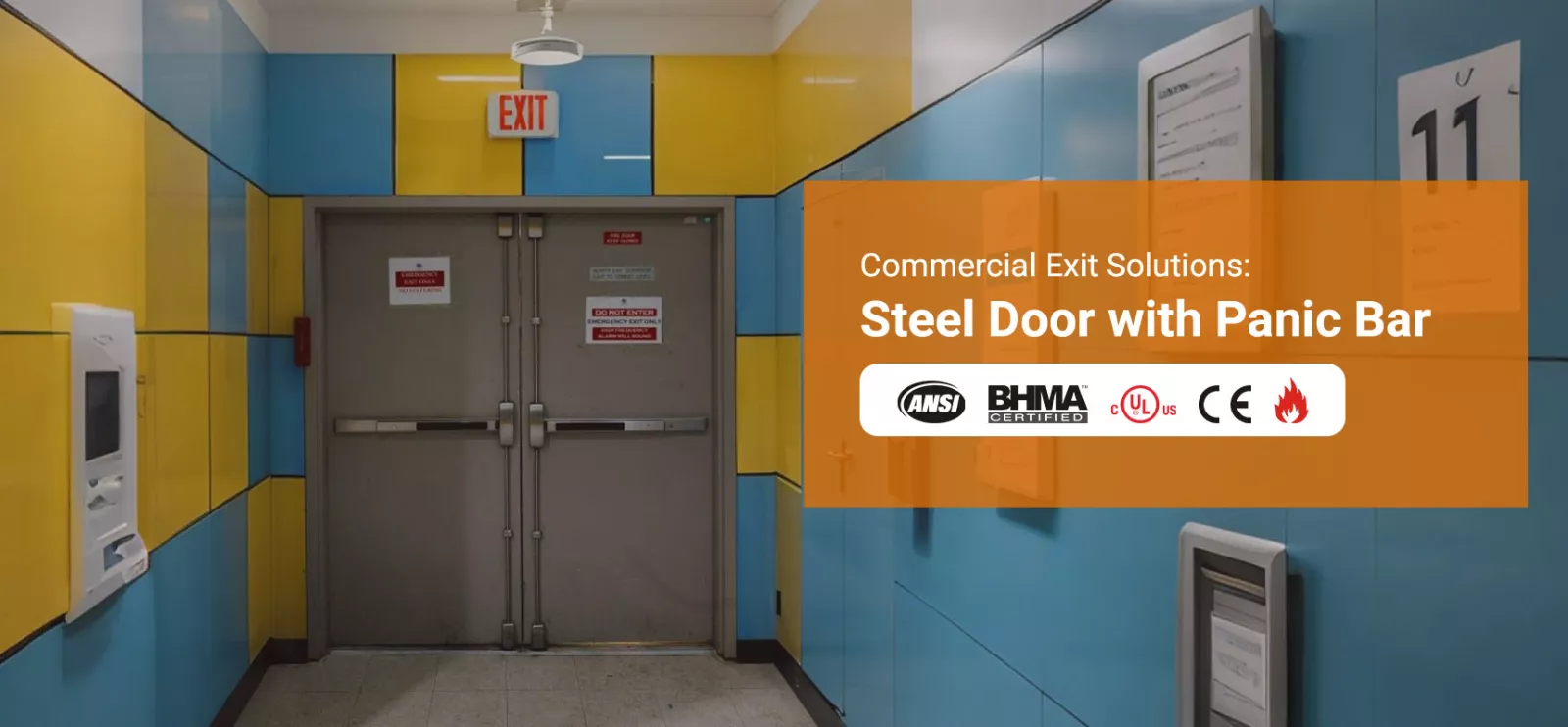
In commercial buildings, warehouses, schools, and public facilities, safety isn't just a priority but it's a legal requirement. One critical component that ensures rapid emergency evacuation is the steel door with panic bar, also known as a panic device or push bar system.
Whether you're managing a commercial property, designing a new facility, or upgrading existing fire safety systems, understanding panic bars on steel doors can mean the difference between compliance and violation, safety and risk. This comprehensive guide walks you through everything you need to know about steel exit doors with push bars, from how they work to which codes apply.
Table of contents
What Is A Panic Bar On A Steel Door?
A panic bar, also called an exit device, push bar, or crash bar, is a horizontal safety mechanism installed on emergency exit door with panic bar systems. The device allows people to exit a building quickly by simply pushing against the bar, which releases the door latch without requiring keys, knobs, or handles to turn.
For a steel door with panic device installations, the panic bar typically spans the width of the door at waist to chest height. When pressure is applied to the bar (usually 15 pounds or less), it activates an internal mechanism that retracts the latch, allowing the door to swing open freely in the direction of exit travel.
1. Why Panic Bars Are Required On Steel Doors?
Building codes mandate panic bar for metal door installations in specific occupancies for critical safety reasons. The primary purpose is to prevent crowd crushing and injuries during emergency evacuations.
History has shown that panic situations cause people to push toward exits. Traditional door hardware (knobs, levers, or locks) can become impossible to operate when crowds press against doors. Panic bars solve this problem because the natural pushing motion of a crowd automatically opens the door.
For steel fire door with panic bar applications, the combination provides both fire compartmentation (the steel door resists fire spread) and rapid evacuation (the panic bar ensures quick exit). This dual functionality makes them essential in schools, hospitals, theaters, shopping centers, and industrial facilities.
2. How Does a Panic Bar Work on Steel Doors?
The steel door push bar mechanism is elegantly simple yet highly reliable. When someone pushes the horizontal bar, it pivots slightly and transfers force through internal linkages to a latch mechanism.
Modern steel door with emergency bar systems often include additional features such as alarm activation when the door opens, delayed egress options that provide 15-second delays (with audible warnings) to deter unauthorized exits while still allowing emergency egress, and electrical monitoring that integrates with building security systems.
The mechanism must meet strict standards for durability and ease of use. Building codes typically require that panic bars operate with no more than 15 pounds of force and function reliably after hundreds of thousands of cycles.
Tips: Difference Between Fire Rated Doors And Panic Steel Doors
Many people confuse fire-rated doors with panic doors, but they serve different purposes and have different requirements.
A steel fire exit door with bar is designed to resist fire and smoke spread for a specific time period (20 minutes, 90 minutes, 3 hours, etc.). For steel fire door, it's essential to use fire exit hardware. The door, frame, and all hardware must be fire-rated and tested together as an assembly. A steel fire exit door with push bar combines both fire resistance and panic hardware.
A panic steel door refers to any door equipped with panic hardware for rapid egress. It may or may not be fire-rated. Not all panic doors are fire doors, and not all fire doors require panic hardware.
Types Of Panic Bars On A Steel Door
Panic exit devices come in three main mechanical families and each is appropriate for different conditions and door configurations.
1. Rim Exit Devices: Surface-Mounted Solutions
A rim exit device consists of a horizontal push bar connected to a surface-mounted case that houses the latch mechanism. When activated, the latch retracts into this case. The strike is mounted on the door frame, and the latch bolt extends from the case into the strike to secure the door.
Camax Hardware manufactures heavy-duty rim exit devices engineered for demanding commercial applications. Our rim panic bars feature ANSI Grade 1 construction with robust stainless steel components, ensuring long-lasting performance in high-traffic environments. Available with various finish options and fire ratings, Camax rim devices meet ANSI/BHMA standards and carry UL listings for fire-rated assemblies.
- • CE & UL Listed Panic Touch Bar
- • Non-handed
- • Certificate: ANSI/BHMA A156.3 grade 1; UL10C, fire rated
- • Material: Stainless steel, Steel
- • Finish: Stainless steel satin, Silver painted, Polishing, PVD, Black, Red
- • Narrow Stile Door Exit Device
- • Non-handed
- • Compliance: ANSI/BHMA A156.3 grade 1; UL10C, 3-hour fire rating
- • Material: Stainless steel, Steel, Aluminum
- • Modular design, more than 4-point locks are available. Security anti-thrust latch.
- • Narrow Stile Crossbar Exit Device
- • Handed
- • Certificate: EN1125, categoery 3; EN1634-1, 2-hour fire rated
- • Optional: Pullman latch with invisible fixing screws
- • Material: Stainless steel, Steel, Plastic
- • Finish: Stainless steel satin, Silver painted, Polishing, PVD, Black, Red
- • Cross bar Exit Device
- • Non-handed
- • Suitable dor narrow stile door
- • Pullman latch, lateral latch modular design, with anti-thrust function
- • REX and LBM monitoring
- • Material: Stainless steel, Steel
- • Finish: Stainless steel satin, Silver painted, Polishing, PVD, Black, Red
2. Vertical Rod Exit Devices: For Double Doors
Vertical rod devices are ideal for double steel exit doors with panic bars and situations where you cannot or prefer not to have surface-mounted hardware on the frame. These devices use vertical rods that extend from the push bar mechanism both upward and downward. When the bar is pushed, the rods retract from strikes mounted at the top and bottom of the door frame, releasing the door.
Camax offers comprehensive vertical rod exit device solutions designed specifically for double door configurations and applications requiring concealed latching. Our vertical rod systems provide superior two-point latching with precision-engineered top and bottom rods that ensure reliable operation through hundreds of thousands of cycles. The systems are available with fire ratings up to 3 hours and can be configured for single or double door applications with various trim options.
- • Concealed Vertical Rod Exit Device
- • Non-handed
- • Certificate: ANSI/BHMA A156.3 grade 1; UL10C, 3-hour fire rated
- • Material: Stainless steel, Steel, Aluminum
- • Finish: Stainless steel satin, Silver painted, Polishing, PVD, Black, Red
- • Concealed Vertical Rod Exit Device with Panic Bar
- • Non-handed
- • Certificate: EN1125; EN1634-1, fire rated
- • Material: Stainless steel, Steel, Plastic
- • Finish: Stainless steel satin, Silver painted, Polishing, PVD, Black, Red
3. Mortise Exit Devices
Mortise exit devices represent the most sophisticated option for steel door with panic device installations. These systems integrate the panic mechanism with a mortise lock body installed within the door itself.
Camax Hardware produces premium mortise exit devices that combine panic functionality with sophisticated access control capabilities. Our mortise systems feature heavy-duty lock bodies with multi-point latching, making them ideal for high-security applications.
- • Heavy-Duty Panic Device
- • Non-handed
- • Certificate: ANSI/BHMA A156.3 grade 1; UL10C, 3-hour fire rated
- • Work with ANSI mortise locks.
- • Modular design, more than 4-point locks are available.
- • Security anti-thrust latch.
- • Touch Bar for Mortise Lock or Concealed Vertical Rod
- • Non-handed
- • Compliance: ANSI/BHMA A156.3 grade 1; UL10C fire rated; EN1125, EN1634-1 fire-rated
- • Work with Euro mortise locks complied to EN1125.
- • Material: Stainless steel, Steel.
When Should You Use A Steel Fire Exit Door With Panic Bar?
Building codes specify when panic hardware is mandatory based on several factors. Understanding these requirements helps ensure compliance and safety. Panic hardware is typically required in assembly occupancies (theaters, churches, auditoriums) with occupant loads of 50 or more people, educational occupancies (schools, daycares), and high-hazard occupancies regardless of occupant count.
Even when not strictly required by code, many building owners choose steel exit door with push bar installations for added safety and liability protection. The relatively modest cost of panic hardware provides significant peace of mind and can reduce insurance premiums.
For industrial settings, a steel door with panic bar for warehouse applications protects workers in facilities with limited exits, hazardous materials, or equipment that could trap people during emergencies. The instant-egress capability of commercial steel door panic exit device systems can save lives when seconds matter.

What Codes Apply To Steel Doors With Panic Bars?
Several standards and codes influence device selection and installation. The most common are listed below.
1. ANSI and BHMA Standards
In North America, panic devices must comply with ANSI/BHMA standards that establish performance requirements.
ANSI/BHMA A156.3 specifically covers exit devices. This standard defines operational requirements including maximum opening force (15 pounds), cycle testing (250,000 minimum cycles), and durability under various conditions. Devices are graded based on performance, with Grade 1 being the highest (suitable for heavy commercial use), Grade 2 for moderate commercial use, and Grade 3 for light commercial use.
2. CE Certification for European Markets
In European markets and countries following European standards, panic devices must carry CE marking and comply with EN 1125 or EN 179.
The distinction between panic and emergency exit hardware relates to occupancy. Panic hardware (EN 1125) is required in areas where people unfamiliar with the building might need to exit quickly. Emergency exit hardware (EN 179) is for areas used by people familiar with the building.
3. UL Listings and Fire Ratings
When panic bars are installed on fire-rated doors, the entire assembly must be tested and listed by UL (Underwriters Laboratories) or another recognized testing laboratory.
UL 10C covers positive pressure fire tests for door assemblies. Panic hardware for fire doors must maintain its functionality and not compromise the door's fire-resistance rating. This means the latch must remain engaged during a fire until the panic bar is activated, and the device must not create gaps that allow fire or smoke passage.
How Panic Bar Dogging Affects Steel Door Safety
Dogging is a mechanism that holds the latch retracted so the door stays unlocked during business hours. With dogging engaged, the push bar does not need to be activated for the door to open. The door functions like a standard swinging door without latching. This feature is useful during business hours when constant traffic makes repeatedly latching and unlatching impractical.
For steel fire exit door with push bar installations, dogging should not be available or should be controlled through the fire alarm system to ensure automatic release and door closure when the alarm activates. Many modern commercial steel door panic exit device systems include intelligent controls that prevent improper dogging use.
Contact Camax Hardware to Choose the Right Panic Bar for Steel Door
Selecting the right steel door with panic bar system involves understanding occupancy requirements, choosing appropriate device types, ensuring code compliance, and maintaining hardware properly over time. The safety of building occupants depends on these systems functioning flawlessly when emergencies occur.
Camax Hardware specializes in commercial-grade panic hardware designed for demanding applications. Our comprehensive product line includes rim exit devices, vertical rod systems for double doors, mortise exit devices, fire-rated panic hardware for steel fire door with panic bar assemblies, and weatherproof options for exterior installations. All Camax panic devices meet or exceed ANSI/BHMA standards, carry appropriate CE certifications for international projects, and are available with UL fire ratings when required.
Contact Camax Hardware today to discuss your panic hardware requirements and discover how our quality products and expert guidance can ensure your building provides safe, code-compliant emergency egress for all occupants.
Need help? Contact Camax for a quote!
Discover Camax's door & window hardware with ANSI/BHMA/UL/CE certification today!