


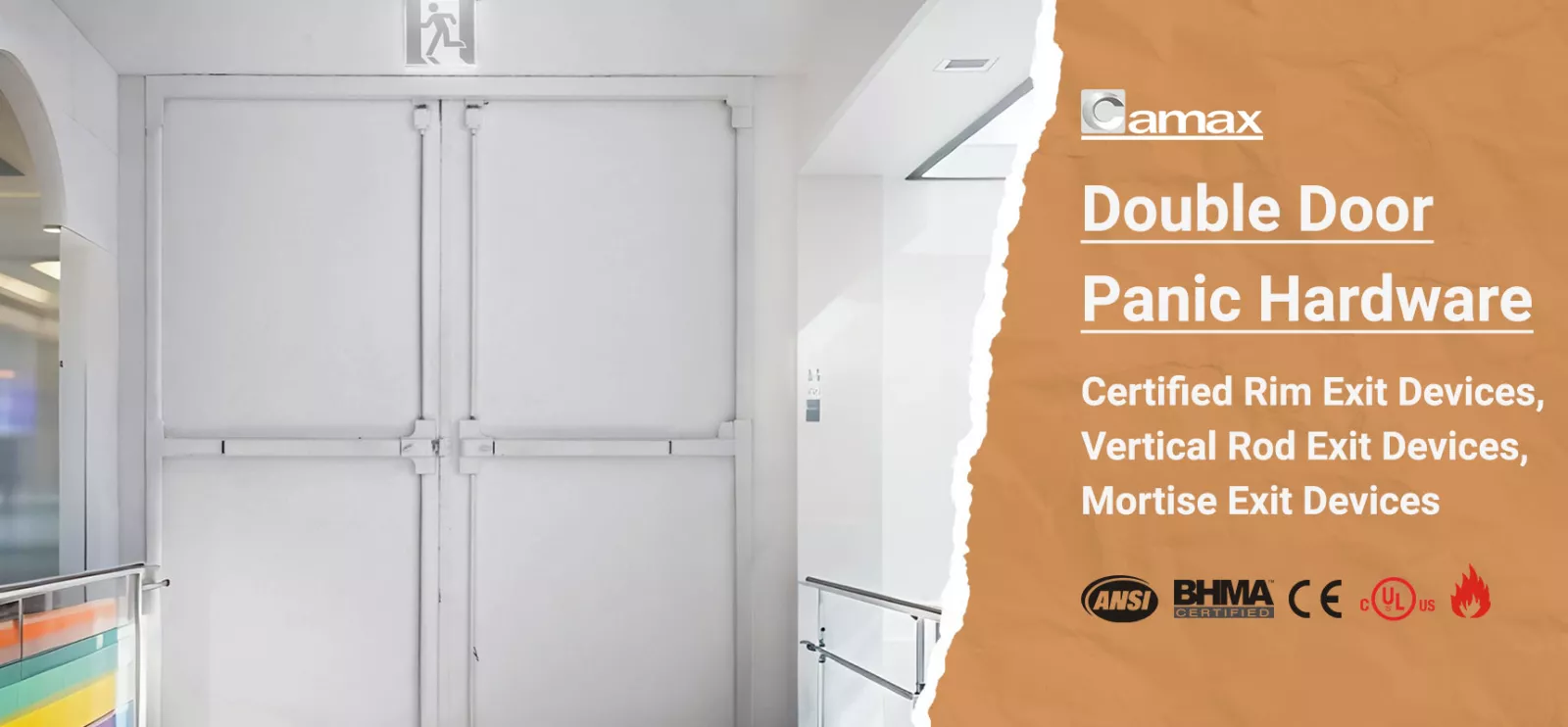
Double door panic hardware plays a vital role in the safety and daily operation of commercial buildings. Offices, retail stores, schools and large public facilities rely on panic bars for double doors to provide smooth and immediate egress during emergencies. When two door leaves operate together, the hardware design becomes far more complex than on a single leaf. Building codes demand reliable performance, accessibility compliance and fire protection integrity.
Whether you're an architect specifying hardware for a new construction project, a facility manager upgrading existing systems, or a contractor installing exit devices, understanding the nuances of panic bars for double doors is essential for ensuring code compliance, maximizing security, and most importantly, protecting lives during emergency evacuations. This comprehensive guide will navigate you through the mechanical options, regulatory requirements, and selection criteria that define professional-grade double door exit solutions.
How Panic Hardware Works for Double Doors?
Panic bars for double doors allow building occupants to exit quickly with a single forward motion. When pressure is applied to the touch bar, the internal mechanical components retract the latch or latches so that the door opens freely.
On a double door, also called a pair of doors, the system must coordinate two moving leaves rather than one. This creates a unique set of engineering considerations that influence which design is appropriate for each type of commercial environment.
1. Why Double Doors Require Specialized Design?
A pair of doors introduces structural and mechanical challenges that do not exist on a single leaf. The two door leaves meet at the center, forming a vertical line called the meeting stile. Because the surface where the latch engages is no longer a fixed jamb, the locking points become mobile. This requires carefully coordinated hardware to ensure reliable alignment and latching.
To achieve proper operation, double door panic hardware often incorporates supporting components such as removable mullions, surface or concealed vertical rods and door coordinators. The selected configuration impacts long-term durability, maintenance complexity, fire rating compatibility and overall security levels.
When choosing a double door with panic bar features, considering these mechanical differences is essential for both safety and compliance.
2. The Difference Between Panic Hardware and Fire Exit Hardware
Panic hardware is typically installed on non-fire-rated openings and is tested to UL 305. Its purpose is to provide free egress during emergencies and smooth operation during daily use. It may include mechanical dogging, which holds the latch retracted for periods of unrestricted traffic, ideal for retail or office environments during business hours.
Fire exit hardware must meet the requirements of both UL 305 and UL 10C. Fire-rated openings must maintain a positive latch at all times to preserve the integrity of the fire barrier. For that reason, fire exit door with panic bar double configurations cannot include mechanical dogging. Only electronic dogging systems are permitted in fire-rated applications and only when they allow the latch to project automatically during a power loss or fire alarm event.

What is the safest panic hardware?
Selecting appropriate double door exit device systems requires understanding the three primary mechanical categories available in the market. Each offers distinct advantages, installation requirements, and performance characteristics that make them suitable for specific applications and building types.
1. Rim Exit Devices with Center Mullions
Rim exit devices remain one of the most widely used solutions for double door applications because they are simple, dependable and easy to maintain. The mechanism mounts directly on the surface of the door and uses a projecting latch that engages a secure strike surface. On paired doors, the latch connects to a center mullion rather than the opposite leaf, creating a stable and reliable anchoring point during emergencies.
This configuration is especially valuable in commercial buildings that require strong performance with minimal maintenance. Camax Hardware manufactures a full line of commercial grade rim exit devices designed for double door systems with optional removable mullions. These products are available with UL listings and CE certifications, ensuring dependable quality for both international and local project requirements. Camax equipment is engineered for heavy use in retail centers, office buildings and public facilities.
- • CE & UL Listed Panic Touch Bar
- • Non-handed
- • Certificate: ANSI/BHMA A156.3 grade 1; UL10C, fire rated
- • Material: Stainless steel, Steel
- • Finish: Stainless steel satin, Silver painted, Polishing, PVD, Black, Red
- • Narrow Stile Door Exit Device
- • Non-handed
- • Compliance: ANSI/BHMA A156.3 grade 1; UL10C, 3-hour fire rating
- • Material: Stainless steel, Steel, Aluminum
- • Modular design, more than 4-point locks are available. Security anti-thrust latch.
- • Narrow Stile Crossbar Exit Device
- • Handed
- • Certificate: EN1125, categoery 3; EN1634-1, 2-hour fire rated
- • Optional: Pullman latch with invisible fixing screws
- • Material: Stainless steel, Steel, Plastic
- • Finish: Stainless steel satin, Silver painted, Polishing, PVD, Black, Red
- • Cross bar Exit Device
- • Non-handed
- • Suitable dor narrow stile door
- • Pullman latch, lateral latch modular design, with anti-thrust function
- • REX and LBM monitoring
- • Material: Stainless steel, Steel
- • Finish: Stainless steel satin, Silver painted, Polishing, PVD, Black, Red
2. Vertical Rod Exit Devices
Vertical rod panic systems are often chosen when designers want to avoid using a center mullion on double doors. These devices lock into the frame at the top and the floor or threshold at the bottom, creating multiple latching points. This design delivers strong resistance against forced entry, wind pressure and continuous heavy traffic. Because the rods engage the building structure directly, they provide a secure and stable anchoring system ideal for high occupancy buildings.
There are two common configurations, surface vertical rod exit devices and concealed rod exit devices. Camax Hardware manufactures both surface and concealed vertical rod devices, including options certified to UL 305 for panic applications and UL 10C for fire rated openings. Camax also offers CE-certified models for global building projects that require European compliance.
Surface vertical rod systems mount visibly on the interior side of the door, making maintenance fast and straightforward.
Concealed vertical rod systems hide the components inside the door, making them a preferred choice for double glass doors or architectural entrances that prioritize a clean aesthetic.
- • Concealed Vertical Rod Exit Device
- • Non-handed
- • Certificate: ANSI/BHMA A156.3 grade 1; UL10C, 3-hour fire rated
- • Material: Stainless steel, Steel, Aluminum
- • Finish: Stainless steel satin, Silver painted, Polishing, PVD, Black, Red
- • Concealed Vertical Rod Exit Device with Panic Bar
- • Non-handed
- • Certificate: EN1125; EN1634-1, fire rated
- • Material: Stainless steel, Steel, Plastic
- • Finish: Stainless steel satin, Silver painted, Polishing, PVD, Black, Red
3. Mortise Exit Devices
Mortise exit devices incorporate the locking mechanism inside a dedicated cavity within the door. This design results in a tight, secure connection and a clean exterior appearance. Mortise systems offer excellent durability, making them suitable for commercial buildings that require a premium and tamper resistant hardware solution. Because the mechanism is built inside the door, the overall strength and stability can be superior to surface mounted components in certain applications.
Although mortise exit devices require more detailed door preparation, they are often chosen for high end commercial interiors or environments where the door hardware must blend with the architectural design. Camax Hardware produces mortise exit devices that meet UL requirements for panic and fire exit use, providing reliable latching and smooth operation. For international projects, Camax also supplies CE-certified mortise devices to help architects and contractors meet local building code requirements.
- • Heavy-Duty Panic Device
- • Non-handed
- • Certificate: ANSI/BHMA A156.3 grade 1; UL10C, 3-hour fire rated
- • Work with ANSI mortise locks.
- • Modular design, more than 4-point locks are available.
- • Security anti-thrust latch.
- • Touch Bar for Mortise Lock or Concealed Vertical Rod
- • Non-handed
- • Compliance: ANSI/BHMA A156.3 grade 1; UL10C fire rated; EN1125, EN1634-1 fire-rated
- • Work with Euro mortise locks complied to EN1125.
- • Material: Stainless steel, Steel.
How to Choose Panic Hardware for Double Doors?
Selecting the right panic push bar double door configuration depends on several considerations involving traffic intensity, code requirements, door material and the intended security level. Below are some expert recommendations to guide your selection.
Choose rim exit devices with a mullion when you want simplicity, lower maintenance and strong latching for general commercial applications.
Choose surface vertical rod systems for the opening that experiences high traffic and needs multiple secure latching points without a mullion.
Concealed vertical rod systems for the architectural design which requires clean lines or for double glass doors.
Choose mortise exit devices when the project requires a premium appearance and built in lockset style operation.
Camax Hardware manufactures a complete range of commercial-grade panic bars for double doors, including rim exit devices, surface and concealed vertical rod types and fire exit hardware for double doors. Camax products are engineered for heavy commercial use and are available with UL listings, CE certifications and varied function options to accommodate different building codes worldwide.
Contact Camax Hardware to Manufacture Your Double Door Panic Hardware
Double door panic hardware is essential for maintaining a safe, reliable and code-compliant exit system. Whether your project involves a rim-style double door push bar with a mullion, a vertical rod configuration or a mortise-style double door exit device, choosing certified commercial hardware ensures long-term durability and smooth operation.
Camax Hardware offers a complete line of panic bars for double doors designed for commercial buildings, schools, hospitals and high traffic facilities. With options available for both panic and fire-rated applications, Camax supports architects, distributors and contractors with dependable hardware backed by global certifications.
If you need expert recommendations for your commercial project or want to explore our double door panic hardware solutions, contact Camax today for professional guidance.
Need help? Contact Camax for a quote!
Discover Camax's door & window hardware with ANSI/BHMA/UL/CE certification today!