

Aluminum doors are widely used in commercial buildings, offices, retail storefronts and modern entrances. Their slim profiles and clean appearance make them practical for many projects, but the available space inside the door can limit the choice of locking hardware. A mortise lock for aluminum door applications must fit the profile while providing the locking function required for the opening. A lock designed for a timber door may not fit an aluminum stile without changes to the preparation or hardware arrangement. For door manufacturers, distributors and project buyers, the decision involves more than the lock's appearance. Camax manufactures door hardware and offers OEM and ODM services for customers developing products for different markets. Understanding the main mortise lock types and their applications is a useful starting point for selecting the right solution.
Table of contents
What Is a Mortise Lock for an Aluminum Door?
A mortise lock has a lock case installed inside a prepared pocket in the door stile. The case contains the operating mechanism and may include a latch, deadbolt or both, depending on the model. A handle or lever operates the latch, while a key or cylinder may control the locking mechanism. The exact operation depends on the lock function.
Unlike a surface-mounted lock, an aluminum door mortise lock sits within the door rather than being attached entirely to its surface. This arrangement gives the door a neat finish, provided the lock case, faceplate, handle and cylinder are compatible with the door construction.
1. How Does a Mortise Lock Work on an Aluminum Door?
When the handle is operated, the spindle transfers movement to the lock mechanism and retracts the latch. Releasing the handle allows the latch to return to its extended position. If the model includes a deadbolt, the key or other specified operating mechanism controls that bolt separately or as part of the designed locking sequence. The strike in the frame receives the latch or bolt when the door closes.
2. Why Does an Aluminum Door Need a Compatible Mortise Lock?
Aluminum door profiles often have limited internal depth and width. The lock case must fit without interfering with the frame, glazing system or other components. Backset, faceplate dimensions, spindle position and cylinder arrangement also affect compatibility. This is why buyers should confirm the door drawing and lock specification before ordering rather than assuming that all door locks for aluminum doors are interchangeable.
Narrow Stile Mortise Locks for Aluminum Doors
1. What Is a Narrow Stile Mortise Lock?
A narrow stile mortise lock is designed for doors with a relatively slim vertical frame section. It is commonly considered for aluminum storefront doors and some glazed entrance systems, where the stile leaves less room for a conventional lock case. The lock must accommodate the available space while maintaining the required latch or deadbolt operation.
2. Why Do Aluminum Doors Need Narrow Stile Mortise Locks?
A standard lock may be too wide or too deep for a slim aluminum profile. A mortise lock for narrow stile aluminum door applications needs dimensions and fixing positions suited to that particular door system. A smaller lock case alone does not guarantee compatibility. The spindle, cylinder, faceplate and strike must also align correctly.
3. Narrow Stile Mortise Locks for Storefront and Glass Doors
A narrow stile mortise lock for aluminum storefront door projects can be used where the door profile supports the required lock preparation. For an aluminum glass door, the lock is generally fitted into the aluminum stile rather than the glass itself. The door manufacturer should confirm that the profile can accommodate the mechanism and that the selected hardware works with the glazing and frame arrangement.
Before specifying a lock, check the available stile dimensions, lock case drawing and required locking function. These details help avoid costly adjustments after the door has been fabricated.

Types of Mortise Locks for Aluminum Doors
Different openings call for different locking functions. Some need a simple latch for everyday access, while others require a deadbolt, a combined latch and deadbolt, or a lock designed to work with panic exit hardware. The following Camax narrow stile mortise locks represent different mortise lock configurations. Confirm the applicable function and dimensional drawing for the specific model before specifying it.
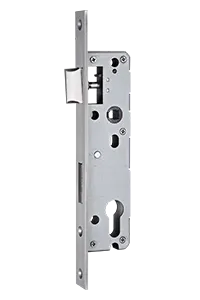
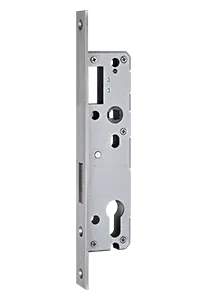
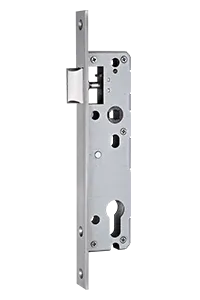
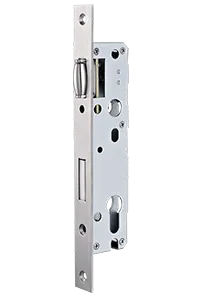
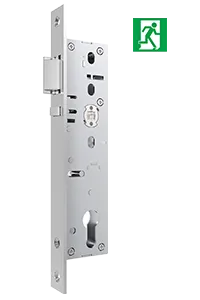
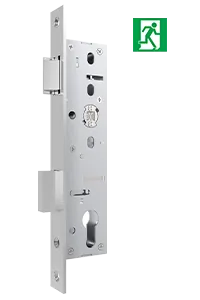
1. Mortise Locks for Classroom, Office and Internal Doors
Internal doors in offices and commercial buildings may need controlled entry without the additional locking functions required at an external entrance. A classroom or office mortise lock should be selected according to the required operation, access arrangement and door use. Camax's mortise lock 35-92CR is a model to consider for projects requiring this type of mortise lock configuration. Check its function schedule and installation dimensions against the project specification.
When selecting a mortise lock for aluminum office door applications, also check the lever handle, cylinder arrangement and frequency of use. These details help determine whether the chosen configuration suits the opening.
- • Classroom Lock
- • Lock case seal, zinc plated
- • Latch made of stainless steel 304
- • 8mm square steel follower in steel
- • Hole for standard fixings
- • Non-handed
2. Mortise Locks for Panic and Exit Device Applications
Some commercial openings require a mortise lock that operates as part of a panic or exit device assembly. These applications are different from ordinary keyed entrance doors because the hardware must support the intended exit function and comply with the requirements applicable to the complete opening. Camax's mortise lock 35-92/65TR is a model family to evaluate for projects involving mortise lock and exit device configurations.
For commercial aluminum door locks, confirm compatibility with the selected exit device, door preparation and any applicable fire or life safety requirements. A mortise lock should not be treated as an approved panic exit solution unless the complete hardware arrangement is suitable for that application.
- • Exit Lock
- • Panic function: Key to unlock, Non-handed, Without strike plate
- • In unlocked position: Latch bolt is operated from both sides by lever handle/key action
- • In locked position: Inside lever handle retracts latch and dead bolt simultaneously; Deadbolt operated by key
- • Compliance with: EN12209, EN179, EN1125
3. Narrow Stile Sash Locks with Latch and Deadbolt
A sash lock combines a spring latch with a deadbolt in one lock case. This configuration is useful when a door needs convenient latching during normal use and a separate deadbolt locking function when required. It can be considered for suitable entrance doors and commercial applications where the door profile accommodates the case.
Camax's mortise lock 30-85A/92A and 35-85A/92A models are options to evaluate for projects requiring this type of combined function. Confirm the lock's operating details, cylinder requirements and dimensions before ordering.
- • Narrow Lock
- • Lock case seal, zinc plated
- • Latch and bolt made of stainless steel 304
- • Bolt projection, double throw, 16mm
- • Hole for standard fixings
- • Non-handed
- • EN12209 in preparation
4. Single Deadbolt Mortise Locks
A single deadbolt mortise lock is designed around a deadbolt locking function rather than a combined latch and deadbolt arrangement. It may suit selected commercial openings where the door and access design call for this type of locking. The strike, cylinder and method of operation must match the intended application.
Buyers looking for a commercial aluminum door mortise lock with deadbolt should check how the door is latched when unlocked and whether a separate latch or additional hardware is required. Camax's mortise lock 30-85D/92D and 35-85D/92D models can be evaluated against the project requirements.
- • Narrow Dead Lock
- • Lock case seal, zinc plated
- • Bolt made of stainless steel 304
- • Bolt projection, double throw, 16mm
- • Hole for standard fixings
- • Non-handed
- • EN12209 in preparation
5. Roller Latch Mortise Locks for Handle-Free Storefronts
A roller latch uses a rolling component to hold a door closed against a compatible strike. It can be considered for selected storefront or interior applications where the door design does not call for a conventional spring latch operated by a lever. The roller and strike must be correctly aligned for smooth closing and reliable retention.
Camax's mortise lock 30-85/92P and 35-85/92P models are options for projects that require a roller latch mortise lock. Confirm whether the door needs additional locking hardware, since a roller latch alone should not be assumed to provide the security of a deadbolt.
- • Roller Lock
- • Lock case seal, zinc plated
- • Roller latch made of stainless steel 304
- • Hole for standard fixings
- • Non-handed
- • EN12209 in preparation
6. Narrow Latch Mortise Locks
A narrow latch lock is designed around a latch function in a lock case intended for compatible door profiles. It may be suitable for openings where straightforward latching is required and a separate deadbolt is not part of the selected configuration. The correct choice depends on the door's use and access requirements.
Camax's mortise lock 30-85L/92L and 35-85L/92L models can be considered when specifying this type of lock. Compare the lock case drawing with the aluminum profile and confirm handle, spindle and strike compatibility before finalizing the order.
- • Narrow Latch Lock
- • Lock case seal, zinc plated
- • Latch made of stainless steel 304
- • Hole for standard fixings
- • Non-handed
- • EN12209 in preparation
Mortise Lock Applications for Different Aluminum Doors
1. Mortise Locks for Aluminum Front Doors
Aluminum front door locks may need a latch, a deadbolt or a combined locking arrangement, depending on the building and access requirements. For an external entrance, buyers should consider the intended level of security, cylinder compatibility, door construction and the way the door is used each day. A suitable mortise lock should fit the profile without compromising the operation of the door.
2. Mortise Locks for Aluminum Office Doors
Office doors can require different functions depending on whether they separate work areas, meeting rooms or controlled-access spaces. A mortise lock for aluminum office door applications should match the access policy and handle arrangement. Where electronic access control is planned, verify compatibility with the complete system rather than selecting the lock in isolation.
3. Aluminum Bathroom Door Locks
An aluminum bathroom door lock generally needs a privacy function suitable for the application. Check the required inside locking method and outside emergency release arrangement, where applicable. Not every mortise lock includes a privacy function, so confirm the operating details before purchase.
4. Commercial Aluminum Doors with Deadbolts
Commercial entrances may require a deadbolt for the intended locking arrangement. The lock should be compatible with the frame, strike and cylinder, and the door must close and align correctly for the bolt to engage. If the opening is part of a fire door or an escape route, check the applicable requirements before specifying the hardware.
How to Choose the Right Mortise Lock for an Aluminum Door
1. Check the Aluminum Profile and Lock Case Dimensions
Start with the door profile drawing. Confirm the space available for the lock case, faceplate and fixing points, as well as the position of the spindle and cylinder. An existing cutout does not guarantee compatibility with another lock. This is particularly important for a narrow stile mortise lock, where small dimensional differences can affect installation.
2. Confirm the Backset and Cylinder Type
The backset and cylinder arrangement must match the lock specification and door preparation. If the project uses an aluminum euro profile system, verify that the lock is designed for the intended euro profile cylinder and that the cylinder dimensions suit the door and escutcheon arrangement. Do not assume that every mortise lock accepts the same cylinder.
3. Match the Lock to the Handle and Door Function
When sourcing aluminum door locks and handles, treat them as a compatible hardware set. Check the spindle size, fixing centres, handle operation and the lock's function. A sash lock, single deadbolt, roller latch and narrow latch lock serve different purposes. Select the function first, then verify the associated hardware.
4. Consider Materials, Finishes and Durability
The lock finish should suit the door hardware and the project's appearance requirements. For frequently used commercial doors, also consider operating cycles, maintenance access and the manufacturer's product documentation. Where corrosion resistance or specific performance standards are required, request the relevant material details and supporting documents rather than relying on appearance alone.
Before requesting a quotation:
Prepare the door profile drawing, required lock function, backset, cylinder type, handle specification, finish, estimated quantity and packaging requirements. These details help the manufacturer assess compatibility and identify any questions before production.
Camax Mortise Locks for Aluminum Doors: OEM and ODM Services
Camax manufactures door hardware for commercial applications and provides OEM and ODM services for customers developing their own product ranges. For a mortise lock for aluminum door project, the starting point is the required lock function and the dimensions of the intended door profile. Camax's mortise locks cover different configurations, including sash locks, deadbolt locks, roller latch locks and narrow latch options.
OEM projects can involve customer branding and product presentation, while ODM cooperation can address product configuration and development requirements subject to technical feasibility. The available options depend on the selected model, tooling requirements and order specifications.
Distributors, importers and door manufacturers can provide their drawings, required functions, cylinder details, finish preferences and target quantities when making an inquiry. This gives Camax team a clearer basis for checking product suitability and discussing the next steps. For projects with non-standard dimensions or specific market requirements, confirm feasibility before finalizing the specification.
Choose the Right Mortise Lock for Your Aluminum Door Project
The right lock depends on the door profile, locking function, cylinder arrangement and hardware compatibility. Whether you need a narrow stile sash lock, a deadbolt model or another mortise lock configuration, confirm the dimensions and operating requirements before ordering. Camax offers a range of mortise lock options and OEM and ODM services for commercial door hardware projects. Contact Camax with your drawings and requirements to discuss suitable products for your market.
Need help? Contact Camax for a quote!
Discover Camax's door & window hardware with ANSI/BHMA/UL/CE certification today!