

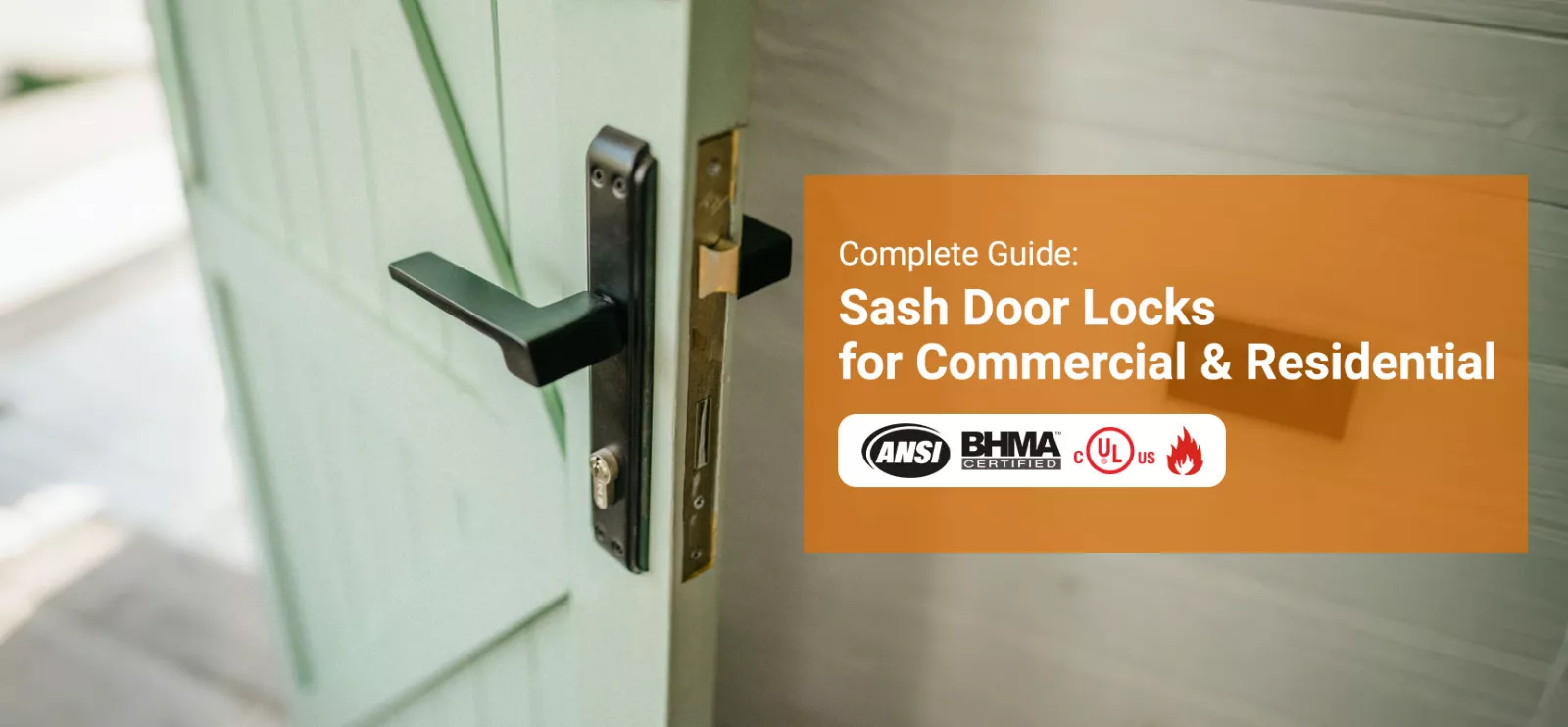
Across the UK, Europe, and many commercial building standards, the sash door lock continues to be one of the most widely used door locking solutions. Whether installed on internal wooden doors, commercial entrances, or fire-rated doors, sash locks offer a practical balance between security, usability, and compatibility with door handles.
Unlike a simple latch or a standalone deadlock, a mortise sash lock combines both functions into one compact mechanism. This is exactly why architects, contractors, and door manufacturers still rely on it today.
In this article, we’ll break down what a sash door lock is, how it works, how it compares with other lock types, and how to choose the right solution for different applications, while also introducing Camax as a reliable OEM and ODM sash lock manufacturer.
Table of contents
What Is a Sash Door Lock?
A sash door lock is a type of mortise lock that combines a spring latch and a deadbolt within one lock case. It is typically operated by both a handle and a key, making it more secure than a latch-only mechanism.
What is a sash lock on a door? When installed, you'll recognize it by the presence of both a door handle (or knob) and a keyhole on the door face. The handle controls the beveled latch that keeps the door closed during normal use, while the key activates the square deadbolt for additional security.
1. How Dose a Sash Door Lock Work?
The working mechanism is elegantly simple. When you press down the handle, an internal spindle retracts the spring-loaded latch bolt, allowing the door to open. Release the handle, and the latch automatically springs back into position, catching in the strike plate. This is your everyday operation—no key needed.
When you insert and turn a key, you're engaging an entirely separate mechanism that throws a solid square bolt (the deadbolt) into the frame. This provides the real security. A typical sash door lock with key won't allow the deadbolt to be thrown while the door is open, and once locked, the latch operation is often disabled to prevent forced entry attempts.
Tips: Why is this safer than a regular door lock?
Because even if someone can manipulate the latch through credit card sliding or other bypass methods, the deadbolt remains firmly in place. The dual-action design creates two independent barriers against unauthorized entry.
Sash Lock vs Deadlock vs Latch: Key Differences Explained
Understanding the difference between a sash lock, a deadlock, and a latch helps avoid incorrect hardware selection—especially for commercial and fire-rated doors.
What is the difference between a sash lock and a deadlock? A deadlock only has the key-operated bolt—there's no latch mechanism. This means you must use a key every single time you want to open or close the door. That's perfect for a storage room or external gate where maximum security trumps convenience, but impractical for an office door or bathroom door where constant key use would be frustrating.
Why use a sash lock instead of a latch? A latch-only mechanism provides convenience but minimal security. The beveled latch bolt can often be pushed back with a credit card or a thin tool. For any door requiring actual security—bedrooms, offices, external doors—you need the deadbolt function that only a sash lock or deadlock provides.
| Sash Door Lock | Deadlock | Latch |
|---|---|---|
| Uses both handle and key | Key-operated only | Handle-operated only |
| Offers convenience and security | Higher security but less convenient | No key security |
| Suitable for internal, entrance, and some external doors | Common on external doors | Best for low-security internal doors |
Tips: Fire-Rated and Commercial Considerations
In fire-rated doors and high-traffic commercial environments, lock selection is a regulatory requirement rather than a design preference. A fire-rated sash door lock must preserve the door’s fire-resistance performance while still allowing safe and reliable egress during emergencies. In commercial use, sash door locks are also subjected to frequent operation, making durability and tested performance essential qualities that residential hardware cannot deliver.
Fire-rated sash door locks are required whenever a door is specified as fire-resistant in building plans, whether for 30-, 60-, or multi-hour ratings. Importantly, compliance depends on the entire door assembly. The door leaf, frame, hinges, lock, and seals must be certified together. A fire-rated lock alone cannot ensure fire protection if the rest of the system is not compliant.
Common Types of Sash Door Locks and Their Applications
1. 3 Lever vs 5 Lever Sash Door Locks
The "lever" designation refers to the internal mechanism that must be aligned correctly before the key can throw the bolt. More levers mean more security—it's that straightforward.
A 3 lever sash lock is typically used on internal doors where moderate security is sufficient, such as bedrooms or offices.
A 5 lever sash lock or five lever sash lock provides higher security and is commonly specified for entrance doors and external applications.
Insurance companies and building standards recognize that three lever mechanisms can be picked or bumped relatively easily by someone with basic locksmith knowledge. The five lever design creates enough complexity that casual break-in attempts are effectively thwarted. For any door providing external access or securing valuable assets, the five-lever sash lock is the appropriate minimum standard.

2. Euro Sash Locks and Euro Profile Cylinders
Rather than the traditional lever mechanism, a euro sash lock uses a replaceable cylinder that follows European (Euro profile) standards. The cylinder slides into the lock case from the face of the lock, held in place by a screw.
Why is the Euro profile common in commercial buildings? Commercial properties often need sophisticated access control. With euro sash locks, you can implement master key hierarchies where the facilities manager has access to everything, department heads access their areas, and employees only their specific offices. If an employee leaves or a key is lost, you replace that one cylinder rather than re-keying an entire building.
How to Choose the Right Sash Door Lock for Your Project?
Selecting the right sash door lock depends on several practical factors:
Door material (wood or steel)
Door thickness
Backset and case size
Internal or external use
Fire-rated requirements
Traffic level (residential or commercial)
If you are wondering which sash door lock should I buy for a wooden door, a stainless steel mortise sash door lock with proper backset is usually the safest option.
1. Camax Stainless Steel and Fire-Rated Sash Locks
Camax manufactures stainless steel sash door locks using 304 stainless steel latch and bolt, suitable for entrance doors and fire-rated doors.
Camax sash locks are CE certified and tested with up to 4-hour fire rating, making them suitable for both residential and commercial fire door applications, including fire-rated euro profile sash door lock solutions.
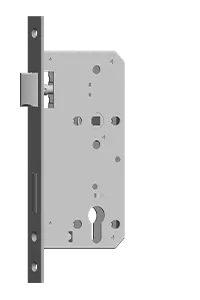
- • Sash Lock
- • Certificate: CE, 4-hour fire rated; EN12209:3X91b0G2BC10
- • Lock case seal, zinc plated
- • Latch and bolt made of stainless steel 304
- • Bolt projection, double throw, 20mm
- • Non-handed
- • Sash Lock
- • Lock case seal, zinc plated
- • Latch and bolt made of stainless steel 304
- • Bolt projection, double throw, 20mm
- • 8mm square steel follower in steel
- • Hole for standard fixings
- • Non-handed
2. Working With Camax as Your Sash Lock Manufacturing Partner
For architects, contractors, and facility managers working on commercial projects, partnering directly with a manufacturer brings clear technical and operational benefits. Camax acts as a long-term manufacturing partner rather than a simple catalog supplier. With a dedicated focus on mortise locks and architectural hardware, we understand the practical challenges of real projects, from non-standard backsets to special fire-rated door requirements.
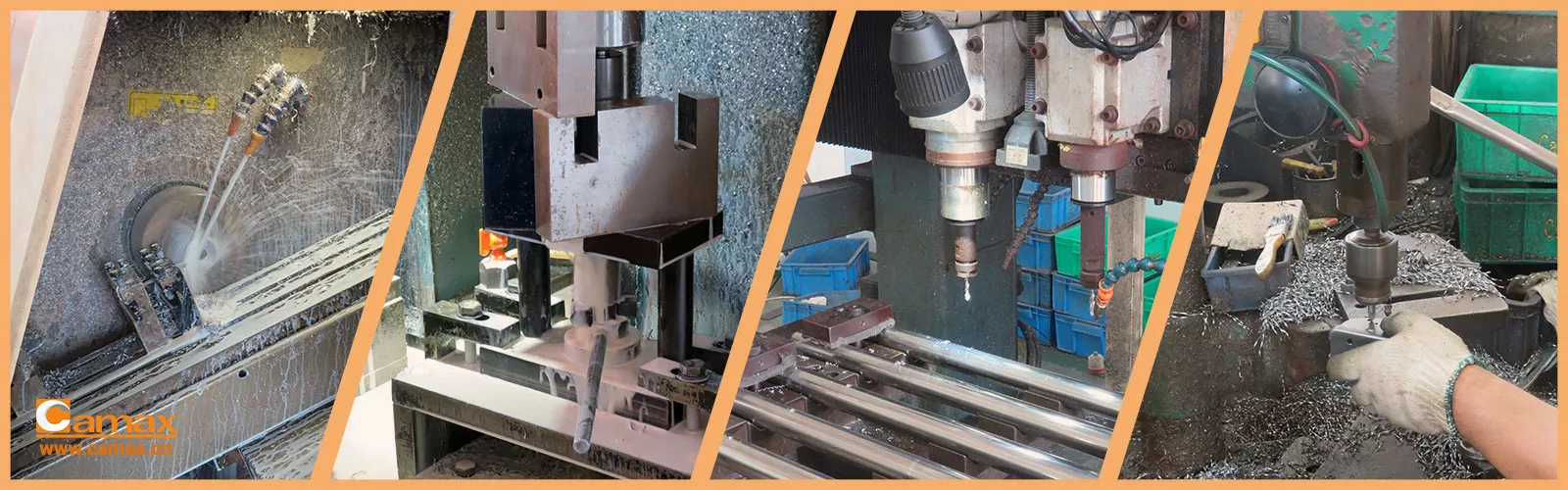
Commercial doors require sash door locks designed for high-traffic use, featuring reinforced latch and bolt structures, durable strike plates, and proven cycle performance. Heavy-duty commercial sash door locks should be engineered for hundreds of thousands of operations. Camax supports these needs through OEM and ODM services, offering customized dimensions, coordinated finishes, door-specific adaptations, and reliable project-level technical support.
Contact Camax and Choose the Right Sash Door Lock With Confidence
The enduring popularity of the sash door lock across European and British construction isn't accidental. This proven design balances security, convenience, and reliability in a way that modern alternatives struggle to match. Whether you're securing a bathroom sash lock for privacy, specifying commercial sash door locks for a new office building, or ensuring compliance with fire-rated sash door lock requirements, understanding the distinctions between lever types, euro profiles, and specialized applications ensures you make informed decisions.
Camax specializes in manufacturing mortise sash locks for commercial, fire-rated, and high-security applications. Our engineering team works directly with architects, contractors, and facility managers to ensure correct specification and long-term performance.
Contact Camax today to discuss your project requirements, request technical specifications, or explore custom solutions for non-standard applications.
Need help? Contact Camax for a quote!
Discover Camax's door & window hardware with ANSI/BHMA/UL/CE certification today!