


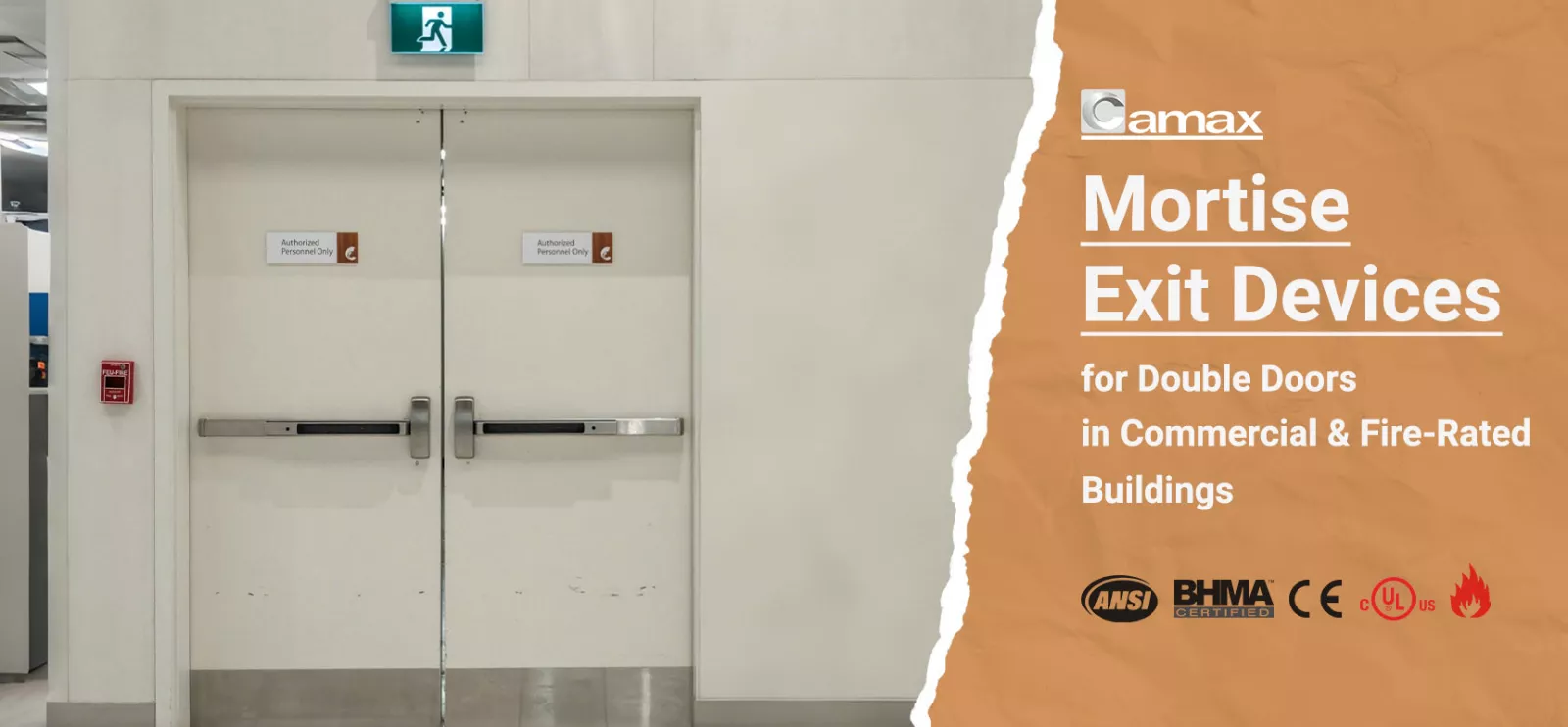
Double doors are common in commercial buildings where wider openings, higher traffic flow, and strict life-safety requirements must be met. Choosing the right mortise exit device for double door applications is not only about aesthetics, but also about code compliance, durability, and reliable emergency operation.
This article explains how mortise exit devices work on double doors, when they are the right choice, how they compare to rim exit devices, and what to consider for fire-rated and code-compliant installations. If you are planning a commercial or institutional project, the following sections will help you make informed decisions.
Table of contents
What Is a Mortise Exit Device for Double Doors?
A mortise exit device for double door is a type of panic hardware that integrates a push bar mechanism with a mortise lock installed inside the door leaf. Unlike surface-mounted rim devices, the locking mechanism is concealed within the door, providing a cleaner architectural appearance while maintaining emergency egress functionality.
In simple terms, a mortise panic device for doors allows occupants to exit by pushing the bar, which retracts the internal mortise latch in one motion. On double door systems, this setup typically involves an active leaf equipped with the mortise exit device and a passive leaf secured by vertical rods or concealed latching hardware.
As an emergency exit device double door solution, mortise exit devices are commonly specified where both appearance and performance matter, such as hotels, offices, hospitals, and educational facilities.

Why Mortise Exit Devices Are Popular in Commercial Double Door Systems?
For many designers and specifiers, a commercial mortise exit device double door solution offers clear advantages over surface-mounted alternatives.
One key reason is visual integration. Because the locking body sits inside the door, mortise exit devices present a streamlined look that aligns well with modern architectural designs. This makes them especially suitable for customer-facing environments where hardware should be functional yet unobtrusive.
From a performance standpoint, a heavy duty mortise exit device for double doors is designed to handle frequent use without compromising smooth operation. The internal components are protected from impact and tampering, which contributes to longer service life in high-traffic buildings.
Additionally, mortise exit devices are naturally compatible with the mortise lock formats already common in commercial construction. This compatibility simplifies coordination with trims, cylinders, and access control components, making them a strong candidate for projects seeking the best mortise exit device for double doors in terms of both function and design.
Mortise Exit Device vs Rim Exit Device on Double Doors
One of the most frequently asked questions in commercial hardware planning is the difference between a rim and mortise exit device for double doors.
Rim exit devices are surface-mounted and latch against the door frame. They are generally easier to install and maintain, especially on non-rebated doors. Mortise exit devices, on the other hand, require door preparation but offer a more integrated appearance.
Door configuration also plays a role. Mortise devices are better suited to non-rebated double doors, while rebated doors often favor vertical rod or surface-mounted solutions due to latch alignment challenges. When deciding whether you need a mortise exit device or a panic bar for your double doors, factors such as door material, fire rating, and long-term maintenance should be considered.
From a project cost perspective, mortise devices may involve higher initial installation effort, but they often reduce long-term maintenance and aesthetic compromises.
Fire-Rated and Code-Compliant Mortise Exit Devices for Double Doors
Not every panic device is suitable for fire-rated applications. A fire rated mortise exit device double door must meet specific standards to ensure it performs reliably under fire conditions.
In many jurisdictions, a UL listed mortise exit device double door is required for fire-rated assemblies. UL 305 covers panic hardware operation, while UL 10C addresses fire endurance of the door assembly. ANSI/BHMA A156.3 further defines performance and durability expectations for commercial-grade exit devices.
A common misconception is that any panic bar automatically meets code requirements. In reality, a code compliant mortise exit device double door must be tested as part of a complete door assembly and installed according to building code requirements for double door panic hardware.
How Does a Mortise Exit Device Operate on Double Doors?
Understanding how a mortise exit device works on double doors helps ensure proper specification and installation.
When the push bar is pressed, the internal mechanism retracts the mortise latch, allowing the active leaf to open immediately. The passive leaf is typically controlled by vertical rods or concealed latches that release automatically or remain fixed depending on the system design.
Door coordinators ensure that the passive leaf closes first, maintaining latch alignment and fire performance. Strikes, trims, and cylinders must be carefully selected to ensure smooth interaction between all components.
When Mortise Exit Devices Are Not the Best Choice?
Although mortise exit devices offer many advantages, they are not suitable for every double door configuration.
Rebated double doors, for example, often create alignment challenges for mortise latches. In these cases, surface-mounted vertical rod systems may provide more reliable operation. Using a mortise panic bar on double doors with deep rebates can increase installation risk and long-term maintenance issues.
Choosing the right hardware requires balancing appearance with engineering practicality, especially in fire-rated environments.
Camax Hardware: Manufacturing Partner for Mortise Exit Devices
Camax is a professional manufacturer specializing in commercial exit devices, including mortise exit devices for double door applications. Rather than acting as a simple product supplier, Camax works as a long-term manufacturing partner for brands, distributors, and project contractors.
The product range includes fire-rated mortise panic hardware and heavy-duty solutions suitable for both steel and wood doors. Camax supports OEM and ODM services, offering customized trims, project-specific strikes, and compatibility with rebated or non-rebated door configurations.
1. ANSI-Certified Mortise Exit Devices for Double Doors
For the North American market, Camax's CMP455 represents their flagship ul listed mortise exit device double door solution. This device has been rigorously tested and certified to ANSI/BHMA A156.3 Grade 1 standards—the highest performance grade available—ensuring it can withstand the demanding requirements of high-traffic commercial applications.
The CMP455 carries a UL 10C three-hour fire rating, making it suitable for the most demanding fire separation applications. Constructed from high-grade stainless steel and steel components, the device is available in multiple finish options including stainless steel satin, silver painted, polishing, PVD coating, black, and red, allowing specification that matches virtually any interior design palette.
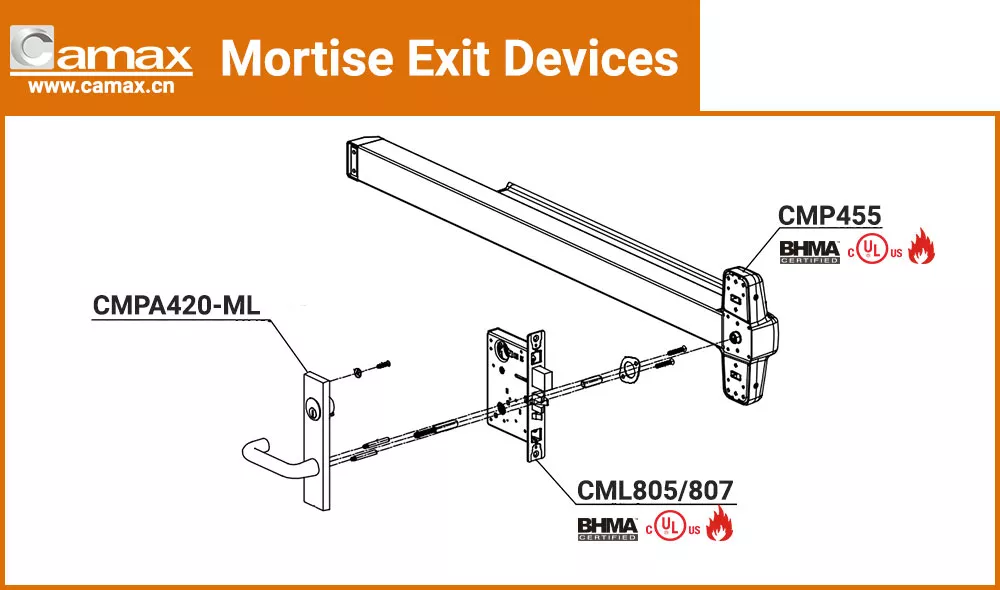
For complete double door systems, the CMP455 can be paired with Camax's CMP466 exit device with concealed vertical rods. This coordination ensures both doors function harmoniously as a complete double door panic hardware with mortise lock system, with the vertical rod device on the inactive door working seamlessly with the mortise device on the active door.
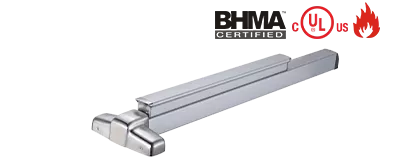
- • Heavy Duty Panic Exit Device
- • Non-handed
- • Certificate: ANSI/BHMA A156.3 grade 1; UL10C, 3-hour fire rated
- • Material: Stainless steel, Steel, Aluminum
- • Finish: Stainless steel satin, Silver painted, Polishing, PVD, Black, Red
- • Concealed Vertical Rod Exit Device
- • Non-handed
- • Certificate: ANSI/BHMA A156.3 grade 1; UL10C, 3-hour fire rated
- • Material: Stainless steel, Steel, Aluminum
- • Finish: Stainless steel satin, Silver painted, Polishing, PVD, Black, Red
- • ANSI Commercial Mortise Locks
- • Certificate: BHMA listed; ANSI/BHMA A156.13-2020, Grade 1 (1,000,000); UL10C fire rated, 3 hours
- • Multi functions in one case
- • Field-reversible handing without opening lock case
2. CE-Certified Mortise Exit Devices for Double Doors
European markets and international projects requiring CE certification can specify Camax's CMP355 crossbar mortise exit device. This model is certified to EN1125 category 3 standards for panic exit devices and carries an EN1634-1 two-hour fire rating, making it compliant with European building codes and fire safety requirements.

The CMP355 works in conjunction with the CMP366 exit device with concealed vertical rods for complete double door applications, providing a coordinated double door mortise panic bar with trim system that meets European performance and safety standards.
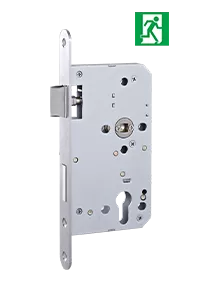
- • Cross bar exit device for narrow stile door, work with mortise lock CC 72/85/92mm
- • Handed
- • Certificate: EN1125, category 3; EN1634-1, fire-rated 2 hours
- • Material: Stainless steel, Steel, Plastic
- • Finish: Stainless steel satin, Silver painted, Polishing, PVD, Black, Red
- • Concealed Vertical Rod Exit Device with Panic Bar
- • Non-handed
- • Certificate: EN1125; EN1634-1, fire rated
- • Material: Stainless steel, Steel, Plastic
- • Finish: Stainless steel satin, Silver painted, Polishing, PVD, Black, Red
- • Exit Lock
- • Panic function: Key to unlock; Non-handed; Without strike plate.
- • In unlocked position: Latch bolt is operated from both sides by lever handle/key action.
- • In locked position: Inside lever handle retracts latch and dead bolt simultaneously; Deadbolt operated by key.
- • Compliance with: EN12209; EN179; EN1125
Supporting Hardware for Mortise Exit Devices on Double Doors
1. Cylinders
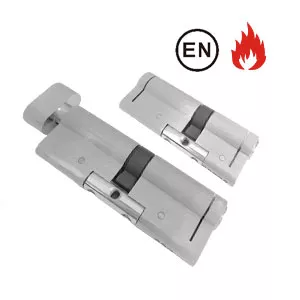
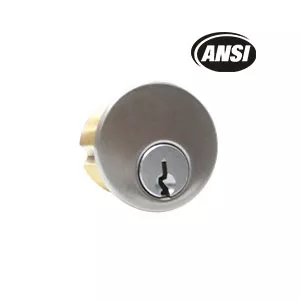
The mortise lock body requires a cylinder to enable keyed access from the exterior. Camax manufactures different cylinder types compatible with both ANSI mortise locks and EN mortise locks, allowing integration with existing key systems or new master key hierarchies.
Camax's Mortise Locks
View All Cylinders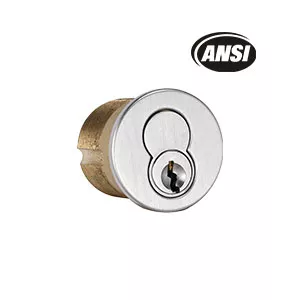
ACC

Euro Cylinders
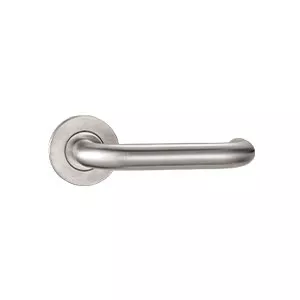
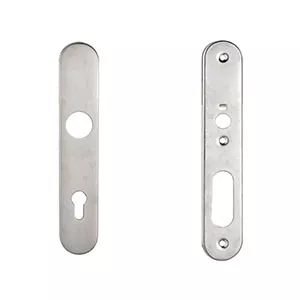
2. Trims and Lever Handles
The exterior trim is what building occupants interact with daily, making it both a functional and aesthetic component. Camax manufactures premium stainless steel trims and lever handles specifically designed to integrate with their mortise exit devices.
Their trim products carry appropriate certifications—UL listing for North American applications and EN1634 and EN1906 certification for European markets. This ensures the trim doesn't compromise the fire rating or functionality of the complete door assembly.
Camax's Mortise Locks
View All Trims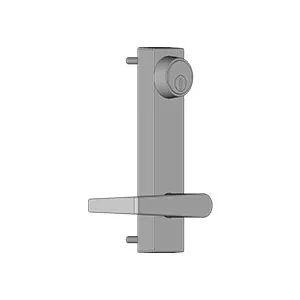
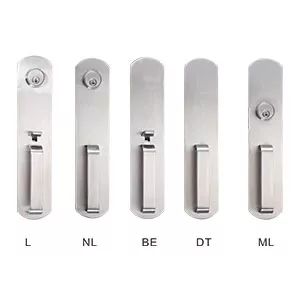
CMPA450 Series

Contact Camax for Mortise Exit Device Solutions
Mortise exit devices play a critical role in the safety, appearance, and compliance of commercial double doors. Choosing the right solution requires not only the correct product, but also a manufacturing partner who understands project demands and regulatory requirements.
Contact Camax today to discuss your mortise exit device for double door projects, request technical support, or receive a customized quotation tailored to your application.
Need help? Contact Camax for a quote!
Discover Camax's door & window hardware with ANSI/BHMA/UL/CE certification today!