


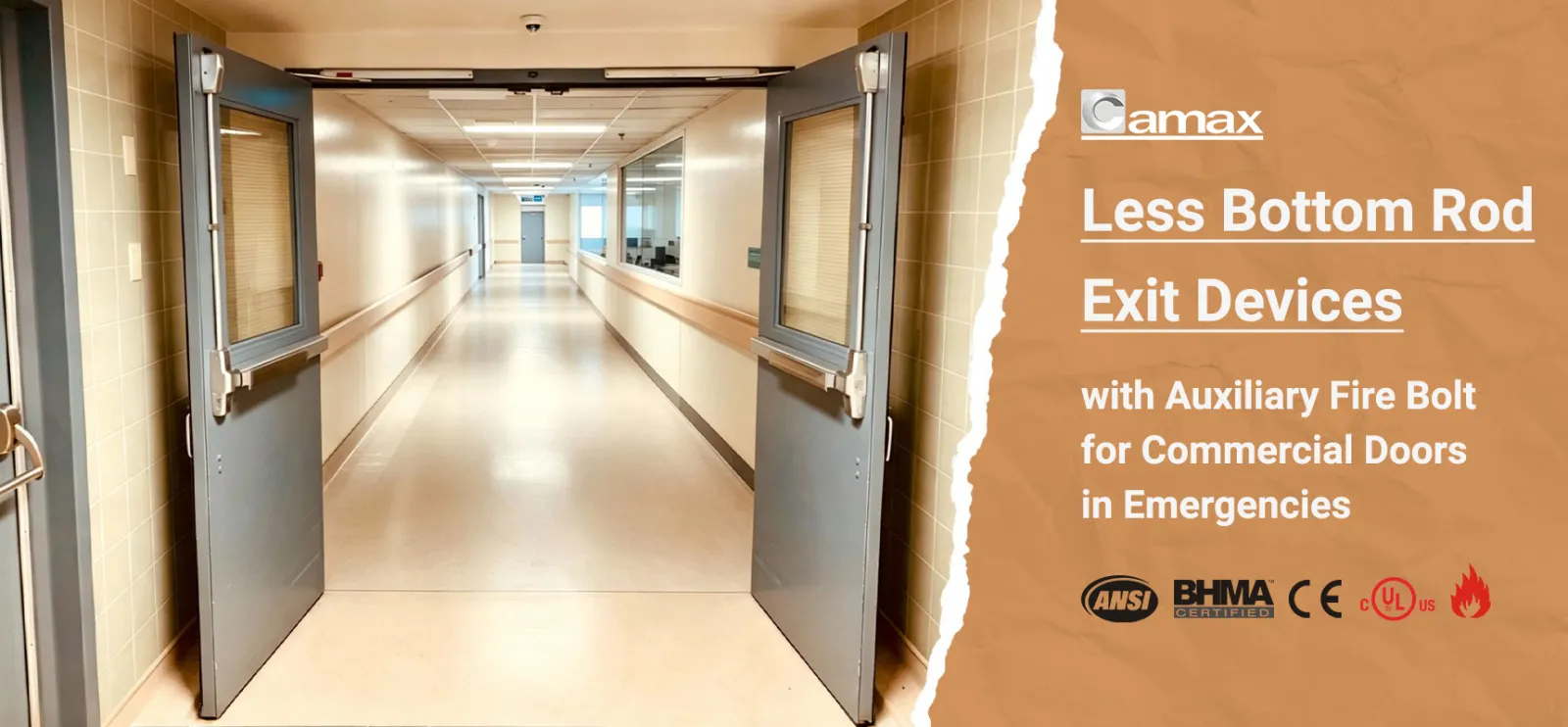
An LBR exit device, also known as a less bottom rod exit device, is a vertical rod exit device designed without the conventional bottom rod. Instead of using vertical rods and latches at both the top and bottom of the door, the LBR configuration operates the upper latch while leaving the lower section of the door free from a vertical rod.
This design can provide a cleaner door appearance, reduce hardware near the floor, simplify floor maintenance and improve the usability of doors in selected commercial environments. An exit device less bottom rod configuration can be particularly useful where a conventional bottom rod may interfere with thresholds, floor coverings, cleaning equipment or the surrounding door environment.
The terms vertical rod exit device without bottom rod, surface vertical rod less bottom rod and LBR exit device generally refer to this type of hardware configuration. It is commonly considered for commercial, institutional and architectural doors where reliable emergency egress is required together with a cleaner lower door area.
Table of contents
What Is an LBR Exit Device?
LBR stands for "Less Bottom Rod". In practical terms, it describes a vertical rod exit device where the bottom rod and its matching floor strike have been left out of the design. The device still uses a chassis connected to the touch bar, but the operating mechanism is built around the top latch only.
A typical surface LBR system may include a touch bar or push pad, central chassis, top rod, top latch, operating linkage, mounting brackets and a top strike. The exact construction varies between manufacturers and product families. Fire rated configurations may also require additional components depending on the certification and listed door assembly.
Important:
LBR does not mean that the entire vertical rod mechanism has been removed. The term specifically describes a vertical rod exit device configuration without the bottom rod. An LBR device should be engineered and supplied as an appropriate LBR configuration rather than created by simply removing the bottom rod from a standard device.
This distinction is important when comparing an LBR exit device with concealed vertical rod exit device, mortise exit devices and other types of panic hardware. Each design has a different operating mechanism and installation requirement.
1. How Does a Less Bottom Rod Exit Device Work?
Understanding how does LBR exit device work starts with the relationship between the touch bar, central chassis, top rod and top latch. When the door is closed, the top latch secures the door in the frame. When an occupant pushes the touch bar, the internal mechanism transfers the movement to the upper latch and releases the door.
The exact internal design varies from one manufacturer to another, so it is worth checking product documentation for the specific device you are working with. It also helps to understand that an LBR exit device is not simply a standard vertical rod unit with the bottom rod pulled out in the field. It is engineered from the ground up around a top latch only configuration, with the door preparation, chassis, and linkage designed to work correctly without a bottom rod. Removing a bottom rod from a standard device that was never designed for that configuration is not the same thing and is not a safe modification.
2. What Is the Difference Between LBR and Standard Exit Device?
One common question is what is the difference between LBR and standard exit device hardware? The main difference is the lower operating mechanism. A standard vertical rod device generally uses both upper and lower rods, while an LBR exit device eliminates the conventional bottom rod.
| Feature | Standard Vertical Rod | LBR Exit Device |
|---|---|---|
| Top rod | Yes | Yes |
| Bottom rod | Yes | No |
| Top latch | Yes | Yes |
| Bottom latch | Typically included | Eliminated |
| Hardware near the floor | More | Less |
| Cleaning access | More restricted | Easier |
| Lower door appearance | More visible hardware | Cleaner appearance |
| Application | Broad range | Selected applications |
| Fire door suitability | Depends on product certification | Depends on product certification |
LBR should therefore not be considered a universal replacement for standard vertical rod hardware. The appropriate configuration depends on door construction, security requirements, fire rating, traffic conditions and the hardware specification for the project.
Why Use a Less Bottom Rod Exit Device?
So, why use a less bottom rod exit device instead of a conventional vertical rod exit device? The answer usually comes down to the environment around the bottom of the door. Eliminating the lower rod can provide several practical and architectural advantages.
1. Cleaner Door Appearance
Without a vertical rod extending along the lower part of the door, the door has a cleaner visual appearance. This can be valuable for architectural entrances, premium commercial interiors and projects where exposed hardware needs to be minimized.
2. Less Hardware Near the Floor
A conventional bottom rod can occupy space close to the floor, threshold and floor covering. An LBR configuration removes this component and can reduce potential interference with the surrounding door environment.
3. Easier Floor Maintenance
The lower section of a door is often exposed to cleaning equipment and frequent maintenance. Hospitals, schools, airports and shopping centers can benefit from having less hardware around the floor area.
4. Reduced Obstruction
Removing the bottom rod creates more open space around the lower portion of the door. This can be useful where floor conditions, thresholds or nearby equipment make a conventional rod inconvenient.
5. Suitable for Selected Commercial Applications
An LBR device can be a practical choice when a project needs vertical rod exit hardware but does not require a conventional lower rod arrangement. The decision should always be based on the complete door and hardware specification.
What is the benefit of no bottom rod on panic hardware?
The main benefit is the reduction of hardware near the bottom of the door. This can improve appearance, simplify cleaning and reduce potential interference while retaining the operating characteristics of a properly engineered upper latch exit device.
Camax Less Bottom Rod Exit Device Solutions
Different commercial projects have different door constructions, appearance requirements and performance specifications. Camax manufactures exit hardware solutions designed to support these requirements, including less bottom rod exit device configurations and related vertical rod solutions.
1. Surface Less Bottom Rod Exit Devices
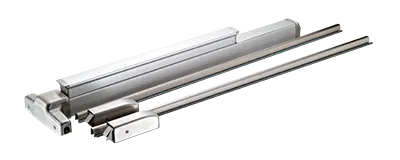
A surface vertical exit device without bottom rod provides visible vertical rod hardware while eliminating the conventional lower rod. This configuration can be considered for commercial doors where installation access, maintenance and a cleaner lower door area are important.
Camax can support project requirements involving touch bar operation, top latch configurations, different door dimensions and customized surface finishes. For a surface vertical rod exit device LBR hollow metal door application, door construction and reinforcement should be reviewed before selecting the final configuration.
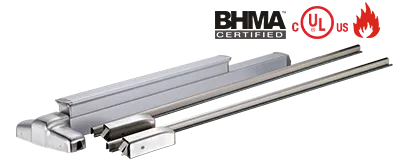
- • CE & UL Listed Panic Touch Bar
- • Non-handed
- • Certificate: ANSI/BHMA A156.3 grade 1; UL10C, fire rated
- • With auxiliary fire bolt
- • Material: Stainless steel, Steel
- • Finish: Stainless steel satin, Silver painted, Polishing, PVD, Black, Red
- • Narrow Stile Door Exit Device
- • Non-handed
- • Compliance: ANSI/BHMA A156.3 grade 1; UL10C, 3-hour fire rating
- • Material: Stainless steel, Steel, Aluminum
- • Modular design, more than 4-point locks are available.
- • Security anti-thrust latch.
2. Concealed Less Bottom Rod Exit Devices
Concealed vertical rod systems provide another approach when the project requires a cleaner architectural appearance. In a concealed configuration, the operating components are positioned within the door rather than exposed on the surface.
For projects asking what doors use concealed vertical exit device without bottom rod, potential applications include selected wood doors and architectural commercial doors. A concealed vertical rod less bottom rod wood door configuration requires appropriate door preparation, internal space and hardware compatibility.
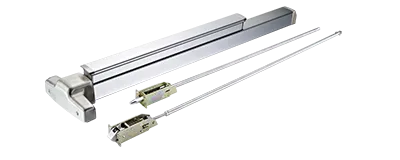
- • Less Bottom Concealed Vertical Rod Exit Device
- • Non-handed
- • Certificate: ANSI/BHMA A156.3 grade 1; UL10C, 3-hour fire rated
- • Material: Stainless steel, Steel, Aluminum
- • Finish: Stainless steel satin, Silver painted, Polishing, PVD, Black, Red
- • Less Bottom Rod Exit Device for Narrow Stile Doors
- • Non-handed
- • Compliance: ANSI/BHMA A156.3 grade 1; UL10C, fire rated 3 hours
- • Material: Stainless steel, Steel, Alumium
- • Finish: Stainless steel satin, Silver painted, Polishing, PVD, Black, Red
3. Fire Rated LBR Configurations
Fire door projects require additional attention to the relationship between the door, frame, exit device and supporting hardware. A fire rated exit device less bottom rod should only be used where the complete hardware configuration is appropriate for the relevant listed or certified door assembly.
One important question is when do you need an auxiliary fire pin for LBR hardware? There is no universal answer for every product. The requirement depends on the exit device design, fire door assembly, certification or listing and applicable project requirements.
An auxiliary fire bolt may be used in specific fire rated hardware designs to provide an additional point of restraint or support the required operation of the door assembly under fire conditions. For this reason, an auxiliary fire bolt should be specified according to the manufacturer's approved configuration rather than added as an improvised modification.
4. OEM and ODM Services
For distributors, door manufacturers and architectural hardware brands, the required exit device configuration may differ from standard catalog specifications. Camax provides OEM and ODM services to support customer specific requirements.
Customized exit device length
Door height adaptation
Customized mounting configurations
Surface finish options
Logo and product branding
Customized packaging
Product labeling
Customer specific hardware combinations
This flexibility allows an exit device less bottom rod solution to be developed around the customer's target market, door system and product positioning rather than relying on a one size fits all configuration.
Where Are Less Bottom Rod Exit Devices Used?
Depending on the product configuration, less bottom rod exit devices show up on fire-rated doors, single doors, double door pairs, metal doors and wood doors, depending on the specific product and its listing. Common settings include:
1. Schools
Frequent door operation and regular cleaning make reduced hardware near the floor useful in selected educational facilities.
2. Hospitals
Cleanability and frequent traffic are important considerations. Less hardware near the floor can simplify the surrounding environment.
3. Airports
High-traffic areas require durable commercial door hardware, while architectural appearance and maintenance also influence hardware selection.
4. Shopping Malls
LBR configurations can provide a cleaner lower door area while supporting frequent daily operation in commercial environments.
5. Office Buildings
The reduced visual presence of hardware near the floor can complement modern commercial interiors and architectural door designs.
6. Industrial Facilities
Selected industrial doors can benefit from durable exit hardware where the lower rod could interfere with the surrounding operating environment.
Choose Camax for Your Less Bottom Rod Exit Device Project
A less bottom rod exit device can provide a practical combination of reliable emergency egress, cleaner door appearance and reduced hardware near the floor. The right configuration depends on the door construction, application, fire requirements and hardware specification.
Camax manufactures LBR exit device solutions for commercial and architectural door applications, including surface and concealed vertical rod configurations. With OEM and ODM services, Camax can support customized device dimensions, finishes, branding, packaging and customer specific hardware combinations.
Whether you are a door manufacturer, architectural hardware distributor or hardware brand, contact Camax to work with your project requirements to develop an exit device solution suited to your target market.
Need help? Contact Camax for a quote!
Discover Camax's door & window hardware with ANSI/BHMA/UL/CE certification today!