


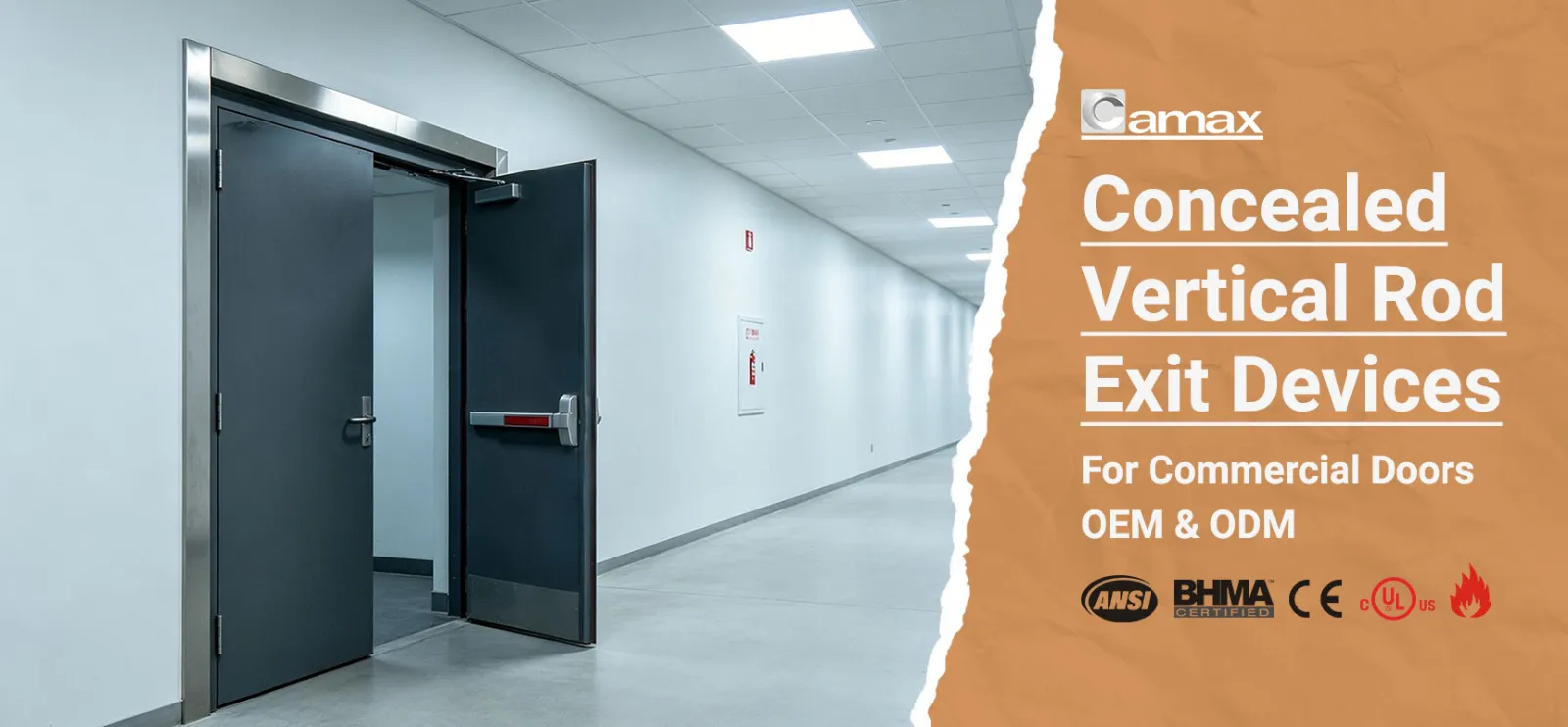
In modern commercial architecture, door hardware is required to provide not only safety and reliable performance, but also a clean and attractive appearance. As building designs become more focused on aesthetics, traditional visible exit hardware is gradually being replaced by more integrated solutions.
A concealed vertical rod exit device has become a popular choice for architects, contractors, and door hardware suppliers because it combines emergency exit functionality with a cleaner door appearance. Unlike traditional surface mounted vertical rod devices, this solution hides the vertical rods inside the door, creating a more professional and streamlined look.
These exit devices are widely used in commercial buildings, schools, hospitals, offices, hotels, retail stores, and other facilities where safety, durability, and appearance are equally important.
Table of contents
Why Concealed Vertical Rod Exit Devices Are Becoming Popular
Emergency egress hardware has always been a non-negotiable part of commercial building design. Fire codes and life-safety standards require that occupants be able to exit quickly under pressure, and exit devices are the mechanism that makes that possible. What has changed in recent years is how that hardware looks.
Traditional surface-mounted panic bars come with vertical rods running along the outside face of the door, connecting the push bar to top and bottom latches. They work reliably, they are relatively easy to service, and they are still the right call in plenty of situations. But in premium commercial spaces, the exposed rod hardware can feel out of place, particularly in lobbies, hotels, healthcare facilities, and institutional buildings where the door itself is part of the architectural statement.
The hidden vertical rod exit device solves this by moving those rods inside the door. The push bar is still there. The latching action is still there. Everything that matters for safety is intact. What disappears is the hardware you can see on the door face.
What Is A Concealed Vertical Rod Exit Device?
A concealed vertical rod exit device is a panic exit hardware in which the vertical rods are routed through the interior of the door rather than mounted on its outer surface. From the outside, you see a push bar and a clean door face. Inside the door stile, a chassis, internal rods, and latching hardware do all the work.
The internal design allows the door to maintain a modern appearance while providing the same basic emergency exit function as traditional panic hardware.
1. Main Components in A Concealed Exit Device
Touch Bar Or Cross Bar: The operating part pressed during emergency exit.
Internal Vertical Rods: Hidden rods that connect the top and bottom locking points.
Top And Bottom Latches: Secure the door and release when the device is activated.
Chassis Mechanism: The internal mechanism that transfers movement from the push bar.
Dogging Mechanism (model-dependent): Available on certain models for maintaining the latch retracted position.
Camax manufactures concealed vertical rod exit devices designed for commercial door applications. With professional OEM and ODM capabilities, Camax supports global door hardware brands, distributors, contractors, and project suppliers with customized product development and manufacturing solutions.
2. Difference Between Concealed And Surface Vertical Rod Exit Devices
People often ask about the difference between concealed and surface vertical rod exit devices. The function is essentially the same. The differences come down to aesthetics, installation requirements, and maintenance access.
| Feature | Surface Vertical Rod Exit Device | Concealed Vertical Rod Exit Device |
|---|---|---|
| Rod Visibility | Rods are exposed on the door surface | Rods are hidden inside the door |
| Appearance | Traditional hardware appearance | Clean and modern architectural design |
| Maintenance | Generally easier access | Requires access inside the door structure |
| Application | General commercial applications | Premium architectural projects |
How To Choose The Right Concealed Vertical Rod Exit Device For Your Project
Selecting the correct concealed vertical rod exit device for commercial doors comes down to three overlapping considerations: door type, certification requirements, and any project-specific customization needs.
1. Start with the Door Construction
A concealed vertical rod exit device for metal doors has different installation requirements than one designed for aluminum narrow stile frames. Metal doors typically offer a larger internal cavity and more flexibility in rod routing. Aluminum narrow stile doors have tight tolerances that require hardware specifically engineered to fit within them.
What doors are concealed vertical rod exit devices used on? The short answer: steel doors, hollow metal doors, aluminum-framed doors, and narrow stile glass doors are the most common. Wood doors can sometimes accommodate concealed hardware depending on their construction, but this should be verified with the door manufacturer.
2. Consider Certification Requirements
Can a concealed vertical rod exit device be used on fire doors? Yes, provided the device carries the appropriate fire rating for the door assembly. Always match the hardware rating to the door rating, and verify compliance with the applicable building code for the project jurisdiction. Fire rated concealed vertical rod exit devices are a standard product category, but specifications vary between manufacturers, so confirm ratings before purchasing.
3. Consider OEM And ODM Customization
For distributors, door manufacturers, and global hardware brands, off-the-shelf hardware may not fully meet the requirements of a particular project or private label program. Camax supports a full range of customization options for concealed exit device orders, including:
Custom product designs
Private labeling solutions
Customized packaging
Mechanical structure customization
Project based product development
Camax Hardware manufactures fire-rated concealed vertical rod exit devices built to meet the demands of commercial door assemblies that require both safety compliance and a clean finish. Each unit is engineered for reliable latching performance under fire conditions, making them a practical choice for schools, hospitals, hotels, and other regulated facilities.
- • Concealed Vertical Rod Exit Device with Panic Bar
- • Non-handed
- • Certificate: EN1125; EN1634-1, fire rated
- • Material: Stainless steel, Steel, Plastic
- • Finish: Stainless steel satin, Silver painted, Polishing, PVD, Black, Red
- • Concealed Vertical Rod Exit Device
- • Non-handed
- • Certificate (Pending): ANSI/BHMA A156.3 grade 1; UL10C, 3-hour fire rated
- • Material: Stainless steel, Steel, Aluminum
- • Finish: Stainless steel satin, Silver painted, Polishing, PVD, Black, Red
Can You Replace A Surface Vertical Rod With A Concealed Vertical Rod Device?
This is one of the more practical questions that comes up during renovation or hardware upgrade projects, and the answer is nuanced. In many cases, yes, you can make the switch. But it is not a simple like-for-like swap.
A concealed vertical rod exit device must be installed within the door's internal stile cavity. That cavity needs to be large enough to accommodate the rod diameter, the chassis, and the latch assemblies at the top and bottom. If the existing door was manufactured with a concealed rod preparation, the upgrade is straightforward. If it was not, modifications to the door or a full door replacement may be necessary.
Choose Camax As Your Concealed Vertical Rod Exit Device Manufacturer
Selecting the right manufacturer is important for ensuring product quality, reliable supply, and long term cooperation.
Camax specializes in manufacturing exit devices and provides professional OEM and ODM services for international partners. From product design and customization to production support, Camax helps customers develop reliable concealed exit hardware solutions for different markets.
If you are looking for a reliable supplier of concealed vertical rod exit devices, concealed exit devices, or customized panic hardware, contact Camax today to discuss your OEM and ODM requirements.
Need help? Contact Camax for a quote!
Discover Camax's door & window hardware with ANSI/BHMA/UL/CE certification today!