


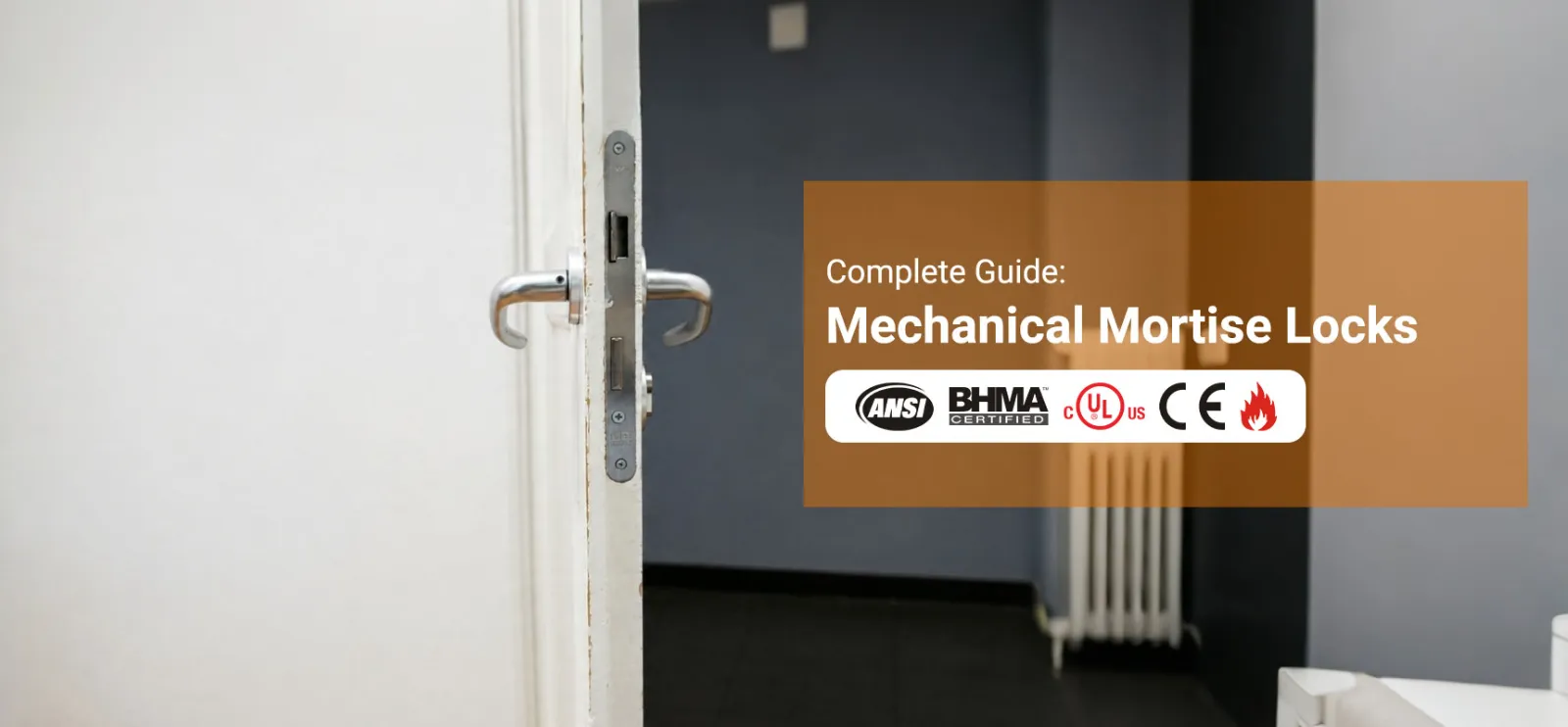
Choosing a mortise lock for a commercial door involves more than deciding how the door should lock and unlock. The building's access requirements, electrical infrastructure, installation conditions, and long-term maintenance all influence the right choice. For some projects, an electrified mortise lock is essential for access control. For others, a conventional mechanical mortise lock provides everything the door needs without adding electrical components to the installation.
Mechanical and electrified mortise locks share a similar installation concept, with the lock case fitted into a pocket in the door edge. Their operating systems, however, are different. Understanding these differences helps door manufacturers, hardware distributors, and project contractors select a suitable locking solution for each application.
Table of contents
What Is a Mechanical Mortise Lock?
A mechanical mortise lock is a door lock installed inside a recessed cavity, or mortise, in the edge of a door. Its locking functions are controlled by mechanical components such as a key cylinder, lever handle, spindle, latchbolt, and deadbolt. The lock operates through physical movement rather than an electrical signal.
When a user turns the lever handle, the spindle transfers movement to the lock mechanism and retracts the latchbolt. A key or thumbturn can operate the locking mechanism, depending on the selected lock function. Some configurations include a deadbolt for an additional locking function, while others use a latchbolt as the primary means of keeping the door closed.
How does a mechanical mortise lock work? In a typical configuration, the lever handle retracts the spring-loaded latchbolt when operated. Releasing the handle allows the latchbolt to return to its extended position. The cylinder and other locking components control access according to the lock's specific function. The exact operation varies between passage, privacy, office, classroom, storeroom, and entrance functions.
1. Main Components of a Mechanical Mortise Lock
Lock case: The metal housing installed inside the door, containing the operating mechanism.
Latchbolt: The spring-loaded bolt that holds the door in its closed position and retracts when the handle is operated.
Deadbolt: A separate locking bolt included in selected lock functions. It is generally operated by a key or thumbturn.
Auxiliary latchbolt: A component used in certain designs to help prevent manipulation of the latchbolt when the door is closed.
Spindle and lever mechanism: Transfers movement from the handle to the lock case.
Cylinder and strike: The cylinder provides key-operated control, while the strike receives the extended bolt or latch on the door frame.
A mechanical mortise door lock is commonly used in office buildings, apartment entrances, schools, hotels, storage areas, and other commercial environments. Its available functions make it suitable for doors with different access requirements, from simple passage to key-controlled entry.
What Are Electrified Mortise Locks?
An electrified mortise lock combines a conventional mortise lock mechanism with electrically controlled functions. Depending on the design, electricity can control the outside lever, retract a latchbolt, or release a locking function. This allows the lock to work with an electronic access-control system rather than relying entirely on a physical key.
An electrified mortise lock normally requires a suitable power supply and electrical connections. Some models operate on 12V or 24V DC, although the required voltage and current depend on the product specification. The electrical components may include a solenoid or motor, internal wiring, monitoring switches, and other control elements.
1. How Electrified Mortise Locks Work
When an authorized credential is presented to a compatible access-control reader, the controller sends a signal to the lock. The electrically controlled mechanism then changes the locking state or enables the outside lever to operate. Depending on the model, the door may also provide monitoring signals to indicate its locking status or other operating conditions.
Electrified mortise locks are often selected for office buildings, hotels, restricted-access rooms, and facilities that need centralized access management. They can reduce reliance on physical keys and make it easier to manage entry permissions across multiple doors.
Their behavior during a power interruption depends on the locking design. Fail-safe and fail-secure configurations respond differently to power loss, so the selected function must be checked against the building's security and egress requirements.
Mechanical vs. Electrified Mortise Locks: What Are the Differences?
The main distinction between a mechanical mortise lock and an electrified mortise lock is how the locking function is controlled. A mechanical model relies on physical operation, while an electrified model adds electrical control. This difference affects installation, maintenance, system cost, and the type of access management available.
| Comparison Point | Mechanical Mortise Lock | Electrified Mortise Lock |
|---|---|---|
| Operating principle | Mechanical components operated by a key, handle, or thumbturn. | Mechanical components combined with electrically controlled functions. |
| Power supply | No external power required for basic operation. | Power required for electrically controlled functions. |
| Wiring | No electrical wiring required for the lock itself. | Electrical connections are generally required. |
| Installation | Generally more straightforward for standalone applications. | Requires coordination with the electrical and access-control systems. |
| Access method | Typically key, lever handle, or thumbturn operation. | Can support electronic credentials and compatible access-control devices. |
| Maintenance | Focuses mainly on mechanical parts and door alignment. | May require inspection of both mechanical and electrical components. |
| Power outage | Basic mechanical functions continue to operate. | Behavior depends on the fail-safe or fail-secure configuration. |
| Typical application | Standalone commercial doors without electronic access requirements. | Doors connected to electronic access-control systems. |
1. Power Supply and Wiring Requirements
A mechanical mortise lock does not need a dedicated electrical supply to perform its normal locking and unlocking functions. This makes it suitable for buildings where the door only needs conventional key or handle operation. There is no need to route power cables through the door or coordinate the lock installation with an electrical contractor.
Electrified models need compatible power and control connections. Depending on the design, installers may need to consider cable routing through the door, frame, or hinge area, as well as the location of the power supply and access-control controller.
2. Installation and Maintenance
Mechanical locks generally involve fewer installation steps because the locking mechanism does not need to connect to an electronic control system. Correct mortise preparation, lock alignment, cylinder fitting, and handle installation remain important, but electrical wiring is not part of the basic installation.
Maintenance requirements also differ. A mechanical lock needs inspection of its latchbolt, handle operation, fixing points, cylinder, and alignment with the strike. An electrified lock may require additional checks of its power connections, control components, and electrical operating functions. Neither type should be treated as maintenance-free.
3. Cost Considerations and Power Outages
For a standalone door, a mechanical mortise lock can reduce the initial project cost by avoiding a dedicated power supply, electrical wiring, and access-control equipment. The total cost still depends on the lock grade, materials, door preparation, installation labor, and project specifications.
A mechanical lock also continues to operate through its normal key and handle mechanisms during a building power outage. With an electrified lock, the result depends on its fail-safe or fail-secure design. This distinction matters when specifying hardware for doors where both security and emergency egress must be considered.
What Are the Advantages of Mechanical Mortise Locks?
Electrified mortise locks offer useful access-control capabilities, but not every commercial door needs them. Where conventional access is sufficient, a mechanical mortise lock can be a more practical solution. Its advantages are mainly related to installation simplicity, power independence, and lower system complexity.
1. No External Power Supply Required
The basic operation of a mechanical mortise lock depends on physical components rather than electricity. Keys, lever handles, and thumbturns operate the lock according to its function. There is no need to provide a dedicated DC power supply or connect the lock to a building's electrical system.
2. Simpler Installation
Without electrical connections, installation is generally more straightforward. Contractors can focus on the mortise pocket, lock dimensions, cylinder, handles, and strike alignment. This can be particularly helpful for replacement work and renovation projects where adding new wiring would involve extra labor or modifications to the existing door.
3. Lower System Complexity
A mechanical mortise lock does not require an electronic controller or access-control connection for basic operation. Fewer system components mean fewer electrical interfaces to coordinate and troubleshoot. For standalone doors, this can make the overall locking arrangement easier to specify and maintain.
4. Independent Operation During Power Outages
Because the lock does not depend on electricity, its basic mechanical functions remain available during a power interruption. Users can continue to operate the key and handle mechanisms as designed. This is a useful characteristic for buildings where independent mechanical operation is preferred.
5. Economical for Standalone Applications
When remote access and centralized management are unnecessary, adding electrified functions may increase project costs without providing a practical benefit. A mechanical mortise lock can meet the door's requirements with fewer supporting components. For projects involving many ordinary office, storage, or utility doors, this can be an important consideration.
6. Straightforward Daily Operation
Mechanical locks use familiar operating methods. Users do not need electronic credentials, software configuration, or an access-control interface to operate the lock. For buildings that rely on conventional key management, a mechanical mortise door lock remains a dependable and easy-to-understand option.
When Should You Choose Mechanical Mortise Locks?
The right lock depends on what the door needs to do. A mechanical mortise lock is worth considering when the project calls for conventional access rather than electronic control.
Standalone commercial doors: Offices, meeting rooms, and other doors where key-operated access is sufficient.
Office and apartment entrance doors: Applications that require defined locking functions without centralized electronic access management.
Storage and utility rooms: Areas where controlled access is needed but remote unlocking or credential management is not essential.
Renovation projects: Existing buildings where installing additional electrical wiring would complicate the work.
Projects with straightforward maintenance requirements: Buildings where a conventional mechanical locking arrangement is preferred.
Specification tip:
Before selecting a mechanical mortise lockset for commercial doors, confirm the required lock function, backset, door thickness, handing, cylinder type, handle compatibility, and applicable performance or fire-rating requirements.
When Are Electrified Mortise Locks a Better Choice?
Mechanical locks are not the right solution for every door. Where a building needs electronic access management, an electrified mortise lock can provide functions that a conventional mechanical model cannot offer on its own.
Centralized access control: Multiple doors can be managed through a compatible building access-control system.
Remote locking and unlocking: Authorized personnel can control access through compatible electronic equipment.
Restricted-access areas: Offices, equipment rooms, and other locations may require credential-based entry.
Building security integration: Electrified locks can work with compatible readers, controllers, and monitoring devices.
For these applications, an electrified mortise lock may justify its additional installation and system requirements. The important point is to specify the lock according to the actual access-control needs of the project rather than adding electrical functions to every door by default.
Camax Mechanical Mortise Locks for Commercial Applications
Camax manufactures mechanical and electrified mortise locks for commercial door applications. For projects that require conventional key-operated locking, Camax provides different lock functions and specifications to suit a variety of door requirements.
1. CML800 Series: ANSI Grade 1 Mechanical Mortise Locks
Camax CML800 Series is designed for commercial applications requiring ANSI mortise lock performance. The series is BHMA Listed and meets ANSI/BHMA A156.13-2020 Grade 1 requirements, including a 1,000,000-cycle test specification.
Selected CML800 configurations are UL10C listed for up to 3-hour fire-door applications. The applicable model, ANSI function, and installation must match the relevant listing and approved door assembly.
For door hardware distributors, importers, and commercial door manufacturers, the CML800 Series provides a mechanical mortise lock platform with specifications suited to demanding commercial applications. Function selection and product configuration should be confirmed against the project requirements.
- • ANSI commercial mortise locks
- • Certificate: BHMA listed; ANSI/BHMA A156.13-2020, Grade 1 (1, 000, 000); UL10C 3-hour fire rating.
- • Lockcase: Heavy-gauge steel, with zinc dichromate finish for corrosion resistance.
- • Deadbolt: One-piece stainless steel, 25mm throw.
- • Latchbolt: Stainless steel, 2 pieces mechanical with anti-friction insert, 19mm throw.
- • Auxiliary Latchbolt: stainless steel.
- • Strike: stainless steel, ANSI straight lip standard 4-7/8" (124mm) x 1-1/4" (32mm).
- • Door thickness: 1-3/4" (45mm) standard. Optional 1-3/8" (35mm), 2-1/2" (64mm).
- • Backset: 2 3/4" (70mm).
| Outside/Inside | SKU | Type | ANSI | Function Description |
|---|---|---|---|---|
 |
CML804 | Office and Inner Entry Lock | F04 | Latch bolt operated by lever from either side except when outside lever is made inoperative by thumbturn or key. When the outside lever is locked, the latch bolt is retracted by key from the outside or by operating the inside lever. Auxiliary dead latch. |
 |
CML809 | Apartment Entrance Lock | F09 | Latch bolt operated by lever from either side, except when outside lever is locked by key from inside. When outside lever is locked, latch bolt is retracted by the key from the outside or by operating the inside lever. Auxiliary dead latch. |
 |
CML820 | Entrance Lock | F20 | Latch when outside from either side, except when the outside lever is made inoperative by thumbturn. Deadbolt operated by key outside or turn inside. The key outside operates both bolts. The operating inside lever retracts both bolts and the outside remains locked. The latch bolt is dead-locked when the outside lever is made inoperative or when the deadbolt is projected. When deadbolt is retracted, the lever is unlocked by thumbturn. |
 |
CML801 | Passage Latch | F01 | Latch bolt operated by lever from either side at all times. |
 |
CML831 | Exit or Communicating Lock | F31 | Latch bolt operated by lever from inside. Non-removable blank trim or no trim outside. |
 |
CML802 | Privacy, Bedroom or Bath Lock | F22 | Latch bolt retracted by knob/lever from either side unless outside is locked by inside thumbturn or outside coin turn. Operating the inside knob/lever, closing the door, rotating the inside thumbturn, or rotating the outside coin turn unlocks the outside knob/lever. The inside knob/lever is always free for immediate egress. |
 |
CML802B | Privacy, Bedroom or Bath Lock | F22 | Latch bolt retracted by knob/lever from either side unless outside is locked by inside thumbturn. Operating the inside knob/lever, closing the door, or operating outside emergency release unlocks the outside knob/lever. The inside knob/lever is always free for immediate egress. |
 |
CML819 | Privacy with Deadbolt and Coin Turn Outside | F19 | Latchbolt retracted by knob/lever from either side. Deadbolt thrown or retracted by inside thumbturn or outside coin turn. Throwing deadbolt locks outside knob/lever. Rotating the inside knob/lever simultaneously retracts the deadbolt and latch bolt, and unlocks the outside knob/lever. Rotating the outside coin turn retracts the deadbolt and unlocks the outside knob/lever. Available with rose trim only. The inside lever is always free for immediate egress. |
 |
CML819B | Privacy with Deadbolt and Cylinder Outside | F19 | Latchbolt retracted by knob/lever from either side. Deadbolt thrown or retracted by inside thumbturn or outside CYLINDER. Throwing deadbolt locks outside knob/lever. Rotating the inside knob/lever simultaneously retracts the deadbolt and latch bolt, and unlocks the outside knob/lever. Rotating outside CYLINDER retracts the deadbolt and unlocks the outside knob/lever. Available with rose trim only. The inside lever is always free for immediate egress. |
 |
CML805 | Classroom Lock | F05 | Latch bolt operated by lever from either side except when outside lever is locked from outside by key. When the outside lever is locked, the latch bolt is retracted by key, or by operating the inside lever. Auxiliary dead latch. |
 |
CML829 | Classroom Dead Lock | F29 | Key from outside operates deadbolt. Turn from inside retracts but does not project deadbolt. |
 |
CML807 | Storeroom Lock | F07 | Latch bolt operated by key from outside or by operating inside lever. The outside lever is always inoperative. Auxiliary dead latch. |
 |
CML814 | Store/Utility Room Lock with Deadbolt | F14 | Latch bolt operated by lever from either side. Deadbolt operated by key from either side. |
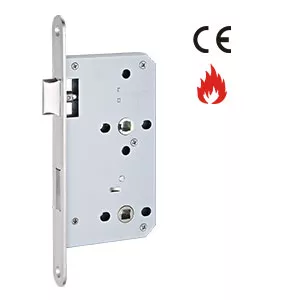
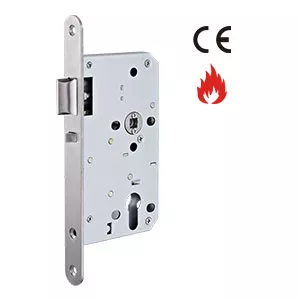
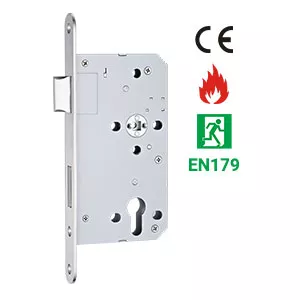
2. EN Mortise Locks: CE-Certified Options for European Applications
Camax also offers EN mortise locks for projects in European markets. These products are designed around European door hardware requirements, with CE-certified options and multiple mechanical lock functions for different door applications.
Selected models are available with fire performance of up to 4 hours, subject to the relevant test evidence, product configuration, and approved door assembly. Buyers specifying fire-rated hardware should confirm the exact model and supporting documentation before placing an order.
Depending on the selected model, EN mortise lock functions can be specified for different access requirements in commercial and residential buildings. This allows distributors and door manufacturers to select a suitable mechanical locking solution for their target markets.
Camax's Mortise Locks
View All Mortise Locks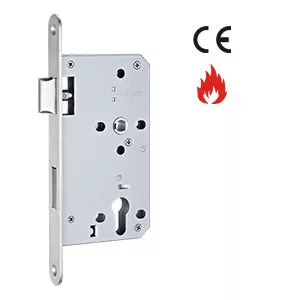
72-55A/72-60A/72-65A
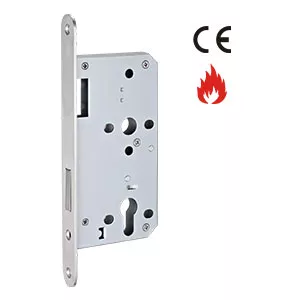
72-55D/72-60D/72-65D
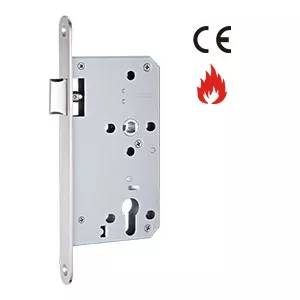
72-55L/72-60L/72-65L
72-60T/72-65T
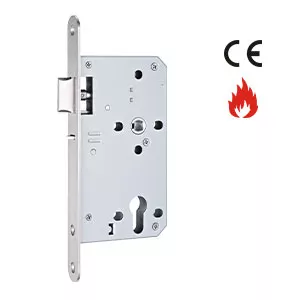
72-60F
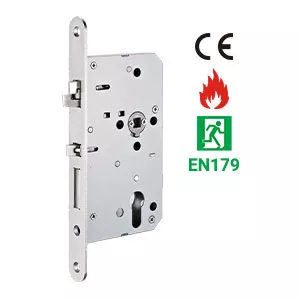
72-60TF
Tips:
In addition to standard product options, Camax provides OEM and ODM services for door hardware brands, distributors, and project suppliers. You can discuss required lock functions, dimensions, finishes, packaging, and other project specifications with the Camax team.
Contact Camax to Choose the Right Mortise Lock for Your Project
Mechanical and electrified mortise locks serve different purposes. Electrified models are a strong option for doors that need centralized access control, remote operation, or integration with electronic security systems. Mechanical mortise locks are often the more practical choice when conventional key and handle operation is enough.
Their power-independent operation, simpler installation, and lower system complexity make them suitable for many standalone commercial doors. The final selection should still account for the lock function, door specifications, performance requirements, and any applicable fire-door certification.
If you are sourcing a mechanical mortise lockset for commercial doors, Camax can support your project with ANSI and EN mortise lock options, multiple mechanical functions, and OEM/ODM services. Contact Camax team to discuss your application and product requirements.
Need help? Contact Camax for a quote!
Discover Camax's door & window hardware with ANSI/BHMA/UL/CE certification today!