


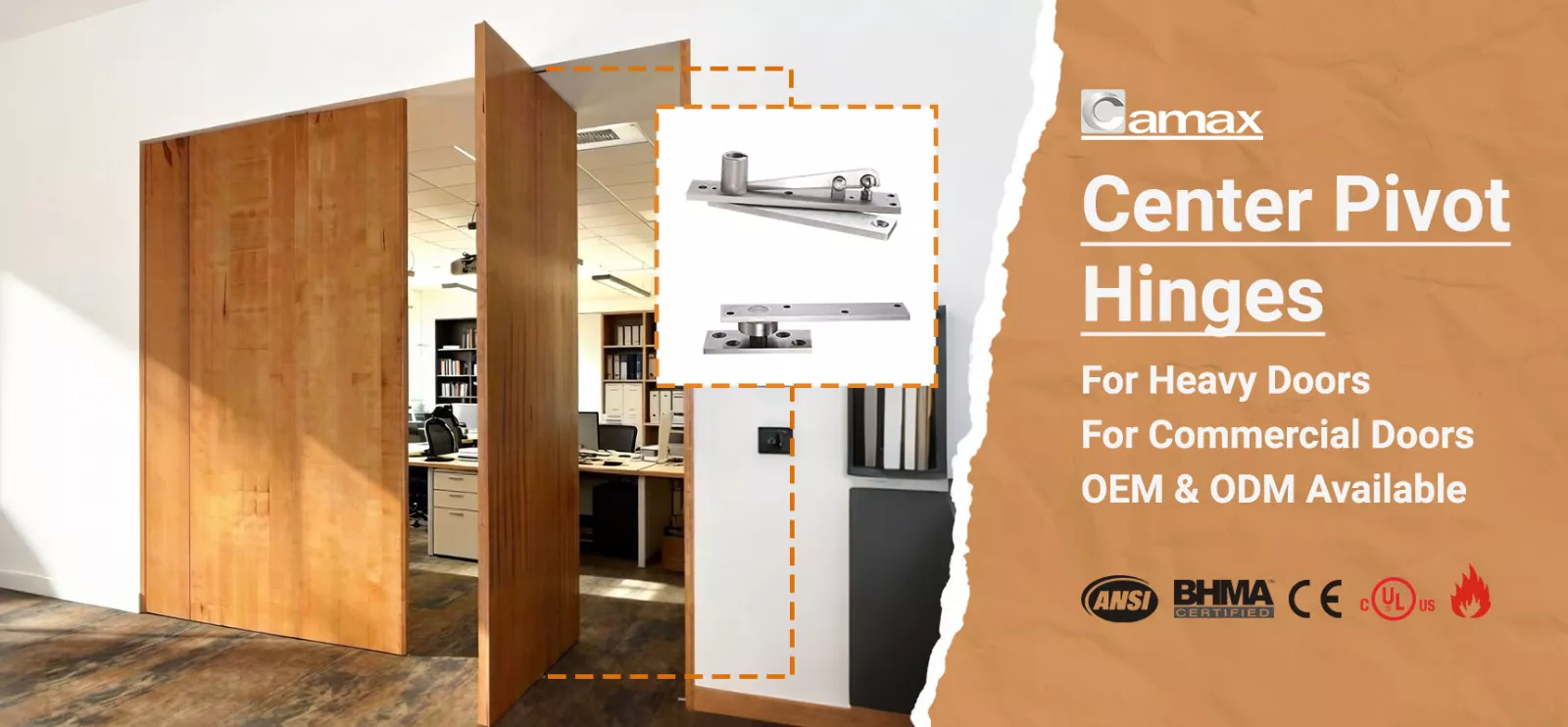
Large-format doors and glass panels have become architectural signatures of modern design. Whether it's a floor-to-ceiling pivot door in a luxury hotel lobby or a massive wooden entry door in a contemporary home, these installations demand hardware that can handle serious weight while maintaining visual elegance.
Traditional butt hinges, while reliable for standard applications, face limitations when doors exceed conventional dimensions. They become visible interruptions in otherwise seamless designs, and their weight-bearing capacity can struggle with doors weighing hundreds of pounds. This is where center pivot door hardware enters the picture as a superior solution.
The center pivot hinge has emerged as the preferred choice for architects, designers, and builders working on commercial projects and upscale residential developments. But what exactly makes this hardware so special, and why are design professionals increasingly specifying it for their projects?
Table of contents
What Is a Center Pivot Hinge?
A center pivot hinge offers a refined alternative to traditional side-mounted door hinges, changing both how a door is supported and how it moves. Instead of fixing the door along its vertical edge, this system creates a rotation axis at or near the center of the door, resulting in a more balanced and controlled motion.
A typical center-hung pivot hinge system consists of two key components: an upper pivot and a lower pivot. The lower pivot is designed to carry most of the door’s weight, while the upper pivot ensures proper alignment and smooth rotation. Working together, these components allow the door to open with minimal resistance and reduced stress on the frame.
1. How Do Center Pivot Hinges Work?
Understanding how a center-hung pivot hinge works starts with its approach to weight distribution and controlled rotation. Unlike traditional hinges that support a door from one side, a center pivot system relies on two precisely aligned pivot points to deliver stability and smooth movement.
The lower pivot is the main load-bearing element. Installed in the floor or within a reinforced frame, it supports most of the door’s weight. Integrated bearing components allow the door to rotate smoothly, even when handling large or heavy door panels, while keeping friction to a minimum.
The upper pivot plays a different but equally important role. Instead of carrying weight, it stabilizes the door laterally and guides its motion. This prevents unwanted movement at the top of the door and helps maintain consistent alignment during operation.
The upper pivot plays a different but equally important role. Instead of carrying weight, it stabilizes the door laterally and guides its motion. This prevents unwanted movement at the top of the door and helps maintain consistent alignment during operation.
2. What Is The Difference Between Center Pivot Hinges and Traditional Door Hinges?
What's the difference between pivot and regular hinges at a fundamental level? Among the commercial door hinges, regular hinges create a hinge line along one vertical edge, meaning the entire door swings around that fixed line. Pivot hinges create rotation points that can be positioned anywhere along the door's width, allowing for more creative door designs and balanced weight distribution.
| Feature | Center Pivot Hinge | Traditional Butt Hinge |
|---|---|---|
| Weight Capacity | Excellent - handles 300+ lbs easily | Limited - struggles above 200 lbs |
| Suitable Door Size | Ideal for large, oversized doors | Best for standard-sized doors |
| Visual Profile | Minimal visibility, clean aesthetics | Hinges visible on door edge |
| Opening Motion | Smooth rotating pivot action | Single-sided swing |
| Installation Complexity | Requires professional installation | Standard installation process |
| Commercial Suitability | Excellent for high-traffic areas | Adequate for moderate use |
| Design Flexibility | Enables dramatic door designs | Conventional door configurations |
Types of Center Pivot Hinges
Not all center pivot door hinges are created equal. Different applications demand different hardware specifications, and understanding these variations helps ensure proper hardware selection for any project.
1. Center Pivot Hinges for Heavy Doors
When a project involves large or heavy doors, standard hardware is rarely enough. Heavy-duty door hinges for commercial doors are designed to manage higher loads while delivering consistent performance in demanding environments. Camax Hardware focuses on the manufacturing of center pivot hinge systems for commercial and architectural doors, supporting projects through flexible OEM and ODM services.
Camax center pivot hardware is engineered to meet ANSI/BHMA A156.4 Grade 1 requirements, ensuring reliable operation under frequent use. For fire-rated door assemblies, selected models are designed to achieve UL10C 3-hour fire ratings, helping maintain door integrity during fire conditions. These pivot hinge systems are suitable for both wood and steel doors and are built with reinforced structures, high-capacity bearings, and durable finishes to support long-term performance in commercial applications.
- • Center Pivot Hinge
- • Suitable for wooden doors and steel doors
- • Compliance with: ANSI/BHMA A156.4, grade1; UL10C, 3-hour fire rating
- • Non-handed
- • Load capacity: 270lbs (120kg)
- • Minimum door thickness: 45mm
- • Material: stainless steel 304
- • Finish: SS, PVD, PS
- • Center Pivot Hinge
- • Suitable for wooden doors and steel doors
- • Precision bearings for smooth operation with dust proof
- • Compliance with: ANSI/BHMA A156.4, grade1; UL10C, 3-hour fire rating
- • Non-handed
- • Load capacity: 500lbs (250kg)
- • Minimum door thickness: 45mm
- • Material: stainless steel 304
- • Finish: SS, PVD, PS
2. Floor Mounted Center Pivot Door Hinges
Floor-mounted center pivot door hinges are widely used in commercial buildings and premium residential projects because they provide strong, stable door support. In this configuration, the lower pivot is securely installed into the floor structure, creating a reliable rotation point that helps manage the weight of large or heavy doors.
Camax Hardware manufactures professional floor-mounted center pivot solutions designed for architectural and commercial door systems, while also offering OEM and ODM customization services for project-specific requirements. Camax bottom pivots are engineered to comply with ANSI/BHMA A156.4 Grade 1 standards, ensuring durability and long service life. Selected models also support UL10C 3-hour fire rating requirements for fire-rated door assemblies.
These pivot systems are suitable for both wood and steel doors and are designed with precision bearings to maintain smooth operation under high-traffic conditions. The floor-mounted configuration integrates seamlessly with complete center pivot door hardware systems, including top pivots and additional supports for tall or oversized doors.
- • BottomPivot Hinge
- • Suitable for wooden doors and steel doors
- • Precision bearings for smooth operation with dust proof
- • Compliance with: ANSI/BHMA A156.4, grade1; UL10C, 3-hour fire rating
- • Non-handed
- • Load capacity: 500lbs (250kg)
- • Minimum door thickness: 45mm
- • Material: stainless steel 304
- • Finish: SS, PVD, PS
How to Choose the Right Center Pivot Hinge?
Selecting an appropriate center pivot hinge for doors requires evaluating several critical factors. Making the wrong choice can lead to operational problems, premature hardware failure, or safety concerns.
1. Door Weight and Load Capacity
One of the most important questions is how much weight a center pivot hinge can hold. Load ratings typically range from 150 kg to over 300 kg, depending on design and materials. For commercial or oversized doors, selecting a heavy-duty center pivot hinge is essential.
2. Door Size and Frequency of Use
Larger doors and high-traffic applications place additional stress on pivot components. Doors in offices, hotels, and public buildings require hinges tested for frequent operation.
3. Interior and Exterior Applications
For exterior doors, corrosion resistance is critical. A stainless steel center pivot hinge for exterior doors offers improved resistance to moisture, temperature changes, and environmental exposure.
Interior applications can often use less expensive materials like plated steel or aluminum, though stainless steel remains an excellent choice for humid environments like commercial kitchens or pool facilities.
4. Center Pivot Hinges for Different Door Materials
Center pivot hinges are suitable for various door materials when properly specified. For wooden doors, load capacity and frame reinforcement are key considerations. Glass doors require specially engineered pivot hinges to ensure balanced stress and smooth movement. For exterior applications, stainless steel center pivot hinges with sealed components provide better resistance to corrosion and environmental exposure, supporting long-term, reliable door performance.
Contact Camax to Get A Suitable Center Pivot Hinges for Modern Door Systems
Center pivot hinges have become a standard choice in modern door design, valued for their ability to support heavy doors, deliver smooth movement, and maintain clean visual lines. Selecting the right pivot hardware and installing it correctly helps ensure reliable performance, long service life, and design flexibility for both commercial and residential applications.
If you're working on a pivot door project, whether commercial, residential, or specialized, Camax can support you with reliable manufacturing, technical expertise, and customization capabilities. Contact Camax to discuss your project needs, request specifications, or explore custom solutions for unique applications.
Need help? Contact Camax for a quote!
Discover Camax's door & window hardware with ANSI/BHMA/UL/CE certification today!