

Door butt hinges may look simple, but they remain one of the most important components in any door system. From residential homes to large commercial buildings, almost every butt hinge door relies on this classic hardware solution to function smoothly and safely. Despite the availability of concealed or specialty hinges, the traditional butt hinge continues to dominate the market because of its strength, reliability, and proven performance.
The choice of door butt hinges affects far more than door movement. A poorly selected butt hinge can lead to door sagging, misalignment, premature wear, or even failure to meet fire and safety regulations. For commercial and fire-rated doors, hinge selection directly impacts compliance, durability, and long-term performance.
This article takes a practical look at what a butt hinge is, the different types available, and what to consider when selecting butt hinges for interior, exterior, and fire-rated doors.
Table of contents
What Is A Door Butt Hinge?
A door butt hinge is a mechanical hinge made up of two flat metal leaves connected by a central pin. One leaf is fixed to the door, while the other is mounted to the door frame. As the door opens and closes, the leaves rotate smoothly around the pin, providing controlled and stable movement. This simple but effective design allows the hinge to support the weight of the door while maintaining proper alignment over long periods of use. Depending on the application, butt hinges can be manufactured with different thicknesses, pin designs, and bearing structures to handle varying door sizes and load requirements.
Butt hinges are widely used across many applications, including interior door butt hinges in residential buildings, exterior door butt hinges exposed to weather, and heavy-duty solutions for commercial and fire-rated doors. Their straightforward construction makes them easy to install, inspect, and replace during maintenance or refurbishment. Butt hinges for steel doors are also available in a wide range of materials and finishes, allowing them to meet both functional and aesthetic requirements. Because of their reliability, adaptability, and long service life, door butt hinges continue to be a trusted hardware solution in buildings around the world.

Different Types Of Door Butt Hinges Explained
When discussing the types of door hinges, butt hinges stand out for their versatility. However, not all butt hinges are the same. Understanding the differences helps ensure proper door function and long service life.
1. Plain Bearing Butt Hinges For Light-Duty Applications
Plain bearing butt hinges use direct metal-to-metal contact between the hinge knuckle and pin. This straightforward construction makes them suitable for light interior doors where traffic levels are moderate and door weight is limited. They are often chosen for cost efficiency and simple installation.
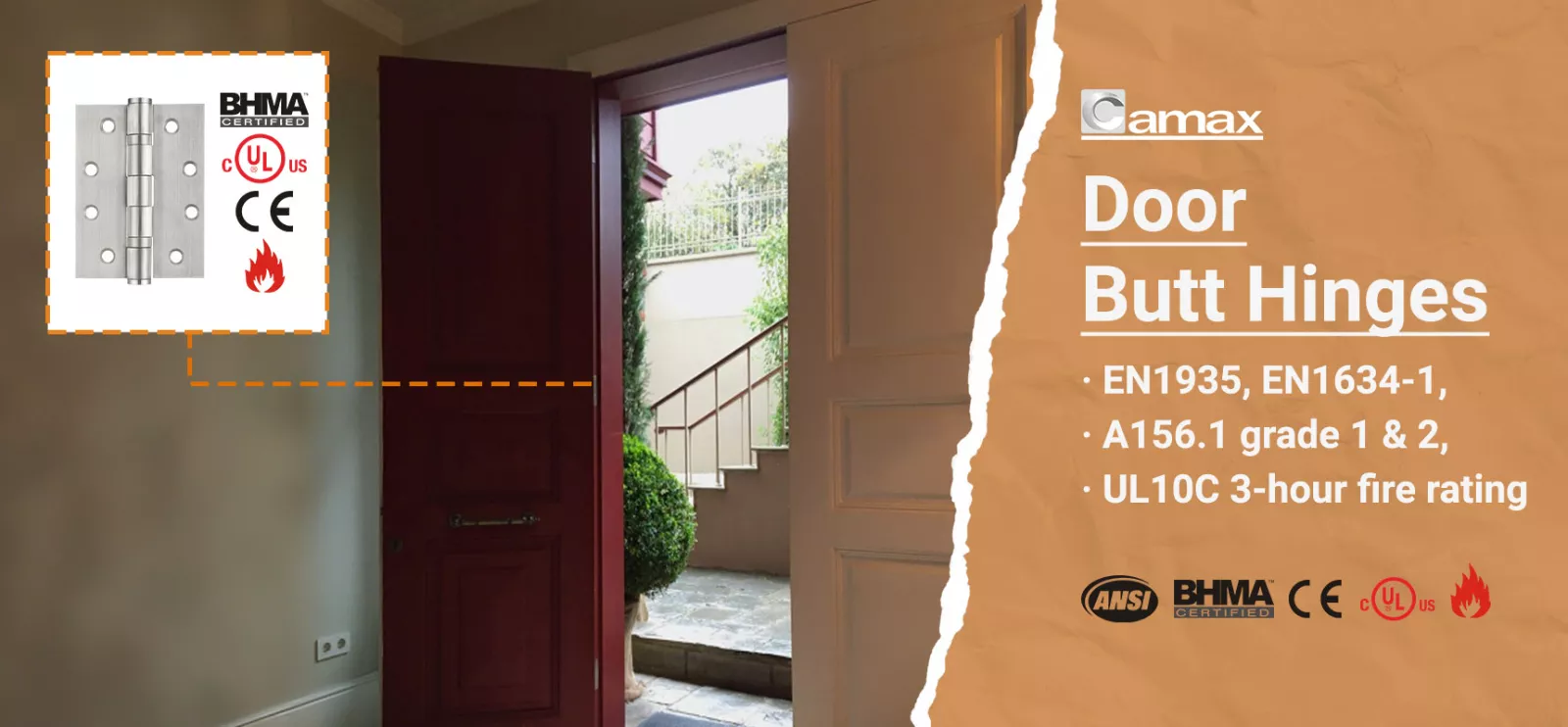
Camax manufactures non-ball-bearing door butt hinges designed for both residential and commercial use. These hinges meet BHMA and UL requirements, comply with ANSI A156.1 Grade 1 and Grade 2 standards, and achieve a UL10C 3-hour fire rating where required. Manufactured from stainless steel, they are available in finishes such as satin stainless steel (SSS), polished stainless steel (PSS), and PVD coatings.
2. Ball Bearing Butt Hinges For Heavy And High-Traffic Doors
Ball bearing butt hinges are designed for demanding environments. By incorporating steel ball bearings between the knuckles, friction is significantly reduced during door movement. This results in smoother operation, less wear, and improved durability over time.
Heavy-duty butt hinges with ball bearings are commonly specified for commercial buildings, public facilities, and fire-rated doors where frequent use is expected. Many architects and contractors now consider ball bearing butt hinges a standard requirement for performance-driven projects.
Camax’s ball bearing butt hinges are manufactured from stainless steel and certified to CE and fire rating standards, including EN1935 and EN1634-1. Multiple finish options such as SSS, PSS, and PVD allow these hinges to meet both functional and aesthetic requirements.
- • Certificate: EN1935; EN1634-1, fire rated for ball bearing butt hinges
- • Certificate: A156.1, grade 1&2; UL10C, 3 hours for butt hinges
- • Material: Stainless steel
- • Finish: SSS, PSS, PVD
Choosing Between Interior And Exterior Door Butt Hinges
Interior door butt hinges are typically selected with an emphasis on smooth operation, quiet performance, and visual consistency with the door design. Since these doors are not exposed to moisture or temperature changes, material requirements are less demanding.
Exterior door butt hinges face a very different set of challenges. Exposure to rain, humidity, temperature fluctuations, and air pollution requires materials with strong corrosion resistance. Stainless steel butt hinges are the preferred choice for exterior applications, offering long-term durability and stable performance. An exterior door stainless butt hinge also reduces maintenance needs and helps prevent rust-related failure.
Fire-Rated And Heavy-Duty Butt Hinges For Commercial Doors
Fire-rated door butt hinge selection is critical in commercial buildings. Fire doors are designed as complete systems, and hinges must be tested and certified to ensure they perform correctly under extreme heat conditions. Certified hinges help maintain door integrity, prevent premature failure, and support safe evacuation.
For heavy fire doors in commercial buildings, the best door butt hinges for heavy doors typically feature ball bearing construction, reinforced knuckles, and fire-tested materials. Using uncertified hinges on a fire door can compromise safety and violate building codes, making professional selection essential.
Camax Hardware: A Professional Door Butt Hinge Manufacturer
Since 2006, Camax Hardware has been a professional manufacturer of door butt hinges for residential and commercial applications. The product range includes stainless steel butt hinges, ball bearing butt hinges, and heavy-duty fire-rated solutions designed to meet international standards.
Camax butt hinges are certified to CE, BHMA, UL, and relevant fire rating standards, ensuring compliance with global project requirements. With strong OEM and ODM capabilities, Camax supports custom sizes, special finishes, private labeling, and packaging solutions for brands, distributors, and contractors.
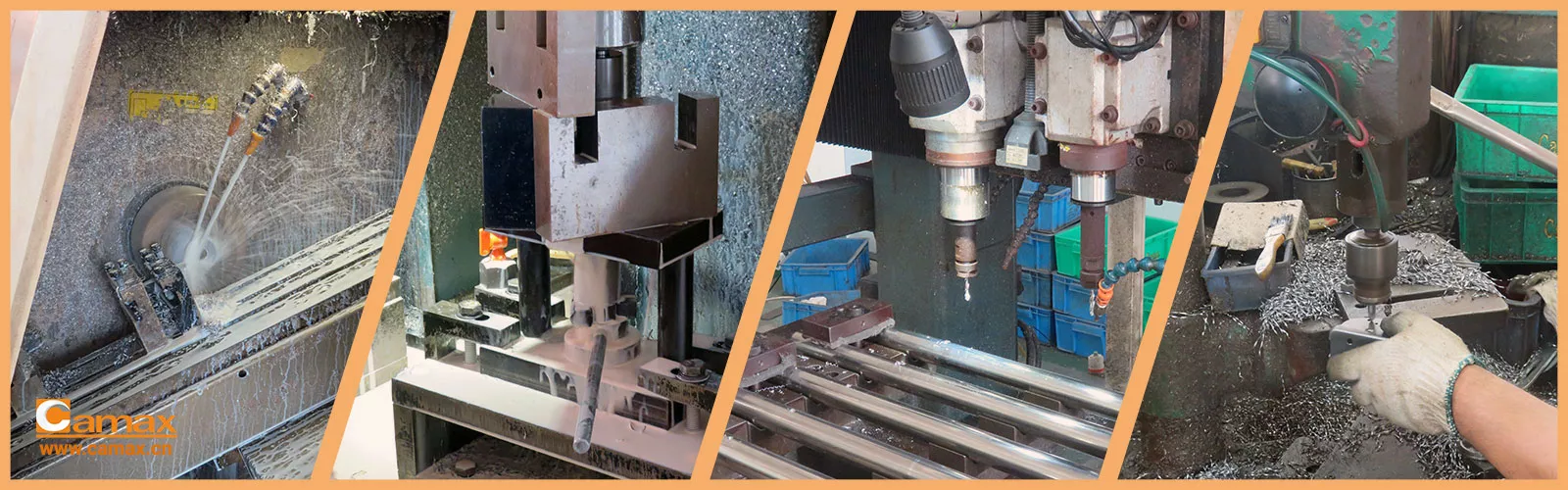
From material selection to precision manufacturing and certification support, Camax focuses on delivering stable quality and long-term reliability for demanding door hardware projects.
Contact Camax Hardware To Select The Right Butt Hinges
Door butt hinges may appear simple, but the right choice makes a measurable difference in safety, durability, and compliance. Material, bearing type, and certification should always be considered, especially for commercial and fire-rated doors. Working with an experienced manufacturer like Camax Hardware helps ensure your projects meet performance expectations and regulatory requirements with confidence.
Contact Camax Hardware to discuss your specific requirements for butt hinges. Our team can help you select the right solutions to ensure your doors operate smoothly, safely, and reliably for years to come.
Need help? Contact Camax for a quote!
Discover Camax's door & window hardware with ANSI/BHMA/UL/CE certification today!