


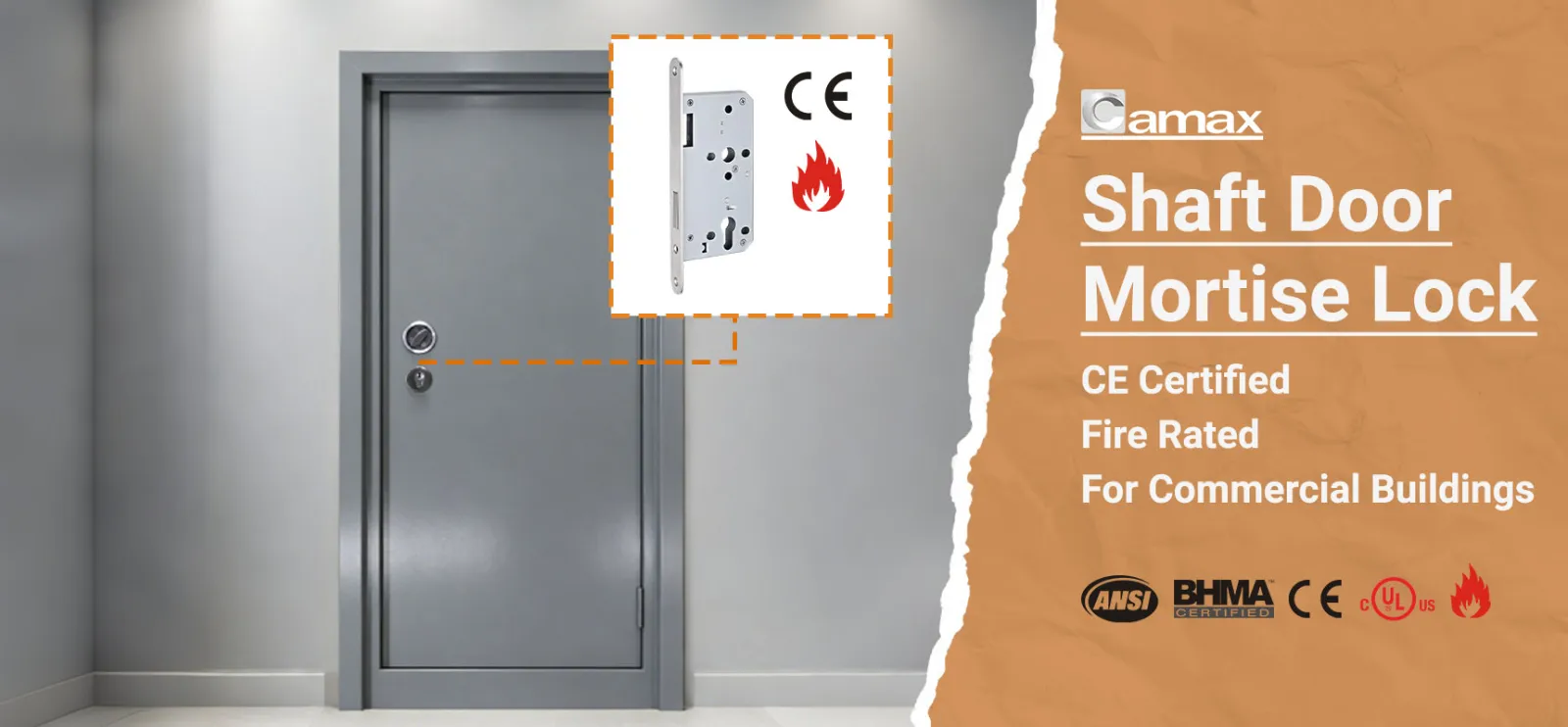
A shaft door is any access door designed to seal off a vertical or horizontal utility passage within a building. These include electrical riser rooms, mechanical service shafts, plumbing chases, and elevator machine room entrances. Unlike a standard interior door, a shaft door often serves as part of a fire compartmentation strategy, which means the lock must perform reliably in normal conditions and remain functional under elevated temperatures.
Unauthorized access to these areas can lead to serious safety incidents: disrupted electrical systems, fire suppression interference, or elevator safety hazards. For these reasons, building codes in most countries specifically address hardware requirements for shaft access doors, including provisions for fire-rated lock assemblies. A shaft door lock therefore carries responsibilities that go well beyond simple access control.
This guide covers everything you need to know about choosing a mortise lock for a shaft door: what it is, why it works better than standard alternatives, how to match the right product to your door type, and what fire rating requirements you should be aware of. Whether you are specifying hardware for a high-rise project or sourcing components for a door manufacturing line, this article will help you make a well-informed decision.
Table of contents
What Is a Mortise Lock for a Shaft Door?
If you have asked yourself exactly what an EN mortise lock is for a shaft door, the answer begins with how the lock sits inside the door. A mortise lock is a self-contained lock body that is recessed into a precisely cut pocket, known as a mortise, in the edge of the door leaf. Unlike a surface-mounted cylindrical lock that relies on the door face for support, the mortise body is encased entirely within the door structure, giving it inherently greater resistance to physical attack.
For shaft door applications specifically, the mortise lock is built around a single active component: a deadbolt. Shaft doors are not meant to click shut automatically on every pass; they are secured access points that should open and close only through deliberate, authorised action. The deadbolt extends squarely into the strike plate when locked and retracts fully when the correct key is used, leaving no protruding hardware that could be manipulated or forced.
The security advantages of this configuration are meaningful. With no exposed bolt housing on the door face and no angled latch to target, there is very little for an intruder to work with. The cylinder sits recessed and protected by the escutcheon plate, and the deadbolt engages deep within the strike box. In a utility shaft environment where a security breach could go undetected for days, this type of robust, deliberate-action locking is exactly what the application calls for.
How Does a Mortise Lock Work on a Shaft Door?
Understanding how a mortise lock works on a shaft door makes it easier to specify the right product and brief maintenance teams on correct operation. The mechanism is straightforward, and that simplicity is part of what makes it reliable over the long term.
At the center of the lock body is a single square-headed deadbolt. When the door is closed and the key is turned, the deadbolt extends horizontally out of the lock body and seats itself into the strike box mortised into the door frame. This is a positive, positive-engagement action: the bolt does not spring, it does not self-latch, and it does not move unless deliberately operated. To unlock, the key is turned in the opposite direction and the deadbolt retracts fully into the lock case, freeing the door.
Why a Mortise Lock Is Better for a Shaft Door than Standard Options?
Many facility managers ask whether a mortise lock is good for a shaft door, or whether a standard cylindrical lock would do the job. The short answer is that for most commercial shaft door applications, a standard lock falls well short of what is needed. Here is a clear look at the differences.
The difference in durability is particularly notable in shaft door settings. Service personnel may access these areas hundreds of times over the life of a building. A lock that degrades after a few thousand cycles will create maintenance burdens and potential security gaps. A well-built commercial mortise lock for a shaft door typically carries ratings of 500,000 cycles or more, making it a genuinely long-term solution.
Door integration is another critical factor. Because the mortise lock body is embedded within the door, it does not create stress concentrations on the door face the way a surface-mounted lock does. This is especially relevant on steel shaft doors, where any flex or vibration in heavy industrial environments can gradually loosen surface-mounted hardware.
| Feature | Mortise Lock | Regular Door Lock |
|---|---|---|
| Security | High | Moderate |
| Durability | Excellent | Standard |
| Commercial Use | Ideal | Limited |
| Fire Door Compatibility | Available | Limited |
| Service Life | Long | Medium |
Camax Mortise Lock Solutions for Every Shaft Door Application
Camax Hardware manufactures a range of mortise locks built specifically for shaft door environments, serving hardware distributors, door manufacturers, project contractors, and OEM clients across global markets. If you are trying to work out how to choose a mortise lock for a shaft door, the decision usually comes down to three variables: door material, traffic level, and fire rating requirements.
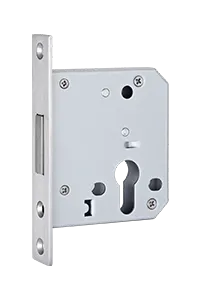
Camax manufactures deadbolt mortise locks suited to steel doors and wood doors. For steel doors, the lock body is built from stainless steel 304 with a reinforced bolt mechanism, sized to match standard shaft door cutout preparations. For wooden doors, a slimmer case profile fits standard timber thicknesses without compromising security, and trim options are available to suit interior finishes.
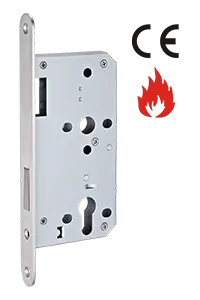
Camax mortise locks for fire doors are CE certified and carry a 4-hour fire rating, making them suitable for the most demanding fire separation requirements in both European and international projects. Full certification documentation is available to support building inspection, specification approval, and project handover.
- • Dead bolt lock
- • Certificate: CE certificate, 4-hour fire rated; 3C-1b0G2BA10
- • Non-handed
- • Lock case seal, zinc plated
- • Dead bolt made of stainless steel 304
- • Bolt projection, double throw, 20mm
- • 8mm square steel follower in steel
- • Hole for standard fixings
- • Dead bolt fire rated lock
- • Non-handed
- • Dead bolt is made of stainles steel 304
- • Forend is made of stainless steel 304
- • Follower is cast from stainless steel 304
Contact Camax to Upgrade Your Shaft Door Security With CE-Certified Mortise Locks
Selecting the right mortise lock for shaft door applications is critical for security, maintenance efficiency, and regulatory compliance. Whether your project requires a mortise lock for steel shaft door, a mortise lock for wooden shaft door, or a fire rated mortise lock for shaft door, choosing a trusted manufacturer can make a significant difference.
Camax provides professional shaft door lock solutions designed for commercial buildings, industrial facilities, residential developments, and OEM projects worldwide. Our products combine advanced engineering, reliable performance, and international quality standards.
Contact Camax today to discuss your requirements, request product specifications, obtain technical support, or receive a customized quotation for your next project.
Need help? Contact Camax for a quote!
Discover Camax's door & window hardware with ANSI/BHMA/UL/CE certification today!