


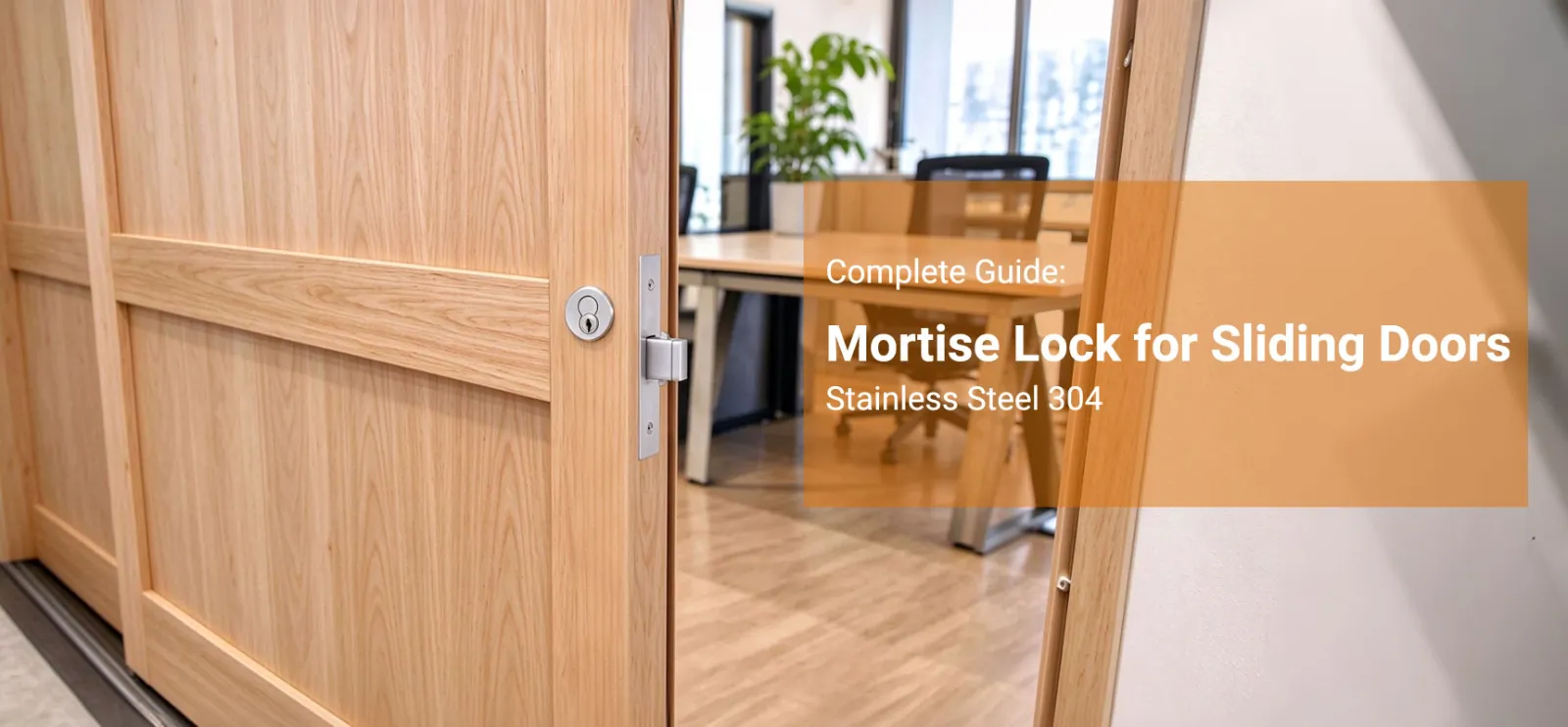
Sliding doors are used in residential buildings, commercial interiors, offices, and various architectural projects. Their locking requirements, however, are different from those of conventional hinged doors. Since a sliding door moves horizontally rather than swinging toward a frame, its lock must engage securely without interfering with the door's movement.
Mortise locks for sliding doors provide an integrated locking solution, with the lock case fitted into a prepared recess in the door. The mechanism may use a hook bolt, deadbolt, or another locking component, depending on the door design and security requirements. The choice of lock is not simply a matter of selecting a suitable handle or cylinder. The lock case, bolt movement, door profile, and strike arrangement must work together.
Table of contents
What Is a Mortise Lock for a Sliding Door?
A sliding door mortise lock is a locking mechanism installed inside a cavity cut into the edge or stile of a sliding door. Unlike surface-mounted locks, which remain visible on the door face, a mortise lock sits within the door structure. This arrangement keeps the hardware relatively compact and allows it to work with recessed handles or other door fittings.
A typical sliding door mortise lock consists of several components:
Lock case: The enclosed housing that contains the internal locking mechanism.
Locking bolt: A hook bolt, deadbolt, or other bolt that secures the door when engaged.
Handle or thumbturn: The operating component used to control the lock, depending on its function.
Cylinder: The key-operated component used to control locking and unlocking on compatible models.
Strike plate or keeper: The receiving component fitted to the adjacent frame or fixed panel.
When the door reaches its closed position, the locking bolt moves into the corresponding strike or keeper. The exact engagement method depends on the lock design. For this reason, a mortise lock must be selected according to the sliding door's profile and the available installation space, rather than by appearance alone.
How Does a Sliding Door Mortise Lock Work?
The operating principle depends on the locking function. On a key-operated model, turning the key moves the internal mechanism and extends or retracts the locking bolt. Some designs also provide a thumbturn on the inside, allowing the user to operate the lock without a key.
Hook bolt mechanisms are particularly relevant to sliding door applications. When the lock is engaged, the curved bolt projects from the lock case and catches behind a compatible strike or keeper. This connection helps prevent the door from being pulled directly away from the receiving component. It is important that the hook and strike are designed to work together; an incorrectly positioned keeper can prevent full engagement or make the lock difficult to operate.
The strike plate is therefore more than a finishing accessory. Its position, opening dimensions, and fixing arrangement affect how reliably the locking mechanism works. Door movement, frame tolerances, and installation accuracy should all be considered when specifying the hardware.
What Types of Mortise Locks Are Used for Sliding Doors?
Several locking mechanisms may be used in sliding door systems. They are not interchangeable, and the most suitable option depends on how the door is constructed and how it needs to be secured.
1. Hook Bolt Mortise Locks
Hook bolt mortise locks are commonly associated with sliding doors. Instead of extending straight into a strike opening, the bolt curves or hooks around a compatible keeper. Once engaged, the hook creates a mechanical connection between the moving door and the fixed frame or panel.
This arrangement is useful where the door needs to resist being pulled apart from its closed position. Hook bolt locks are often considered for aluminum and other sliding door systems, provided the lock dimensions and bolt geometry match the door profile. Buyers should check the hook projection, engagement depth, and strike dimensions before confirming compatibility.
2. Deadbolt Mortise Locks
A deadbolt mortise lock uses a solid projecting bolt to secure the door. When locked, the bolt extends into a receiving opening in the frame or an appropriate strike component. Unlike a spring-loaded latch, a conventional deadbolt is generally operated by a key or thumbturn.
Deadbolt mechanisms can be used in certain sliding door designs, but their suitability depends on the available space and the relationship between the door and frame. The bolt must enter its receiving component cleanly when the door is closed. A deadbolt designed for a hinged door should not be assumed to work on a sliding system without checking its geometry and installation requirements.
3. Latch-Based Mortise Locks
Latch-based mortise locks use a retractable latch to hold a door in its closed position. Depending on the design, the latch may be operated by a handle, key, or another control mechanism.
These locks are more dependent on the door's closing arrangement. A latch intended for a swinging door may rely on the door pressing against the frame and entering a strike in a particular direction. Sliding doors approach the frame differently, so the latch shape, direction of movement, and strike configuration must be suitable for the application.
For many sliding door projects, a purpose-designed hook bolt mechanism is a more relevant starting point than a conventional latch. The final choice should still be based on the complete door system and its intended use.
Camax Mortise Lock Manufacturing and OEM/ODM Solutions
Camax has been manufacturing door hardware since 2006, with product lines covering mechanical and electrified locking solutions, panic exit devices, concealed hinges, cylinders, and door handles. Its mortise lock manufacturing experience supports projects that require attention to lock construction, operating functions, dimensions, and application requirements.
Sliding door projects often involve specific dimensional constraints. Aluminum profiles, for example, may leave limited space for the lock case and operating components. The required backset, faceplate size, bolt projection, and strike position can vary between door systems. A product that fits one profile may not suit another.
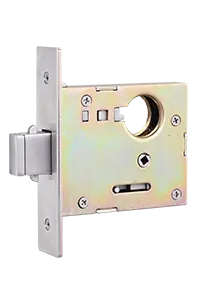
- • ANSI mortise lock for sliding doors
- • Self-retracting hook with non-marring latch bolt
- • Stainless stel 304 deadbolt with 1" (25.4mm) throw
- • Stainless steel face plate
- • ANSI mortise lock for sliding doors
- • Self-retracting hook with non-marring latch bolt
- • Stainless stel 304 deadbolt with 1" (25.4mm) throw
- • Stainless steel face plate
Mortise Locks for Sliding Doors vs. Hinged Doors
Although both door types can use mortise-mounted locking hardware, their operating conditions are different. A lock selected for a hinged door may not be suitable for a sliding door, even if the lock case appears to fit.
| Consideration | Sliding Door Mortise Lock | Hinged Door Mortise Lock |
|---|---|---|
| Door Movement | Moves horizontally along a track. | Swings around hinges. |
| Locking Engagement | Often uses a hook bolt or another bolt designed for the sliding system. | Commonly uses a latchbolt and/or deadbolt. |
| Installation | Must fit the sliding door stile, profile, and available cavity. | Must fit the door edge and the prepared mortise. |
| Strike Arrangement | Must accommodate the position and movement of the sliding panel. | Must align with the door's closing position and swing path. |
| Key Consideration | Bolt engagement, keeper position, and operating clearance. | Door handing, backset, latch function, and strike alignment. |
Tips: Can a Standard Mortise Lock Be Used on a Sliding Door?
Not necessarily. A standard mortise lock designed for a hinged door may use a latchbolt or deadbolt arrangement that does not match the movement and closing geometry of a sliding door. Even when the lock case can physically fit inside the door, the bolt may not engage correctly with the frame.
Before selecting a product, check the intended application stated by the manufacturer. The lock, strike, and door profile should be assessed as a complete system. If a standard lock is being considered for a non-standard application, obtain confirmation of compatibility rather than relying on similar dimensions or appearance.
How to Choose the Right Mortise Lock for a Sliding Door
Product selection should begin with the door itself. The following points help buyers compare sliding door mortise locks and provide manufacturers with the information needed for a more accurate product recommendation.

1. Check the Door Material and Profile
Sliding doors may be made from aluminum, timber, or other materials. Their internal construction and available space can differ considerably. Aluminum sliding doors, in particular, often use narrow profiles, making the lock case dimensions and faceplate size important. Confirm the door profile before choosing a model.
2. Confirm the Lock Case Dimensions
Check the lock case height, depth, width, backset, and faceplate dimensions. The available cavity must accommodate the complete lock body without weakening the door structure or interfering with other fittings. Do not rely on the external appearance of a lock to determine whether it will fit.
3. Select the Appropriate Locking Mechanism
Decide whether the project requires a hook bolt, deadbolt, or latch-based mechanism. Consider how the bolt will engage with the frame and whether the selected arrangement provides the required level of security and ease of operation. The strike or keeper must be compatible with the chosen bolt.
4. Consider the Operating Method
Key operation, an internal thumbturn, and handle-controlled functions serve different user requirements. Some projects need access from both sides, while others require key control from the outside and convenient locking from the inside. Confirm the required function before requesting a quotation.
5. Evaluate Security and Cylinder Compatibility
The security of a sliding door depends on more than the lock itself. Bolt engagement, strike fixing, door construction, cylinder quality, and the strength of the surrounding frame all matter. Check that the cylinder and locking mechanism are designed to work together, and consider the security requirements of the building.
6. Check Installation Clearance and Alignment
The lock needs enough space for the bolt to extend and retract without obstruction. The strike must also be positioned accurately. Insufficient clearance or poor alignment can lead to difficult operation, incomplete locking, and premature wear. Where possible, use the door manufacturer's drawings during the specification process.
7. Choose Suitable Materials and Finishes
Material and finish selection should reflect the installation environment. Doors exposed to moisture, frequent handling, or demanding operating conditions may require suitable corrosion-resistant materials and protective finishes. Buyers should confirm the material specifications rather than judging durability from appearance alone.
Contact Camax to Specify the Lock Around the Sliding Door
Selecting mortise locks for sliding doors requires more than matching a lock to the door's external dimensions. The locking mechanism, door profile, lock case, bolt projection, strike arrangement, and operating function all need to work together. Hook bolt designs are particularly relevant to many sliding door systems, while deadbolt and latch-based options depend on the specific door construction.
For distributors, door manufacturers, and project purchasers, providing accurate technical information at the beginning of the sourcing process can prevent unnecessary product changes and installation problems. Camax offers experience in commercial door hardware manufacturing and OEM/ODM cooperation for project-specific requirements.
Discuss Your Door Hardware Requirements with Camax
Looking for a mortise lock solution for a sliding door project? Share your door profile, required dimensions, locking function, and application details with Camax. Our team can review your requirements and discuss suitable product options or potential OEM/ODM development.