


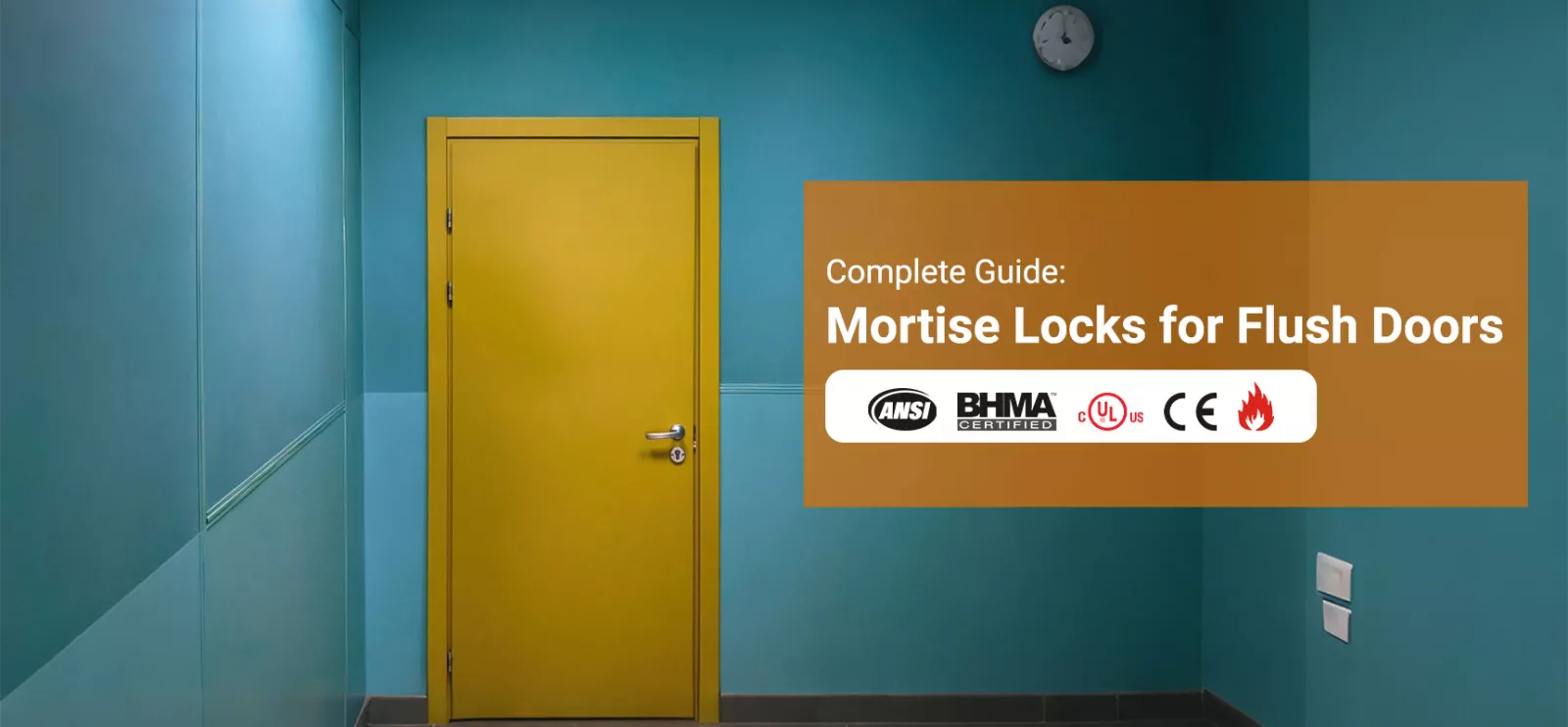
Flush doors have become a defining feature of modern architecture. With their flat surfaces, clean lines, and minimal detailing, modern flush doors are widely used in residential developments, hotels, offices, healthcare facilities, and educational buildings. However, this minimalist design places higher demands on hardware selection—especially when choosing the right mortise lock for flush door applications.
Unlike rebated doors, flush doors offer no overlapping edges to hide or compensate for poorly selected hardware. Every component, including the lock body, latch, and trim, directly impacts appearance, performance, and long-term reliability. Selecting the wrong lock can compromise aesthetics, durability, or even regulatory compliance.
This article explains how mortise locks work on flush doors, how to choose the right configuration, and why professionally manufactured solutions play a critical role in modern projects. Read on to understand what truly matters when specifying mortise locks for flush door systems.
Table of contents
What Is a Mortise Lock for a Flush Door?
A mortise lock is a locking mechanism installed entirely inside the door leaf. For a mortise lock for flush wooden door or a mortise lock for flush timber entrance door, a pocket is precisely cut into the edge of the door to house the lock body. Only the faceplate, spindle holes, and cylinder openings remain visible.
This concealed installation method is particularly well suited to flush doors, where surface-mounted hardware would interrupt the clean architectural appearance. Mortise locks also distribute force more evenly across the door structure, which improves durability and security.
Flush doors may be constructed from timber, steel, or composite materials. Timber flush doors require careful attention to mortise depth and backset, while steel flush doors often demand reinforced lock cases and fire-rated compatibility. In both scenarios, a properly designed mortise lock ensures reliable performance without weakening the door leaf.
1. Why Architects and Contractors Prefer Mortise Locks on Flush Doors?
The decision to use a mortise lock on a flush door is rarely accidental. Compared to tubular or cylindrical locks, mortise locks provide a stronger mechanical structure and better alignment with minimalist design goals.
For projects with high traffic, such as offices or hotels, mortise locks handle repeated use more effectively. Their compatibility with lever handles, escutcheons, and architectural trims also allows greater design flexibility. This is why many professionals consider a mortise lock not only suitable but often the better choice for flush door installations.

2. Mortise Locks vs Tubular and Cylindrical Locks on Flush Doors
Understanding the difference between mortise and tubular lock for flush doors helps clarify why mortise solutions dominate commercial projects. Tubular and cylindrical locks are easier to install and cost-effective for low-traffic residential use. However, they rely on smaller internal mechanisms and offer limited durability.
Mortise locks require deeper door preparation but deliver superior strength, smoother operation, and a more refined appearance. Tubular locks may be acceptable for closets or secondary rooms, while mortise locks are recommended for main entrances, corridors, and commercial environments where performance and longevity matter.
| Feature | Mortise Lock | Tubular/Cylindrical Lock |
|---|---|---|
| Installation Depth | Requires deeper pocket (typically 4-6 inches), needs thicker door (minimum 1-3/4") | Shallow cross-bore installation, works with thinner doors |
| Structural Integrity | Metal case strengthens door structure, distributes stress evenly | Removes more door material at stress points, potentially weakening structure |
| Security Level | Superior resistance to forced entry, Grade 1 options available | Adequate for residential use, typically Grade 2 or 3 |
| Aesthetic Result | Minimal visible hardware on flush surface, refined appearance | Larger visible escutcheons may disrupt clean lines |
| Longevity | Designed for 1+ million cycles, commercial-grade durability | Suitable for residential use, shorter lifespan under heavy use |
| Cost | Higher initial investment, lower long-term cost | Lower upfront cost, may require replacement sooner |
How to Choose the Right Mortise Lock for a Flush Door?
Choosing the right mortise lock involves more than selecting a latch type. Professionals evaluating how to choose mortise lock for flush door projects should consider door thickness, backset size, usage frequency, and functional requirements.
Slim mortise locks are often specified for narrow stile flush doors, while standard or reinforced cases are preferred for heavy-duty applications. Interior doors may prioritize silent operation, whereas entrance doors demand higher security and fire compliance.
Selection Tip:
The best mortise lock for flush door projects balances door design, functional needs, and long-term maintenance expectations rather than focusing solely on initial cost.
1. ANSI Mortise Locks Designed for Flush Doors
Camax manufactures ANSI commercial mortise locks certified to ANSI/BHMA A156.13 Grade 1, with UL10C 3-hour fire-rated performance. These locks are engineered for demanding commercial environments and are available in multiple ANSI functions, including passage, storeroom, classroom, entrance, bedroom, and deadlock configurations.
Constructed from stainless steel 304 with a variety of architectural finishes, these ANSI mortise locks integrate seamlessly with flush doors while meeting strict durability and safety requirements.
- • ANSI commercial mortise locks
- • Certificate: BHMA listed; ANSI/BHMA A156.13-2020, Grade 1 (1, 000, 000); UL10C 3-hour fire rating.
- • Lockcase: Heavy-gauge steel, with zinc dichromate finish for corrosion resistance.
- • Deadbolt: One-piece stainless steel, 25mm throw.
- • Latchbolt: Stainless steel, 2 pieces mechanical with anti-friction insert, 19mm throw.
- • Auxiliary Latchbolt: stainless steel.
- • Strike: stainless steel, ANSI straight lip standard 4-7/8" (124mm) x 1-1/4" (32mm).
- • Door thickness: 1-3/4" (45mm) standard. Optional 1-3/8" (35mm), 2-1/2" (64mm).
- • Backset: 2 3/4" (70mm).
| Outside/Inside | SKU | Type | ANSI | Function Description |
|---|---|---|---|---|
 |
CML804 | Office and Inner Entry Lock | F04 | Latch bolt operated by lever from either side except when outside lever is made inoperative by thumbturn or key. When the outside lever is locked, the latch bolt is retracted by key from the outside or by operating the inside lever. Auxiliary dead latch. |
 |
CML809 | Apartment Entrance Lock | F09 | Latch bolt operated by lever from either side, except when outside lever is locked by key from inside. When outside lever is locked, latch bolt is retracted by the key from the outside or by operating the inside lever. Auxiliary dead latch. |
 |
CML820 | Entrance Lock | F20 | Latch when outside from either side, except when the outside lever is made inoperative by thumbturn. Deadbolt operated by key outside or turn inside. The key outside operates both bolts. The operating inside lever retracts both bolts and the outside remains locked. The latch bolt is dead-locked when the outside lever is made inoperative or when the deadbolt is projected. When deadbolt is retracted, the lever is unlocked by thumbturn. |
 |
CML801 | Passage Latch | F01 | Latch bolt operated by lever from either side at all times. |
 |
CML831 | Exit or Communicating Lock | F31 | Latch bolt operated by lever from inside. Non-removable blank trim or no trim outside. |
 |
CML802 | Privacy, Bedroom or Bath Lock | F22 | Latch bolt retracted by knob/lever from either side unless outside is locked by inside thumbturn or outside coin turn. Operating the inside knob/lever, closing the door, rotating the inside thumbturn, or rotating the outside coin turn unlocks the outside knob/lever. The inside knob/lever is always free for immediate egress. |
 |
CML802B | Privacy, Bedroom or Bath Lock | F22 | Latch bolt retracted by knob/lever from either side unless outside is locked by inside thumbturn. Operating the inside knob/lever, closing the door, or operating outside emergency release unlocks the outside knob/lever. The inside knob/lever is always free for immediate egress. |
 |
CML819 | Privacy with Deadbolt and Coin Turn Outside | F19 | Latchbolt retracted by knob/lever from either side. Deadbolt thrown or retracted by inside thumbturn or outside coin turn. Throwing deadbolt locks outside knob/lever. Rotating the inside knob/lever simultaneously retracts the deadbolt and latch bolt, and unlocks the outside knob/lever. Rotating the outside coin turn retracts the deadbolt and unlocks the outside knob/lever. Available with rose trim only. The inside lever is always free for immediate egress. |
 |
CML819B | Privacy with Deadbolt and Cylinder Outside | F19 | Latchbolt retracted by knob/lever from either side. Deadbolt thrown or retracted by inside thumbturn or outside CYLINDER. Throwing deadbolt locks outside knob/lever. Rotating the inside knob/lever simultaneously retracts the deadbolt and latch bolt, and unlocks the outside knob/lever. Rotating outside CYLINDER retracts the deadbolt and unlocks the outside knob/lever. Available with rose trim only. The inside lever is always free for immediate egress. |
 |
CML805 | Classroom Lock | F05 | Latch bolt operated by lever from either side except when outside lever is locked from outside by key. When the outside lever is locked, the latch bolt is retracted by key, or by operating the inside lever. Auxiliary dead latch. |
 |
CML829 | Classroom Dead Lock | F29 | Key from outside operates deadbolt. Turn from inside retracts but does not project deadbolt. |
 |
CML807 | Storeroom Lock | F07 | Latch bolt operated by key from outside or by operating inside lever. The outside lever is always inoperative. Auxiliary dead latch. |
 |
CML814 | Store/Utility Room Lock with Deadbolt | F14 | Latch bolt operated by lever from either side. Deadbolt operated by key from either side. |
2. EN Mortise Locks for European Flush Door Projects
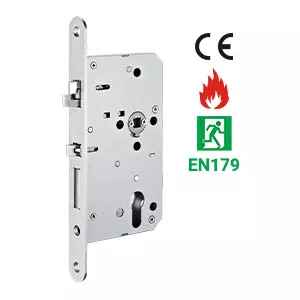
For projects following European standards, Camax also produces EN-certified mortise locks with CE marking and up to 4-hour fire resistance. These locks support functions such as sash locks, bathroom locks, latch bolts, exit locks, and classroom configurations.
With sealed lock cases, zinc-plated components, and stainless steel construction, EN mortise locks are well suited to both residential and commercial flush door systems across global markets.
Camax's Mortise Locks
View All Mortise Locks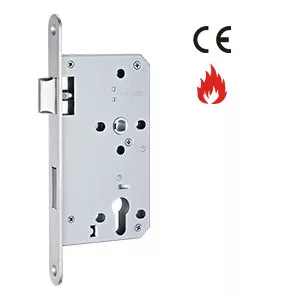
72-55A/72-60A/72-65A
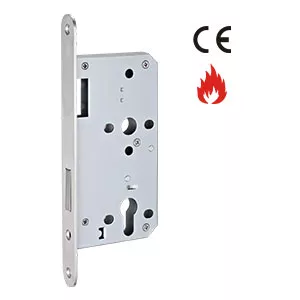
72-55D/72-60D/72-65D
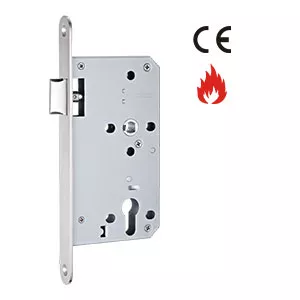
72-55L/72-60L/72-65L
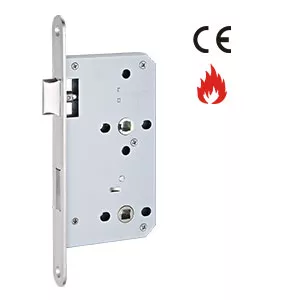
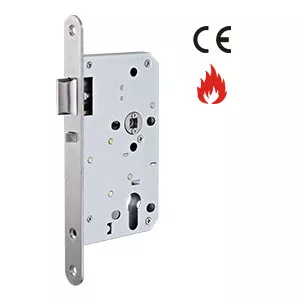
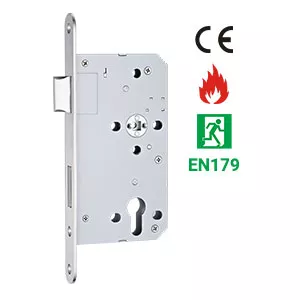
72-60T/72-65T
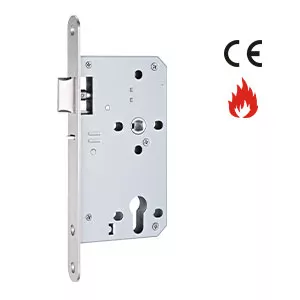
72-60F
72-60TF
Silent Mortise Locks for Bedrooms and Bathrooms
Noise reduction is an increasingly important consideration, especially in hotels, apartments, and private residences. A silent mortise lock for flush door applications uses dampened or plastic latch mechanisms to reduce clicking sounds during operation.
A silent mortise lock for bedroom flush door environments improves comfort and privacy, while a privacy mortise lock for bathroom flush door configurations provides both discretion and functionality. These solutions are particularly valued in hospitality projects where user experience directly impacts satisfaction.
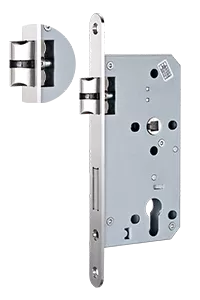
- • Lock with silent latch
- • Latchbolt with plastic piece to reduce noise.
- • These latchbolt can be applied to all locks with latch bolt.
- • "N" means lock with silent latch bolt.
Fire-Rated Mortise Locks for Flush Doors
In many commercial buildings, fire-rated doors are mandatory. A fire rated mortise lock for flush door must be tested as part of a complete door assembly to ensure it does not compromise fire resistance.
Standards such as UL10C and EN fire testing verify that mortise locks can withstand high temperatures while maintaining structural integrity. A common mistake is installing non-rated locks on fire doors, which can invalidate certification and create safety risks.
Proper compatibility between the mortise lock, trim, and lever handle is essential for compliance. Working with experienced manufacturers helps avoid costly errors during specification and installation.
Tips: OEM and ODM Mortise Lock Solutions for Flush Door Projects
Modern construction projects often require more than off-the-shelf solutions. Camax provides OEM and ODM mortise lock options for modern flush doors, supporting custom backsets, case dimensions, finishes, and branding.
Whether the project involves wood, steel, or fire-rated flush doors, Camax adapts mortise lock designs to suit specific door constructions and long-term supply requirements. This manufacturing flexibility allows developers and distributors to maintain consistency across large-scale projects.
Contact Camax and Select the Right Mortise Lock for Flush Doors
Flush doors demand careful hardware selection. From aesthetics and durability to silent operation and fire compliance, choosing the right mortise lock directly influences both performance and user experience.
For flush door projects requiring reliable, code-compliant mortise locks, working with an experienced manufacturer like Camax helps ensure performance, consistency, and long-term value.
If you are specifying mortise locks for flush door projects and need technical guidance, customization options, or long-term supply support, contact Camax to discuss your project requirements with our engineering team.
Need help? Contact Camax for a quote!
Discover Camax's door & window hardware with ANSI/BHMA/UL/CE certification today!