

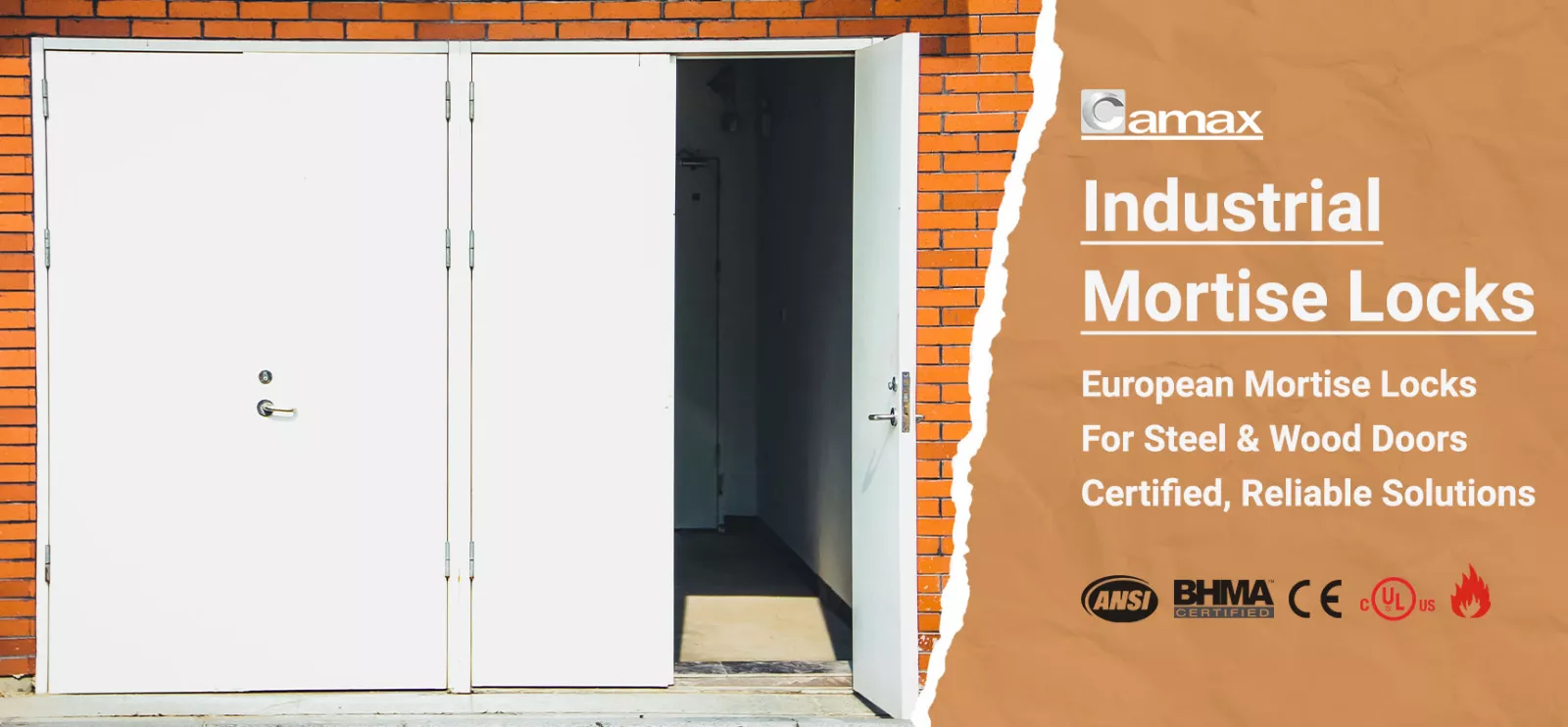
Industrial facilities depend heavily on reliable door hardware to maintain security, safety, and operational continuity. Whether it is a warehouse entrance, factory production area, or commercial loading zone, the locking system plays a critical role in protecting property and ensuring controlled access. A dependable European mortise lock for industry is widely recognized as one of the most trusted solutions for industrial door security.
Staff need to move freely between areas during normal operations. In an emergency, every second counts, and a malfunctioning lock and industrial door hardware can turn a manageable situation into a serious one. Access control has to work alongside all of this: the right people get through, the wrong ones don't.
This is why the European mortise lock for industry has become such a standard choice across the sector. Whether you're specifying a mortise lock for steel door applications on a production floor or managing access to a warehouse, the euro profile mortise lock offers a practical combination of security, durability, and flexibility that surface-mounted locks simply can't match. This guide walks through what you need to know before you buy.
Table of contents
What Is a European Mortise Lock?
A European mortise lock is a lock mechanism installed inside a pocket, or mortise, cut into the door itself. Unlike a surface-mounted lock, which sits on the face of the door, a mortise lock is recessed flush with the door edge. This approach has two immediate advantages: the lock body is protected from tampering, and the door retains a clean, professional finish.
The lock uses a Euro profile cylinder, a standardized cylinder format that has become the dominant standard across European and international commercial construction. Because the cylinder follows a common specification, replacement and rekeying are straightforward, which matters a great deal in facilities where staff turnover and security reviews happen regularly.
Industrial doors require strong and stable locking mechanisms
Security and access control protect valuable equipment and inventory
Reliability reduces downtime and maintenance costs
A European mortise lock is designed for heavy-duty performance
How Does a European Mortise Lock Work?
Understanding how a European mortise lock works takes some of the mystery out of specifying and maintaining one. The sequence is simple: when you insert the key and turn it, the cylinder rotates its internal cam. That cam engages a follower inside the lock body, which in turn extends or retracts the deadbolt. The deadbolt slides into the strike plate pocket in the frame, and the door is secured.
The latch bolt operates separately. It's spring-loaded and catches automatically as the door closes, so staff don't need to actively engage it. Pressing a handle or lever retracts the latch for opening.
Key control, meaning the ability to restrict who can copy the key, is another practical feature of the euro profile system. High-security cylinders with restricted key profiles are readily available and compatible with most standard lock cases, giving facilities a way to manage access without switching to an entirely different hardware family.
Why Does the Correct Euro Mortise Lock Matter for Industrial Environments?
Many professionals ask why are European mortise locks used in industry. The answer lies in their performance advantages. Industrial facilities demand hardware that can withstand heavy use while maintaining consistent security.
Tips:
A quality heavy-duty European mortise lock can be rated for hundreds of thousands of operating cycles, which translates to many years of reliable service even on high-traffic industrial doors.
Durability is the starting point. Industrial environments are tough on hardware. Temperature swings, heavy door weights, and constant use all take their toll. A heavy-duty European mortise lock built to relevant EN standards is designed to handle this, with internal components rated for high cycle counts and housings that resist corrosion and mechanical stress.
Standardization makes management easier. Because the euro profile cylinder is a common standard, facilities managers can specify a consistent hardware family across an entire site. Spare cylinders, replacement parts, and service expertise are all widely available.
In each of these settings, the mortise lock for an industrial entrance door typically needs to satisfy multiple requirements at once: reliable latching, secure deadbolt action, potential fire rating compliance, and compatibility with access control. The euro mortise lock system is structured to meet all of these from a single hardware family.
Popular Types of European Mortise Locks for Industrial Door Applications
Different industrial environments require different locking functions. The following categories represent the most commonly used euro profile mortise lock designs in modern facilities.
1. European Exit Locks for Emergency Egress
In any building where people gather, emergency egress has to be fast and reliable. An exit lock is designed specifically for this purpose: it allows occupants to leave quickly without needing a key, while still providing security against unauthorized entry from outside.
Camax manufactures a range of European mortise locks certified for emergency exit applications. These locks comply with relevant EN standards for panic and fire exit hardware, and are built for installations on fire escape routes, stairwells, and emergency doors where a standard Euro mortise lock would not be appropriate.
- • Exit Lock
- • Certificate: CE, 4-hour fire rated; EN12209:3X91b0G2BA10; EN179:376B(b)1322AB
- • Lock case seal, zinc plated
- • Latch and bolt made of stainless steel 304
- • Hole for standard fixings
- • Non-handed
- • Automatic Deadbolt Locking Mortise Lock
- • EN12209 in preparation
- • Lock case seal, zinc plated
- • Latch and bolt made of stainless steel 304
- • Bolt projection, one throw, 20mm
- • 8mm square steel follower in steel
- • Non-handed
2. European Mortise Locks for Wood and Metal Doors
Standard entry doors, internal passage doors, washroom doors, and warehouse access points all have different functional requirements. Camax offers a range of EN mortise locks for industrial door applications, each certified to relevant CE standards and available in multiple function types, including entry, passage, washroom, and dead-locking configurations.
Whether the substrate is a timber fire door or a heavy steel panel, a correctly specified mortise lock for fire doors in this range will provide reliable, long-term performance. For steel door installations in particular, a fire-rated European mortise lock version is available to meet fire resistance requirements alongside the locking function.
- • Sash Lock
- • Certificate: CE, 4-hour fire rated; EN12209:3X91b0G2BC10
- • Lock case seal, zinc plated
- • Latch and bolt made of stainless steel 304
- • Bolt projection, double throw, 20mm
- • Non-handed
- • Bathroom Lock
- • Certificate: CE, 4-hour fire rated; EN12209:3X9b0G0BG10
- • Follower to keyway centers 78mm
- • Lock case seal, zinc plated
- • Latch and bolt made of stainless steel 304
- • Non-handed
- • Latch Bolt Fire-Rated Lock
- • Certificate: CE, 4-hour fire rated; EN12209:3X91b0G0B010
- • Lock case seal, zinc plated
- • Latch made of stainless steel 304
- • 8mm square steel follower in steel
- • Non-handed
- • Dead Bolt Lock
- • Certificate: CE, 4-hour fire rated; 3C-1b0G2BA10
- • Lock case seal, zinc plated
- • Deadbolt made of stainless steel 304
- • Bolt projection, double throw, 20mm
- • 8mm square steel follower in steel
- • Non-handed
- • Night Latch Lock
- • Certificate: CE, 4-hour fire rated; EN12209:3X91b0G2BA10
- • Lock case seal, zinc plated
- • Latch made of stainless steel 304
- • 8mm square steel follower in steel
- • Non-handed
3. European Mortise Locks with Special Latches
The standard spring latch does the job in most situations, but certain industrial environments call for something more specific. Noise-sensitive facilities, cleanrooms, high-traffic corridors, and doors subject to misalignment all benefit from a latch type engineered for those particular conditions.
Camax manufactures three specialist latch options that are fully compatible with its range of industrial mortise lock cases, and can be specified as a direct replacement for the standard latch without modifying the lock body.
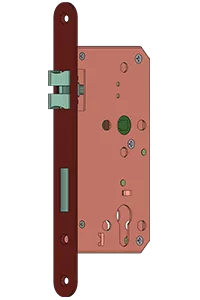
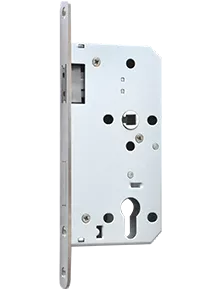
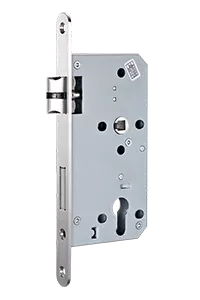
- • Lock with silent latch
- • Latchbolt with plastic piece to reduce noise
- • These latchbolts can be applied to all locks with latch bolt
- • "N" means locks with silent latch bolt
- • Lock with magnetic latch
- • Latchbolt is magnet
- • These latchbolts can be applied to all locks with latch bolt
- • "M" means locks with magnetic latch
- • All latches can be changed into anti-friction
- • "A" means anti-friction latch
Why Choose Camax as Your Industrial Mortise Lock Manufacturer
Camax is a specialist manufacturer of architectural hardware and industrial mortise locks with a product range built around the real-world demands of commercial and industrial construction. Every lock in our catalogue is designed to perform under sustained use, meet relevant certification requirements, and integrate cleanly with modern access control infrastructure.
Our European mortise lock for industry range covers standard, narrow stile, and emergency exit applications, and is available in a range of finishes and function configurations to suit specific project requirements.
We offer full OEM and ODM services for clients who require custom specifications, including modified backsets, alternative finishes, or branded cylinder profiles. Our engineering team works directly with architects, contractors, and procurement managers to ensure every specification is technically sound before it goes to site.
Step by Step Guide to Choosing the Right European Mortise Lock
Knowing how to choose a European mortise lock for an industrial project comes down to working through a short list of practical questions. Each one narrows the field and points you toward the right specification.
Step 1: Determine the Type of Door
Start by identifying the door material and application. Common examples include steel doors, fire doors, and industrial entrance doors. Each door type requires a specific mortise lock for an industrial entrance door configuration.
Step 2: Verify Door Thickness and Dimensions
Door thickness directly affects cylinder length and backset measurement. Using the correct dimensions ensures smooth installation and reliable locking performance.
Step 3: Select the Required Security Level
Security requirements vary by location. Options typically include standard, heavy-duty, and high-security models. Facilities handling valuable equipment often select a heavy-duty European mortise lock for maximum protection.
Step 4: Confirm Safety and Certification Requirements
Industrial buildings must comply with safety regulations. Certifications such as fire resistance and durability testing verify product reliability. A certified fire-rated European mortise lock is essential for emergency exit routes.
Step 5: Consider Environmental Conditions
Environmental factors influence product lifespan. High humidity, outdoor exposure, and heavy industrial use require corrosion-resistant materials and reinforced components.
Contact Camax and Secure Your Industrial Doors with Reliable Locking Solutions
Choosing the right locking system is essential for maintaining safety, protecting assets, and ensuring smooth daily operations. A properly selected European mortise lock for industry provides dependable performance for years of continuous use.
Whether you manage a warehouse, factory, or commercial facility, investing in a high-quality industrial Euro mortise lock helps reduce maintenance costs and improve security reliability. With the right design, materials, and certification, your door hardware can perform consistently even in demanding industrial environments.
Camax manufactures reliable European mortise locks for industrial doors with flexible OEM and ODM services. Our products are designed for durability, safety, and long-term performance in industrial environments worldwide.
Contact Camax today to discuss your project requirements and receive professional support for customized locking solutions.
Need help? Contact Camax for a quote!
Discover Camax's door & window hardware with ANSI/BHMA/UL/CE certification today!