


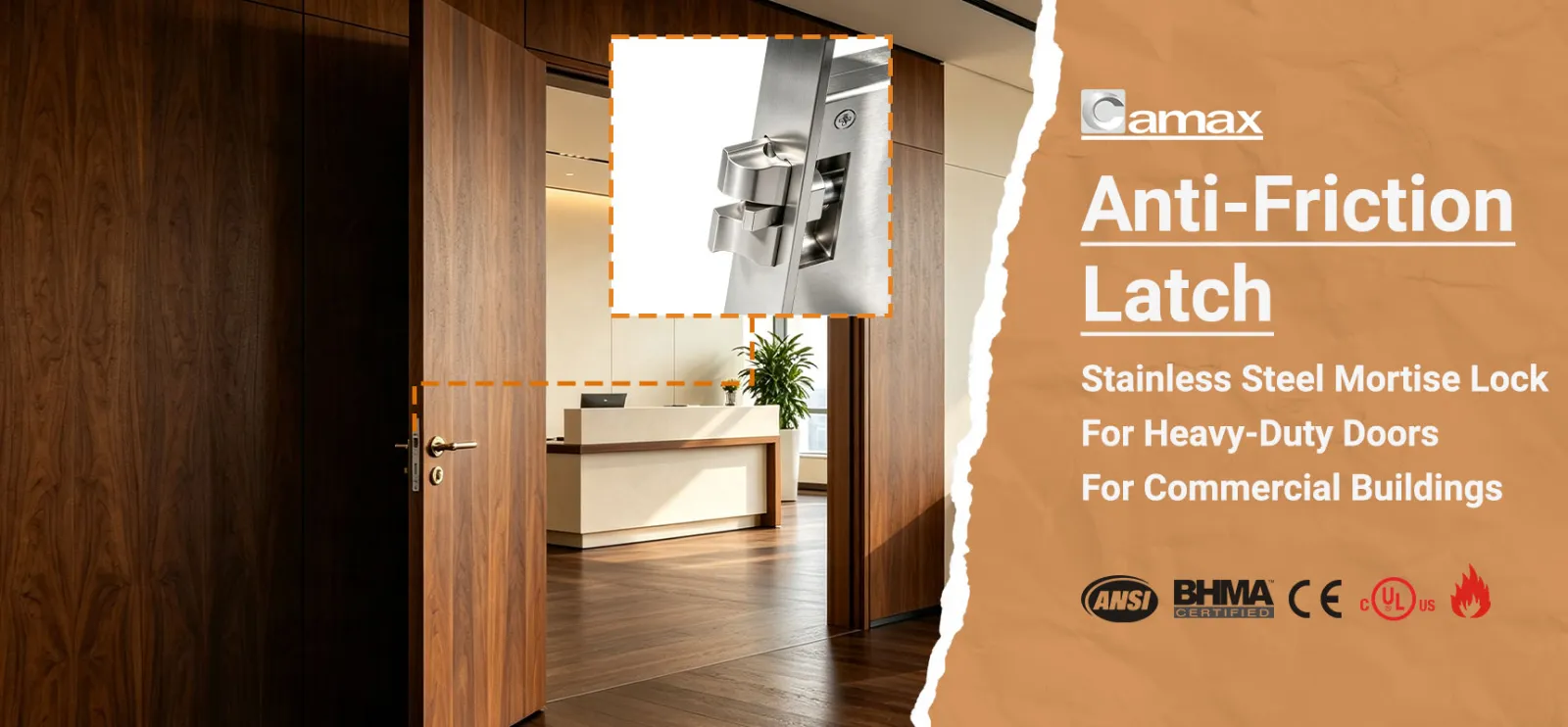
A mortise lock with anti-friction latch is a commercial door lock designed to provide smoother latch operation and reliable performance during frequent door use. The anti-friction mechanism reduces resistance as the latch engages with the strike, making the door easier to close while helping reduce wear on the locking components.
This type of lock is particularly useful for commercial buildings, schools, hospitals, hotels and other facilities where doors are opened and closed many times each day. A commercial mortise lock with anti-friction latch combines the strength of a mortise lock body with a specially designed latch mechanism, while a heavy duty mortise lock with anti-friction latch can provide dependable performance for demanding applications.
Table of contents
What Is a Mortise Lock with Anti-Friction Latch?
If you are asking what is a mortise lock with anti-friction latch, the simplest answer is that it is a mortise lock equipped with a latch mechanism designed to reduce friction when the door closes. The lock body is installed inside a pocket cut into the edge of the door, creating a clean appearance while providing a robust locking structure.
A typical mortise lock body with anti-friction latch can contain several working components, depending on the lock function and application. These may include the main latch bolt, anti-friction mechanism, deadbolt, spindle follower and other internal operating components. The lock works together with a strike installed in the door frame.
1. Why Use an Anti-Friction Latch on a Mortise Lock?
Easier Door Closing
Heavy commercial doors can require considerable force to close when a conventional latch rubs strongly against the strike. An anti-friction mechanism reduces this resistance, helping the latch engage more smoothly. This is useful for large commercial doors, fire doors and other applications where reliable closing is important.
Reduced Wear on Door Hardware
Repeated contact between a latch and strike can contribute to wear over time. By reducing friction during the closing cycle, an anti-friction latch can help minimize stress on the latch, strike and surrounding door hardware. This is especially useful in high-traffic buildings.
More Consistent Performance
Commercial doors may experience minor alignment changes caused by hinge wear, building movement or temperature variations. An anti-friction latch can help maintain smooth operation when the door does not close under perfectly ideal conditions.
Better Everyday User Experience
Schools, hospitals and office buildings may have hundreds or even thousands of door operations every day. A smoother closing action can make the hardware more comfortable to use and reduce the effort required to secure the door.
Suitable for Frequent Operation
One of the main benefits of anti-friction latch mortise locks is their suitability for applications where reliable operation over a large number of cycles is important. When the lock is correctly selected and installed, the anti-friction design can contribute to consistent long-term performance.

How Does an Anti-Friction Latch Work on a Mortise Lock?
If you are wondering how does an anti-friction latch work on a mortise lock, the process begins as the door approaches the frame. The latch mechanism interacts with the strike and is guided into the correct position with less resistance than a conventional sliding latch.
Step 1: The door swings toward the closed position and approaches the frame.
Step 2: The anti-friction component makes first contact with the strike plate, not the main latch bolt.
Step 3: The latch mechanism retracts slightly, using far less force than a direct sliding contact would require.
Step 4: The main latch bolt then enters the strike opening smoothly, with minimal resistance.
Step 5: The door closes securely using noticeably less push force from the user.
When the door moves toward the closed position, the anti-friction component makes initial contact with the strike. The mechanism is designed to reduce the resistance that would otherwise occur when the latch slides against the strike. As the door reaches its final position, the main latch engages with the strike and secures the door.
The exact internal construction can vary between manufacturers and lock functions. For this reason, door manufacturers should always check the technical specifications of the selected mortise lock with anti-friction latch bolt before designing or specifying a complete door assembly.
Mortise Latch vs Anti-Friction Latch: What Is the Difference?
One common search question is what is the difference between a mortise latch and an anti-friction latch? The important point is that a mortise latch describes the latch component used within a mortise lock, while an anti-friction latch describes a particular latch design intended to reduce resistance during door closing.
| Feature | Standard Mortise Latch | Anti-Friction Latch |
|---|---|---|
| Contact with Strike | Primarily sliding contact | Designed to reduce contact resistance |
| Closing Force | Generally higher | Generally lower |
| Door Operation | Standard operation | Smoother closing action |
| High Traffic Suitability | Suitable for many applications | Well suited to frequent operation |
| Hardware Wear | Normal contact wear | Reduced friction can help minimize wear |
It is worth clarifying that an anti-friction latch is not a completely separate category of lock. Rather, it is an upgraded latch design fitted inside a familiar mortise lock body, which is why a mortise lock with anti-friction latch bolt can usually be installed in the same door prep as a standard mortise lock.
Camax Mortise Locks with Anti-Friction Latch
Camax manufactures commercial mortise locks with anti-friction latch mechanisms for a variety of architectural and institutional door applications. The product range can be configured for different door functions and project requirements, giving door manufacturers, distributors and architectural hardware brands greater flexibility when developing their product portfolios.
Camax manufactures a full lineup built around this technology, including commercial mortise locks with anti-friction latch, heavy-duty mortise locks for demanding entrances, classroom mortise locks for education facilities, and stainless steel mortise locks with anti-friction latch for environments that need extra corrosion resistance. Each is tested for durability and consistent performance across thousands of open and close cycles.
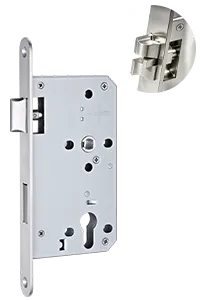
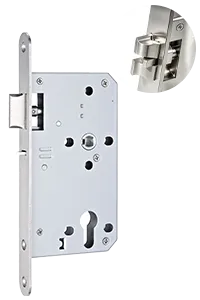
1. Sash Lock with Anti-Friction Latch
A sash lock configuration combines latch and locking functions in one mortise lock body. An anti-friction latch can provide smoother door closing for commercial doors that require regular locking and unlocking.
- • Sash lock
- • Non-handed
- • Lock case seal, zinc plated
- • Latch and bolt made of stainless steel 304
- • Bolt projection, double throw,20mm
- • Latch can be changed into anti-friction
- • 8mm square steel follower in steel
- • Hole for standard fixings
2. Passage Lock with Anti-Friction Latch
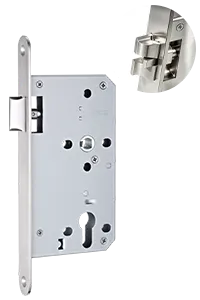
Passage configurations are suitable for doors that need convenient daily access without a dedicated locking function. The anti-friction latch supports smooth operation in frequently used interior and commercial doors.
- • Fire-rated latch bolt lock
- • Non-handed
- • Lock case seal, zinc plated
- • Latch made of stainless steel 304
- • Latch can be changed into anti-friction
- • 8mm square steel follower in steel
- • Hole for standard fixings
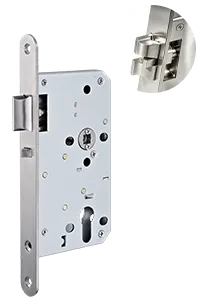
3. Classroom Lock with Anti-Friction Latch
A classroom mortise lock with anti-friction latch is suitable for educational facilities where doors may be operated repeatedly throughout the school day. The combination provides a durable lock body with smoother latch engagement.
- • Classroom lock
- • Non-handed
- • Lock case seal, zinc plated
- • Latch made of stainless steel 304
- • Latch can be changed into anti-friction
- • 8mm square steel follower in steel
- • Hole for standard fixings
4. Storeroom Lock with Anti-Friction Latch
Storeroom mortise locks are designed for controlled access applications. Combining the required locking function with an anti-friction latch can provide reliable operation for commercial storage and service areas.
- • Night latch lock
- • Non-handed
- • Lock case seal, zinc plated
- • Latch made of stainless steel 304
- • Latch can be changed into anti-friction
- • 8mm square steel follower in steel
- • Hole for standard fixings
Tips:
For distributors, contractors and hardware brands, Camax also offers OEM and ODM support so the finished product matches your project or brand requirements. This includes customized dimensions, finish customization, logo marking, packaging customization, and function customization to fit different door and access control setups.
Where Is a Mortise Lock with Anti-Friction Latch Used?
Where is a mortise lock with anti-friction latch used? These locks are particularly suitable for commercial and institutional buildings where doors experience frequent operation and smooth closing is important.
1. Commercial Buildings
Offices, shopping centers and airports require door hardware that can withstand regular use. A commercial door hardware anti-friction mortise lock can provide dependable latch engagement while supporting comfortable daily operation.
2. Schools and Universities
Educational facilities often have classrooms, laboratories and administrative areas with high door traffic. A classroom mortise lock with anti-friction latch can help provide smooth operation and durable performance throughout the school day.
3. Healthcare Facilities
Hospitals and healthcare facilities benefit from door hardware that operates smoothly and consistently. Staff may need to move through doors while carrying equipment or assisting patients, making easy door operation an important consideration.
4. Hotels
Hotels require hardware that combines reliable performance with a refined appearance. An anti-friction latch can help provide smoother closing action in guest rooms, service areas and other frequently used doors.
5. Industrial Buildings
Factories, warehouses and other industrial facilities can place significant demands on door hardware. A heavy duty mortise lock with anti-friction latch can be considered for applications where durability and frequent operation are major priorities.
Contact Camax and Get A Practical Mortise Lock with Anti-Friction Latch Solution for Commercial Doors
A mortise lock with anti-friction latch combines the robust construction of a mortise lock with a latch mechanism designed to reduce resistance during door closing. The result is smoother operation that can be particularly valuable in commercial, educational, healthcare, hospitality and industrial environments.
From a stainless steel anti-friction latch mortise lock for demanding environments to a classroom or storeroom configuration for institutional applications, the right product should be selected according to the door type, traffic level, required function, material and applicable project standards.
Camax manufactures mortise locks with anti-friction latch solutions for commercial and institutional applications. With OEM and ODM services, material and finish options, customized functions, branding and packaging, Camax supports architectural hardware brands, distributors and door manufacturers developing reliable door locking solutions for global markets.
Camax can support your project with commercial mortise locks, anti-friction latch configurations and OEM and ODM manufacturing services. Contact Camax’s team to discuss your required lock function, material, finish and customization requirements.
Need help? Contact Camax for a quote!
Discover Camax's door & window hardware with ANSI/BHMA/UL/CE certification today!